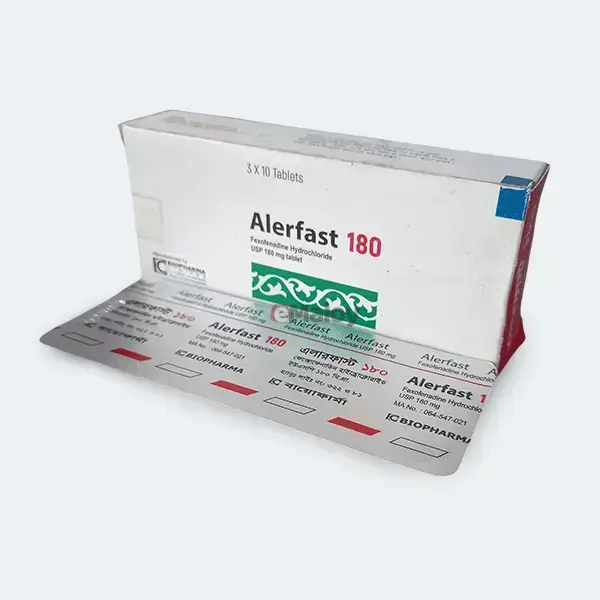
Alerfast 180 is a medication containing Fexofenadine Hydrochloride USP 180 mg. It is a second-generation, non-drowsy antihistamine manufactured by Biopharma Limited in Bangladesh.
Indications
Alerfast 180 is used to relieve symptoms associated with severe and persistent allergic conditions in adults and children 12 years of age and older. It works by blocking the action of histamine, a substance in the body that causes allergic symptoms.
It is specifically indicated for:
- Chronic Idiopathic Urticaria (Hives): It significantly reduces the signs and symptoms of chronic hives, including itching (pruritus) and the number of wheals (red, itchy welts on the skin).
- Seasonal Allergic Rhinitis (Hay Fever): It is also used for the relief of symptoms of seasonal allergic rhinitis, such as sneezing, runny nose, itchy nose, itchy palate, itchy throat, and itchy, watery, red eyes. While the 120 mg dose is sufficient for allergic rhinitis, the 180 mg dose is often preferred for more severe cases or for chronic urticaria.
Pharmacology
Fexofenadine is a selective antagonist of peripheral H1 receptors. It blocks the effects of histamine in the body's tissues, preventing the cascade of events that leads to allergic symptoms. As a second-generation antihistamine, it does not easily cross the blood-brain barrier, which minimizes its sedative effects and makes it a non-drowsy option.
Dosage and Administration
Alerfast 180 mg tablets are for oral use.
- Adults and Children 12 years and older: The recommended dose is 180 mg once daily.
- Renal Impairment: In patients with impaired kidney function, a lower starting dose of 60 mg once daily is recommended.
- Administration: For optimal absorption, it is recommended to take the tablet with water on an empty stomach. Avoid taking it with fruit juices (e.g., grapefruit, orange, or apple juice) as they can reduce the absorption of fexofenadine and make the medication less effective.
Side Effects
Alerfast 180 is generally well-tolerated. Side effects are usually mild and comparable to those observed with a placebo.
- Common: Headache, nausea, dizziness, and drowsiness.
- Rare: Fatigue, dry mouth, sleep disorders (insomnia, nightmares), nervousness, and skin rash.
- Serious (Very rare): Severe hypersensitivity reactions, including swelling of the face, lips, and tongue (angioedema), difficulty breathing, and anaphylaxis.
Contraindications
Alerfast 180 is contraindicated in individuals with a known hypersensitivity to Fexofenadine or any other components of the formulation.
Precautions and Warnings
- Cardiovascular Disease: Use with caution in patients with a history of or ongoing cardiovascular disease, as antihistamines as a class have been associated with adverse reactions like palpitations and tachycardia.
- Elderly and Patients with Impaired Organ Function: Use with care in elderly patients and those with kidney or liver impairment.
- Antacids: Do not take antacids containing aluminum and magnesium hydroxide gels within 2 hours of taking Alerfast, as they can interfere with absorption.
Pregnancy and Lactation
- Pregnancy (US FDA Category C): There are no adequate and well-controlled studies in pregnant women. It should be used during pregnancy only if the potential benefits outweigh the potential risks to the fetus.
- Lactation: Fexofenadine is known to be excreted in breast milk. Caution should be exercised, and a doctor should be consulted before administering to a nursing woman.
Drug Interactions
- Erythromycin and Ketoconazole: Concomitant use with these drugs can increase the plasma concentration of Fexofenadine.
- Antacids (containing aluminum and magnesium): Can reduce the bioavailability of Fexofenadine. A 2-hour gap between administrations is recommended.
- Fruit Juices: Can significantly decrease the absorption of fexofenadine.
Storage Conditions
Store at a temperature not exceeding 30°C, protected from light and moisture. Keep out of the reach of children.



Comment