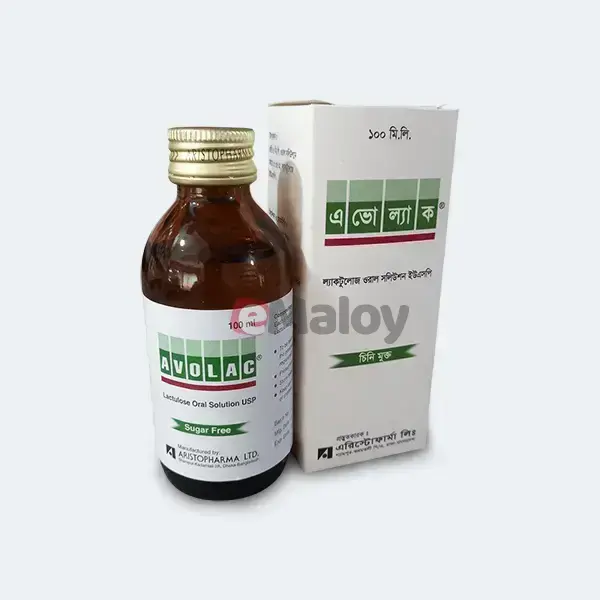
Avolac 100ml Syrup contains Lactulose USP at a concentration of 3.35 g per 5 ml . It is manufactured by Aristopharma Ltd. in Bangladesh.
Indications:
Avolac is used for the treatment of:
- Constipation (chronic constipation): It is used when a high-fiber diet, generous fluid intake, and sufficient physical exercise are not effective.
- Intestinal flora disturbances: Following therapy with broad-spectrum antibiotics, in gall bladder diseases, and intestinal diseases (colitis, diverticulosis, megacolon, etc.).
- Increased blood ammonia levels (hyperammonemia): In hepatopathy, portal-systemic encephalopathy, precoma, and coma.
- Diseases of the gums and periodontal apparatus (paradontosis): Bleeding gums, inflammation, dystrophy.
Pharmacology:
Lactulose is a synthetic disaccharide that is not broken down in the stomach and small intestine. In the colon, it is metabolized by saccharolytic bacteria into low molecular weight organic acids (mainly lactic acid). This process:
- Lowers the pH of the colon contents.
- Promotes water retention through osmosis, increasing stool volume and softening it.
- Increases peristaltic activity, facilitating bowel movement.
- Inhibits the growth of putrefactive bacteria and supports the growth of beneficial intestinal bacteria.
- Reduces the increase in metabolic degradation products in the blood in liver disease.
Dosage and Administration:
Dosage should be followed accurately as directed. Due to individual responses, the optimal dose may vary.
- Constipation:
- Adults: Initially 3-6 teaspoons (15-30 ml) daily; long-term therapy 1.5-6 teaspoons (7.5-30 ml) daily.
- Children up to 14 years: Initially 3 teaspoons (15 ml) daily; long-term therapy 1-2 teaspoons (5-10 ml) daily.
- Infants and toddlers: Initially 1-2 teaspoons (5-10 ml) daily; long-term therapy 1 teaspoon (5 ml) daily.
A prompt laxative effect can be achieved by taking 3-9 teaspoons (15-45 ml) in 1/8-1/4 liter of water, coffee, tea, fruit juice, or milk on an empty stomach in the morning. Defecation usually occurs about 2 hours later.
- Damaged intestinal flora:
- Adults: 1-2 teaspoons (5-10 ml) daily.
- Children: 1 teaspoon (5 ml) daily.
- Reduction of blood ammonia level (in hepatopathy): A maximum of 18-30 teaspoons (90-150 ml) daily.
- Precoma: A maximum of 30 teaspoons (150 ml) of Avolac spread over the day.
- Gum and periodontal diseases: Adults: 3-6 teaspoons (15-30 ml) daily.
Avolac can be taken with or without food. Mixing the dose with half a glass of water or fruit juice may improve the taste. Aim to drink 6-8 glasses of liquid daily while taking Avolac.
Contraindications:
- Hypersensitivity to galactose and/or lactose.
- Galactose-free diet.
- Gastro-cardiac symptom complex (heart problems stemming from the gastrointestinal tract).
- Suspected intestinal obstruction.
Side Effects:
- Occasionally, flatulence, cramps, and abdominal discomfort may occur at the beginning of treatment, which usually resolves by reducing the dose or taking it in smaller portions throughout the day.
- Overdosage can lead to diarrhea.
- In abuse, loss of electrolytes (primarily potassium) can occur.
Precautions:
- Administer with care to patients intolerant to lactulose.
- The higher doses used for hepatic encephalopathy should be considered for diabetic patients.
- Consult a doctor in case of pregnancy or if side effects occur.
- Avolac contains a maximum of 11% galactose and 2% tagatose, which should be considered for patients on a galactose-free diet.
- Diarrhea from overdose should be managed with discontinuation and adequate fluid and mineral intake.
- Avoid foods that cause flatulence and excessive intake of carbonated drinks during therapy.
- For intestinal flora disturbances, a periodic treatment course of 6-8 weeks is generally recommended.
- Taking Avolac with or after meals may reduce the laxative effect, requiring a dose increase.
- The stool-regulating effect may take several days in some patients, in which case Avolac may be taken every 2nd or 3rd day.
Drug Interactions:
The glycosidic effect of cardiac glycosides can be intensified by potassium deficiency in cases of Avolac abuse.
Storage:
Keep in a dry place, away from light and heat, and out of reach of children.
Important Note: This information is for general knowledge and informational purposes only and does not substitute professional medical advice. Always consult your doctor or pharmacist for specific instructions and guidance regarding your medication. They can assess your individual medical condition and provide the most appropriate advice.



Comment