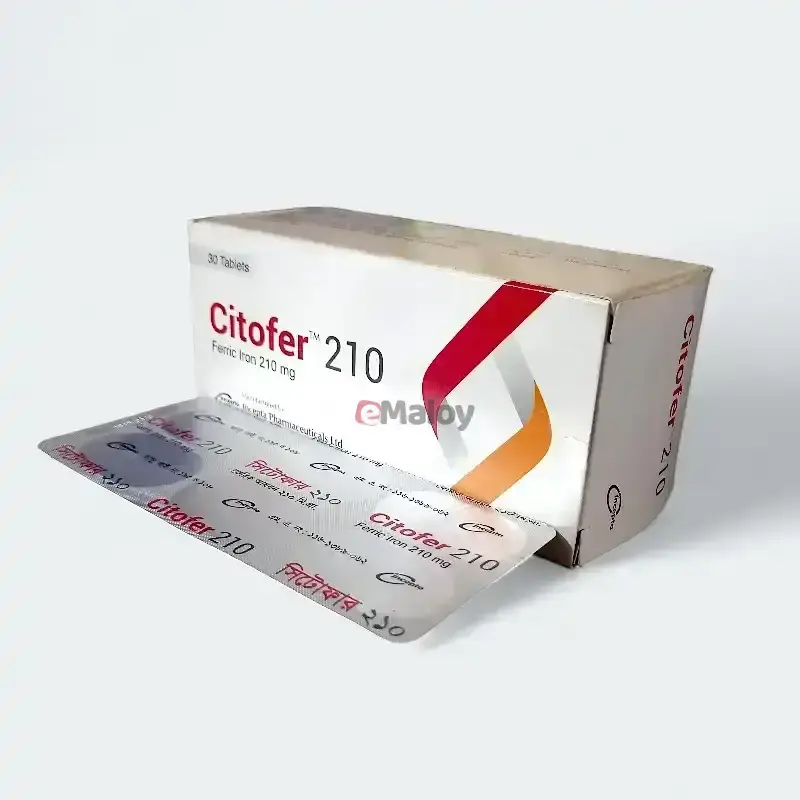
Citofer: A Dual-Action Treatment for Chronic Kidney Disease Patients
Citofer is indicated for adult patients with chronic kidney disease (CKD). It serves two primary purposes:
- Control of serum phosphorus levels in patients on dialysis.
- Treatment of iron deficiency anemia in patients not on dialysis.
How Citofer Works (Pharmacology)
Citofer contains Ferric Citrate, which acts through a dual mechanism:
- Phosphate Binding: In the gastrointestinal (GI) tract, ferric iron binds to dietary phosphate, forming insoluble ferric phosphate. This compound is then excreted in the stool, thereby preventing phosphate absorption into the bloodstream and lowering serum phosphate levels.
- Iron Absorption: Ferric iron is reduced to the ferrous form in the GI tract. It is then transported into the blood, where it is oxidized back to ferric iron and circulates bound to transferrin. This absorbed iron can then be incorporated into hemoglobin, helping to treat iron deficiency anemia.
Key Indications & Benefits
- Hyperphosphatemia in Chronic Kidney Disease (on Dialysis): Helps maintain serum phosphorus at target levels, reducing the risk of complications associated with high phosphate.
- Iron Deficiency Anemia in Chronic Kidney Disease (not on Dialysis): Increases hemoglobin levels, addressing anemia common in CKD patients.
Dosage & Administration
Citofer tablets are taken orally with meals. Dosage adjustments are made to achieve target serum levels or hemoglobin goals.
- Hyperphosphatemia in CKD on Dialysis:
- Starting dose: 2 tablets orally 3 times per day with meals.
- Adjustment: Increase or decrease by 1 to 2 tablets as needed to maintain serum phosphorus at target levels, up to a maximum of 12 tablets daily. Dose can be titrated at 1-week or longer intervals.
- Iron Deficiency Anemia in CKD not on Dialysis:
- Starting dose: 1 tablet orally 3 times per day with meals.
- Adjustment: Increase as needed to achieve and maintain hemoglobin goal, up to a maximum of 12 tablets daily or as directed by the physician.
Use in Children & Adolescents: The safety and efficacy of Ferric Citrate have not been established in children and adolescents.
Always consult a registered physician for medication use.
Important Considerations & Warnings
It is crucial to discuss your full medical history with your doctor before taking Citofer.
Contraindications:
- Patients with iron overload syndrome (Hemochromatosis).
Side Effects: Most common adverse reactions include:
- Discolored feces
- Diarrhea
- Constipation
- Nausea
- Vomiting
- Cough
- Abdominal pain
- Hyperkalemia (high potassium levels)
Interactions:
- Oral drugs such as Doxycycline & Ciprofloxacin should be separated from Citofer (take Citofer at a different time).
Pregnancy & Lactation:
- There are no available data on Ferric Citrate use in pregnant women or lactating mothers. Use during pregnancy or lactation should only be considered if clearly needed and advised by a physician, weighing potential benefits against risks.
Precautions & Warnings:
- Iron Absorption: Iron absorption from Citofer may lead to excessive elevations in iron stores. This may manifest as increases in serum ferritin and transferrin saturation (TSAT) levels. Patients may require a reduction in dose or discontinuation of intravenous iron if these levels become too high.
- Accidental Overdose: Accidental overdose of iron-containing products is a leading cause of fatal poisoning in children under 6 years of age. Keep Citofer out of reach of children. In case of accidental overdose, call a doctor or poison control center immediately.
Overdose Effects:
- No specific data are available regarding overdose of Citofer in patients. In CKD patients, the maximum dose studied was 2,520 mg ferric iron per day. Symptoms of iron overdose can include severe gastrointestinal distress, metabolic acidosis, and cardiovascular collapse.
Storage Conditions
Store below 30°C, away from light and in a dry place. Keep out of the reach of children.



Comment