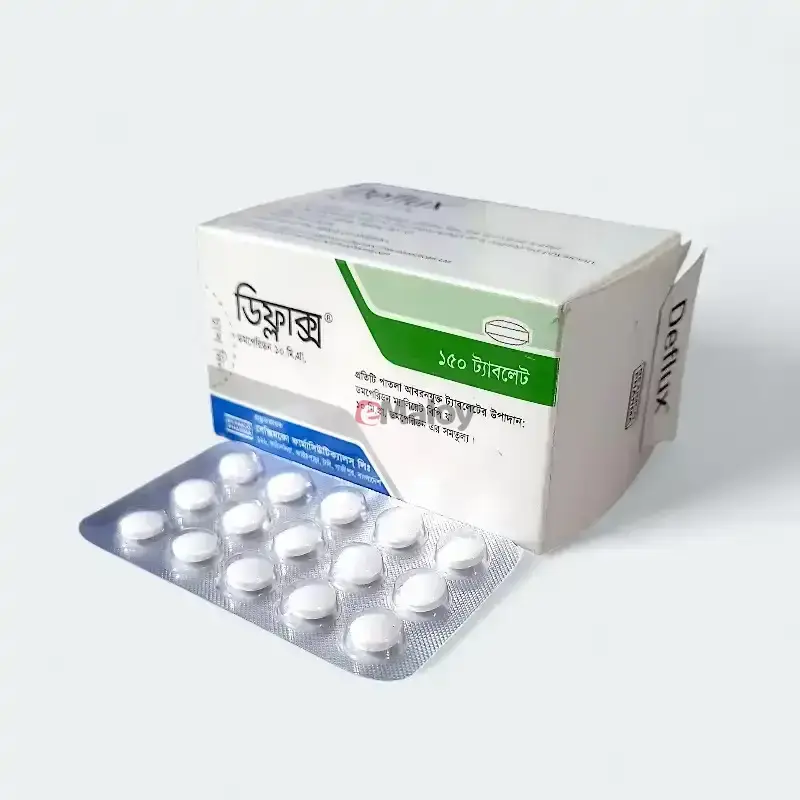
Deflux 10: A Motility Stimulant and Dopamine Antagonist
Deflux 10 is a medication that contains Domperidone, a dopamine antagonist. It primarily works by affecting the motility of the gastrointestinal tract and blocking dopamine receptors in the Chemoreceptor Trigger Zone (CTZ), leading to its anti-nausea and prokinetic effects.
How Deflux 10 Works (Pharmacology)
Domperidone's action is based on its ability to block dopamine receptors. These receptors are mainly located in:
- Chemoreceptor Trigger Zone (CTZ): By blocking dopamine receptors here, Domperidone effectively suppresses nausea and vomiting.
- Stomach and GI tract: By blocking dopamine receptors that influence GI motility, Domperidone enhances the movement and tone of the upper gastrointestinal tract. This facilitates gastric emptying, improves peristalsis (wave-like contractions) in the stomach and duodenum, and helps regulate the pyloric sphincter. It also increases esophageal peristalsis and lower esophageal sphincter pressure, preventing gastric content from flowing back into the esophagus (regurgitation).
Crucially, Domperidone has weak penetration across the blood-brain barrier, meaning it has minimal effect on dopamine receptors in the brain. This characteristic helps to reduce psychotropic and neurologic side effects (like extrapyramidal phenomena) commonly associated with other dopamine antagonists.
Key Indications & Benefits
Deflux 10 is indicated for:
- Dyspeptic Symptom Complex: Often associated with delayed gastric emptying, gastroesophageal reflux, and esophagitis. This includes symptoms like:
- Epigastric sense of fullness, abdominal distension, upper abdominal pain.
- Eructation (belching), flatulence, early satiety.
- Nausea and vomiting.
- Heartburn with or without regurgitation.
- Non-ulcer dyspepsia.
- Acute Nausea and Vomiting: Of functional, organic, infectious, dietetic origin, or induced by radiotherapy, drug therapy, or migraine.
- Parkinson's Disease: Used to suppress dopamine-agonist induced nausea and vomiting (as it blocks peripheral dopamine receptors without counteracting central effects).
- Radiological Studies: For speeding barium transit in follow-through radiological studies.
Dosage & Administration
Domperidone should be taken 15-30 minutes before meals and, if necessary, before retiring.
Usual Recommended Oral Dose:
- Adults: 10-20 mg (1-2 tablets or 10-20 ml suspension), every 6-8 hours daily. The maximum daily dose is 80 mg.
- Children: 2-4 ml suspension/10 kg body weight OR 0.4-0.8 ml pediatric drops/10 kg body weight, every 6-8 hours daily.
Specific Conditions:
- In Dyspeptic Symptom:
- Adults: 10-20 mg (1-2 tablets or 10-20 ml suspension), every 6-8 hours daily.
- Children: 0.2-0.4 mg/kg (2-4 ml suspension/10 kg or 0.4-0.8 ml pediatric drops/10 kg) body weight, every 6-8 hours daily.
- In Acute and Sub-acute Conditions (mainly acute nausea and vomiting):
- Adults: 20 mg (2 tablets or 20 ml suspension), every 6-8 hours daily.
- Children: 0.2-0.4 mg/kg (2-4 ml suspension/10 kg or 0.4-0.8 ml pediatric drops/10 kg) body weight, every 6-8 hours daily. (Maximum treatment period for acute nausea and vomiting is 12 weeks).
By Rectum in Suppositories:
- Adults (including elderly): 30-60 mg every 4-8 hours.
- Children: Maximum daily dose rectally is 30 mg for those weighing 10 to 25 kg. The dose may be divided throughout the day if necessary.
The maximum period of treatment is 12 weeks for most conditions.
Always consult a registered physician for medication use.
Important Considerations & Warnings
It is crucial to discuss your full medical history with your doctor before taking Deflux 10.
Contraindications:
- Known hypersensitivity to Domperidone.
- Neonates.
- Whenever gastrointestinal stimulation might be dangerous (e.g., gastrointestinal hemorrhage, mechanical obstruction, or perforation).
- Patients with prolactin-releasing pituitary tumor (prolactinoma).
Side Effects:
- Rare: Transient intestinal cramps.
- Extrapyramidal phenomena: Rare in young children and exceptional in adults; these reverse spontaneously upon stopping treatment.
- Hyperprolactinaemia: May occur due to pituitary gland being outside the blood-brain barrier, leading to neuroendocrinological phenomena like galactorrhoea (milk production) and gynecomastia (breast enlargement in males).
- Neurological side-effects (in infants): Cannot be totally excluded when the blood-brain barrier is immature.
- Rare allergic reactions: Such as rash and urticaria.
Interactions:
- Anticholinergic drugs: May antagonize the antidyspeptic effect of domperidone.
- Antacids and antisecretory drugs: Should not be given simultaneously with domperidone as they lower its oral bioavailability.
- CYP3A4 inhibitors (e.g., azole antifungals, macrolide antibiotics, HIV protease inhibitors, nefazodone): Concomitant use may result in increased plasma levels of domperidone.
- Orally administered drugs with sustained release or enteric coated formulations: Theoretically, domperidone's gastro-kinetic effects could influence their absorption (though not observed with digoxin or paracetamol in stable patients).
- Neuroleptics: Domperidone does not potentiate their action.
- Dopaminergic agonists (bromocriptine, L-dopa): Domperidone suppresses their unwanted peripheral effects (digestive disorders, nausea, vomiting) without counteracting their central properties.
Pregnancy & Lactation:
- Pregnancy: Animal studies did not show teratogenic effects at high doses. However, like most medicines, Domperidone should only be used during the first trimester of pregnancy if the anticipated therapeutic benefit justifies it. No evidence of increased risk of malformations in humans so far.
- Lactation: The drug is excreted in breast milk. Domperidone concentrations in breast milk are 4 times lower than corresponding plasma concentrations. It is not known whether this is harmful to the newborn. Therefore, nursing is not recommended for mothers taking domperidone, unless the expected benefits outweigh any potential risk.
Precautions & Warnings:
- Children: Use with absolute caution in children, especially young children, due to an increased risk of extra-pyramidal reactions because of an incompletely developed blood-brain barrier.
- Hepatic Impairment: Use with caution in patients with hepatic impairment as domperidone is highly metabolized in the liver.
- Renal Impairment: In severe renal insufficiency, the elimination half-life is increased. While a single acute dose may not need adjustment, for repeated administration, the dosing frequency should be reduced to once or twice daily depending on severity, and the dose may need to be reduced. Patients on prolonged therapy should be reviewed regularly.
- Mental Alertness: Domperidone does not affect mental alertness.
Overdose Effects:
- Symptoms may include drowsiness, disorientation, and extrapyramidal reactions (especially in children).
- Treatment: Administration of activated charcoal and close observation. Anticholinergic, antiparkinson drugs, or antihistamines with anticholinergic properties may help control extrapyramidal reactions.
Storage Conditions
Store below 30°C, protected from light & moisture. Keep out of children's reach.




Comment