Indications
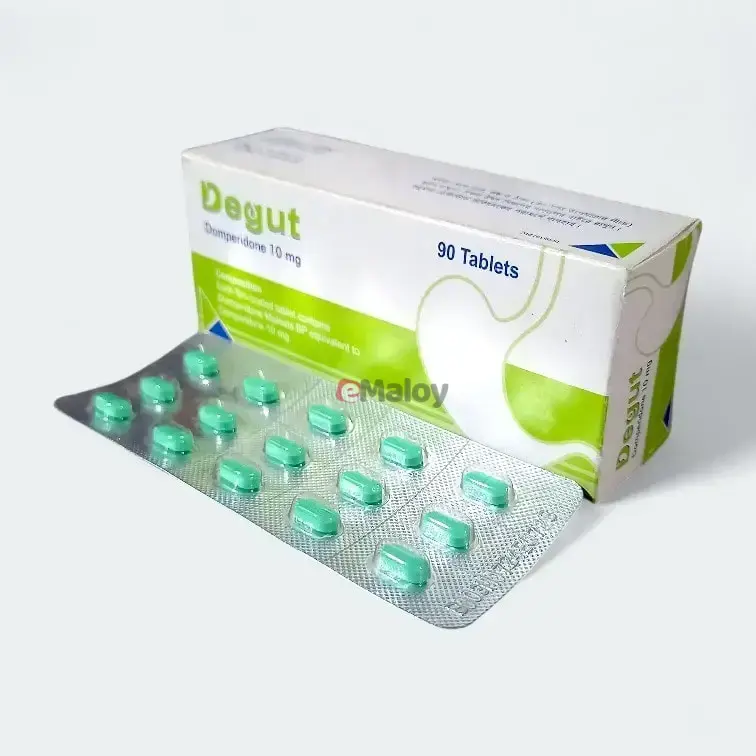
Degut (Domperidone) is indicated for:
- Dyspeptic symptoms: Such as epigastric fullness, abdominal distension, nausea, vomiting, heartburn, and non-ulcer dyspepsia. These symptoms are often associated with delayed gastric emptying, gastroesophageal reflux, and esophagitis.
- Acute nausea and vomiting: Can be caused by various factors including functional, organic, infectious, or dietetic origins, as well as from radiotherapy, drug therapy, or migraines.
- Parkinson's disease: To treat nausea and vomiting induced by dopamine-agonist medications.
- Radiological studies: To speed up barium transit in follow-through studies.
Pharmacology
Domperidone is a dopamine antagonist that primarily blocks dopamine receptors in the Chemoreceptor Trigger Zone (CTZ) and stomach. This action gives it gastroprokinetic effects, restoring normal motility and tone in the upper gastrointestinal tract. It facilitates gastric emptying, enhances intestinal peristalsis, and increases lower esophageal sphincter pressure, which helps prevent reflux. Due to its limited ability to cross the blood-brain barrier, it has minimal central nervous system side effects.
Dosage & Administration
Domperidone should be taken 15-30 minutes before meals and, if necessary, before bed. The maximum daily dose is 80 mg.
- Oral (Adults): 10-20 mg (1-2 tablets or 10-20 ml suspension) every 6-8 hours.
- Oral (Children): 0.2-0.4 mg/kg of body weight (2-4 ml suspension/10 kg or 0.4-0.8 ml pediatric drops/10 kg) every 6-8 hours.
- Acute Nausea and Vomiting (Adults): 20 mg (2 tablets or 20 ml suspension) every 6-8 hours. The maximum treatment duration is 12 weeks.
- Rectal (Suppositories):
- Adults: 30-60 mg every 4-8 hours.
- Children (10-25 kg): Maximum daily dose is 30 mg, which can be divided throughout the day.
Interaction
- Anticholinergic drugs: May counteract the effects of domperidone.
- Antacids and antisecretory drugs: Should not be taken at the same time as they can reduce domperidone's oral bioavailability.
- CYP3A4 inhibitors (e.g., azole antifungals, macrolide antibiotics): May increase the plasma levels of domperidone.
- Dopaminergic agonists (e.g., bromocriptine, L-dopa): Domperidone suppresses their peripheral side effects like nausea and vomiting without interfering with their central effects.
Contraindications
Degut is contraindicated in:
- Patients with a known hypersensitivity to the drug.
- Neonates.
- Conditions where stimulating gastrointestinal motility could be dangerous (e.g., gastrointestinal hemorrhage, mechanical obstruction, or perforation).
- Patients with a prolactin-releasing pituitary tumor (prolactinoma).
Side Effects
Side effects are rare. Transient intestinal cramps have been reported. Extrapyramidal phenomena are rare in young children and exceptional in adults, and they reverse spontaneously when treatment is stopped. Domperidone can increase plasma prolactin levels, which in rare cases may lead to galactorrhea and gynecomastia. Rare allergic reactions, such as rash and hives, have also been reported.
Pregnancy & Lactation
Domperidone should only be used during the first trimester of pregnancy if the anticipated therapeutic benefit outweighs the potential risk. It is excreted in breast milk, and nursing is not recommended for mothers taking this medication unless the benefits outweigh the potential risks to the infant.
Precautions & Warnings
- Children: Use with absolute caution in young children due to an increased risk of extrapyramidal reactions from an incompletely developed blood-brain barrier.
- Hepatic Impairment: Use with caution in patients with hepatic impairment, as the drug is highly metabolized in the liver.
- Renal Impairment: The dosing frequency should be reduced for patients with severe renal insufficiency on repeated administration.
Overdose Effects
Symptoms of overdose may include drowsiness, disorientation, and extrapyramidal reactions, particularly in children. In case of overdose, activated charcoal and close monitoring are recommended. Anticholinergic, antiparkinsonian drugs, or antihistamines with anticholinergic properties may help control extrapyramidal reactions.
Therapeutic Class
Domperidone is a motility stimulant, dopamine antagonist, and prokinetic drug.
Storage Conditions
Store below 30°C, protected from light and moisture. Keep out of children's reach.
Comment