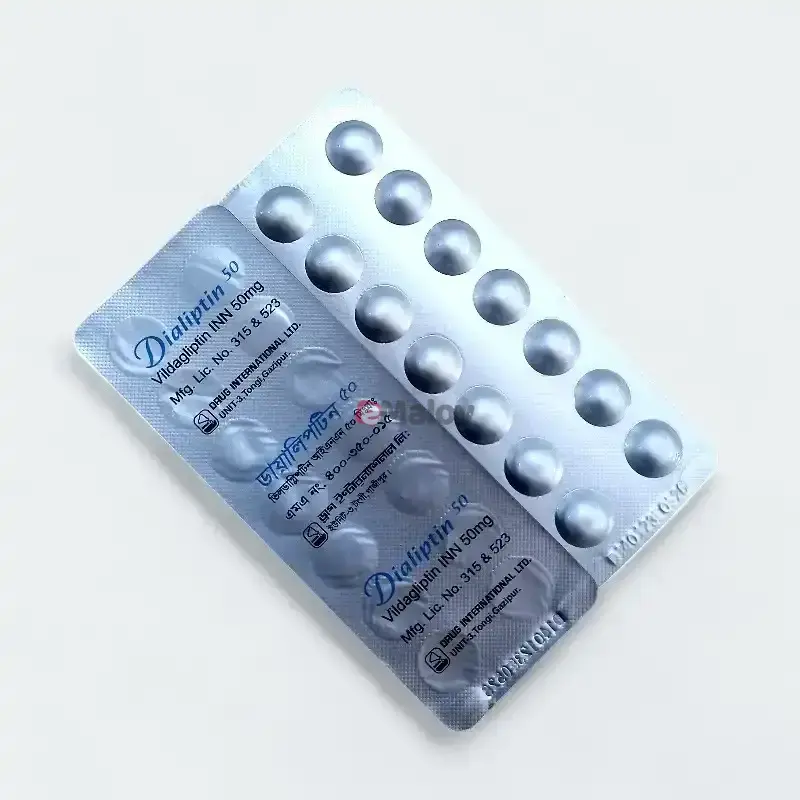
Dialiptin 50: A DPP-4 Inhibitor for Type 2 Diabetes Mellitus
Dialiptin 50 contains Vildagliptin, a dipeptidyl peptidase-4 (DPP-4) inhibitor used to improve glycemic control in patients with type 2 diabetes mellitus. It works by enhancing the body's natural ability to control blood glucose levels.
How Dialiptin 50 Works (Pharmacology)
Vildagliptin, as a DPP-4 inhibitor, slows down the inactivation of incretin hormones (Glucagon-Like Peptide-1 (GLP-1) and Glucose-Dependent Insulinotropic Polypeptide (GIP)). These incretin hormones are crucial for glucose homeostasis:
- Increased Insulin Release: When blood glucose is normal or elevated, GLP-1 and GIP increase insulin synthesis and release from pancreatic beta cells.
- Decreased Glucagon Secretion: GLP-1 also reduces glucagon secretion from pancreatic alpha cells, which in turn leads to reduced glucose production by the liver.
By prolonging the active levels of these incretins, Vildagliptin effectively increases insulin release and decreases glucagon levels in a glucose-dependent manner, helping to control blood sugar.
Key Indications & Benefits
Dialiptin 50 is indicated as an adjunct to diet and exercise to improve glycemic control in patients with type 2 diabetes mellitus. It can be used as:
- Monotherapy: When diet and exercise alone are insufficient.
- Dual Combination Therapy: When diet, exercise, and a single antidiabetic agent do not provide adequate glycemic control. It can be combined with:
- Metformin
- A Sulphonylurea
- A Thiazolidinedione
- Insulin
Dosage & Administration
Vildagliptin can be taken with or without a meal.
- Monotherapy: 50 mg or 100 mg daily.
- Dual Combination with Metformin or a Thiazolidinedione: 50 mg twice daily (morning and evening).
- Dual Combination with a Sulphonylurea: 50 mg once daily in the morning.
Special Populations:
- Elderly: No dosage adjustment is required.
- Mild Renal Impairment: No dosage adjustment is required.
- Pediatric Use: Not recommended in patients under 18 years of age.
Always consult a registered physician for medication use.
Important Considerations & Warnings
It is crucial to discuss your full medical history with your doctor before taking Dialiptin 50.
Contraindications:
- Hypersensitivity to Vildagliptin or any of its excipients.
- Patients with moderate to severe renal impairment.
- Patients with hepatic impairment, specifically those with pre-treatment alanine aminotransferase (ALT) or aspartate aminotransferase (AST) >3 times the upper limit of normal (ULN).
- Patients with type 1 diabetes.
Side Effects:
- The majority of adverse reactions are mild and transient, rarely requiring discontinuation.
- A rare case of hepatic dysfunction has been observed.
- Clinical trials extending over 2 years have not shown additional safety signals or unforeseen risks.
Interactions:
- No clinically significant interactions were observed with pioglitazone, metformin, glibenclamide, digoxin, warfarin, amlodipine, ramipril, valsartan, or simvastatin.
- The glucose-lowering effect of Dialiptin may be reduced by certain active substances, including thiazides, corticosteroids, thyroid products, and sympathomimetics.
Pregnancy & Lactation:
- Pregnancy: Vildagliptin should not be used during pregnancy.
- Lactation: Vildagliptin should not be used during lactation.
Precautions & Warnings:
- Elderly ( ≥75 years): Exercise caution due to limited clinical experience.
- Liver Function Monitoring:
- Monitor Liver Function Tests (LFTs) prior to initiation, at three-monthly intervals in the first year, and periodically thereafter.
- If transaminase levels are increased, confirm with a second evaluation and follow with frequent LFTs until normalization.
- If AST or ALT persists at >3xULN, Dialiptin treatment should be stopped.
- Patients developing jaundice or other signs of liver dysfunction should discontinue Dialiptin.
- Following withdrawal and LFT normalization, treatment should not be reinitiated.
- Congestive Heart Failure: Use with caution in patients with NYHA functional class I-II congestive heart failure. Do not use in patients with NYHA functional class III-IV.
Overdose Effects:
- The provided information does not detail specific overdose effects beyond what might be inferred from its mechanism (e.g., hypoglycemia if combined with other agents). It's implied that management would be supportive.
Storage Conditions
Store below 30°C, protected from light & moisture. Keep out of reach of children.




Comment