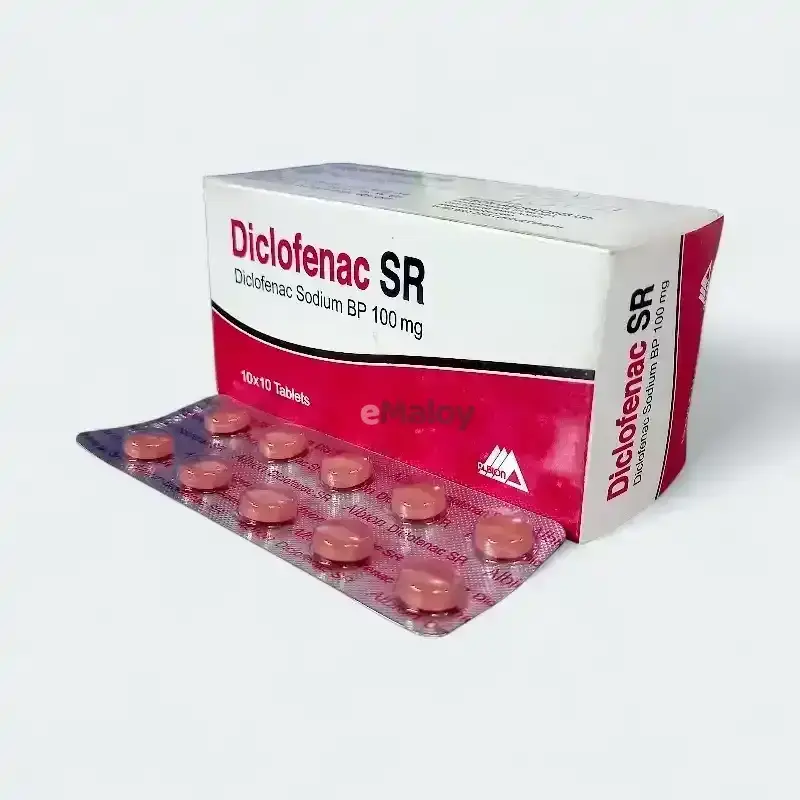
Diclofenac SR: A Non-Steroidal Anti-Inflammatory Drug (NSAID)
Diclofenac SR is a potent non-steroidal anti-inflammatory drug (NSAID) with significant anti-rheumatic, anti-inflammatory, analgesic (pain-relieving), and antipyretic (fever-reducing) properties. The "SR" likely indicates a sustained-release formulation. It works by inhibiting prostaglandin biosynthesis, a key process in inflammation, pain, and fever.
How Diclofenac SR Works (Pharmacology)
Diclofenac Sodium exerts its therapeutic effects by inhibiting prostaglandin biosynthesis. Prostaglandins are lipid compounds that play a major role in mediating inflammation, pain, and fever in the body. By blocking their production, Diclofenac helps to reduce these symptoms. It also has some uricosuric effect, meaning it can help in the excretion of uric acid.
Diclofenac is rapidly and completely absorbed from the gastrointestinal tract, with peak plasma concentrations typically reached within about 2 hours after ingestion (when taken with or after a meal). It is highly bound to plasma proteins (99.7%) and is extensively metabolized in the liver, undergoing first-pass metabolism.
Key Indications & Benefits
Diclofenac SR is indicated for the treatment of various acute and chronic inflammatory and painful conditions, including:
- Rheumatology:
- Inflammatory and degenerative forms of rheumatism.
- Chronic involutive polyarthritis.
- Ankylosing spondylarthritis.
- Osteoarthritis, spondylarthroses.
- Acute gout.
- Peri-articular rheumatic disorders.
- Surgery and Traumatology:
- Sprains, bruises, dislocations, fractures, soft tissue injuries.
- Post-surgical pain and inflammation.
- Obstetrics and Gynecology:
- Primary dysmenorrhea (painful menstruation).
- Episiotomy (surgical cut during childbirth).
- Various inflammatory conditions like adnexitis, endometritis, parametritis, salpingitis, and mastitis.
- Otorhinolaryngology (ENT):
- As pre-operative medication for the prevention of pain, inflammation, and swelling.
- Dentistry:
- Post-operative and post-traumatic pain, inflammation, and swelling.
- Other Indications:
- Prevention of pain and treatment of inflammation and swelling in patients who have undergone urogenital tract operations.
- Renal (kidney) and biliary (gallbladder) colic.
Dosage & Administration
The specific dosage and administration depend on the formulation (FC Tablet, SR Tablet, Dispersible Tablet, TR Capsule, Suppository, Injection, Gel). The "SR" formulation typically aims for once-daily dosing.
Diclofenac SR Tablet:
- Adults: 1 tablet daily, taken whole with liquid, preferably at meal times.
- If necessary, the daily dose can be increased to 150 mg by supplementing with conventional (non-SR) tablets.
- Children: 1-3 mg of diclofenac/kg body weight daily in divided doses (for certain indications like juvenile rheumatoid arthritis).
- Elderly patients: The lowest effective dosage is recommended, even though pharmacokinetics are generally not significantly impaired.
General Guidelines (across various formulations, as provided in the text):
- Diclofenac FC Tablet (Adults): 75-150 mg daily in 2 to 3 divided doses, preferably after food. Reduce dose for long-term use.
- Diclofenac Dispersible Tablet (Adults): 2-3 tablets daily, max 150 mg. Take before meals. Disperse in half a glass of water before swallowing. No information on use beyond 3 months.
- Diclofenac TR Capsule: One capsule daily, preferably after mealtimes.
- Diclofenac Suppository (Adults): 50 mg suppository 2-3 times daily. Max daily dose 150 mg.
- Diclofenac Injection (Adults): Usual dose is 1 ampoule daily. Can be increased to 2 ampoules daily in serious cases.
- Diclofenac Gel (External Use Only): 2-4 g applied to skin 3-4 times daily, rubbed in lightly. Can be used in addition to other forms of Diclofenac. Avoid contact with eyes or mucous membranes. Wash hands after application.
Always consult a registered physician for medication use.
Important Considerations & Warnings
Discuss your full medical history with your doctor before taking Diclofenac SR.
Contraindications:
- Hypersensitivity to any ingredient of the product.
- Peptic ulcer disease.
- Hypersensitivity to Diclofenac or other non-steroidal anti-inflammatory agents.
- Asthmatic patients in whom attacks of asthma, urticaria (hives), or acute rhinitis (nasal inflammation) are precipitated by acetylsalicylic acid (aspirin) or other prostaglandin synthetase inhibitors.
- Diclofenac Gel should not be used under occlusive airtight dressings.
Side Effects:
- Diclofenac SR is generally well tolerated, with mild, rare, and transient adverse effects.
- Common (especially at start): Epigastric pain (upper abdominal pain), eructation (belching), nausea, diarrhea, dizziness, or headache.
- Less common: Peripheral edema (swelling), skin reactions (rash, eczema).
- Diclofenac Gel: May cause local irritation, reddening of the skin, and skin rash.
Interactions:
- Lithium and Digoxin: May increase plasma concentrations of these drugs.
- Anticoagulants (e.g., Warfarin): Isolated reports of increased risk of hemorrhage; caution advised despite no apparent influence on anticoagulant effect in clinical investigations.
- Antidiabetic agents: Can generally be given together without affecting their clinical effect.
- Cyclosporin: Nephrotoxicity (kidney damage) reported when used concomitantly.
- Methotrexate: Cases of serious toxicity reported when given within 24 hours of NSAIDs.
- Quinolone antimicrobials: Convulsions may occur; exercise caution.
- Other NSAIDs and Steroids: Co-administration may increase frequency of unwanted effects. With aspirin, plasma levels of both are lowered.
Pregnancy & Lactation:
- Pregnancy: Should be employed only for compelling reasons during pregnancy. The lowest effective dose should be used. Not recommended during the first trimester. Diclofenac Sodium Gel is not recommended during pregnancy due to insufficient clinical data.
- Lactation: A very insignificant quantity of Diclofenac may be detected in breast milk, but no undesirable effects on the infant are expected.
Precautions & Warnings:
- Peptic Ulceration/GI Bleeding: In rare instances, if peptic ulceration or gastrointestinal bleeding occurs, treatment with Diclofenac SR should be considered.
- Elderly Patients: Should be kept under close observation.
- Diclofenac Gel: Should not contact eyes or mucous membranes. Hands should be washed properly after application. Not for oral consumption.
Storage Conditions
Store in a cool and dry place, protected from light. Store below 30°C. Keep out of the reach of children.



Comment