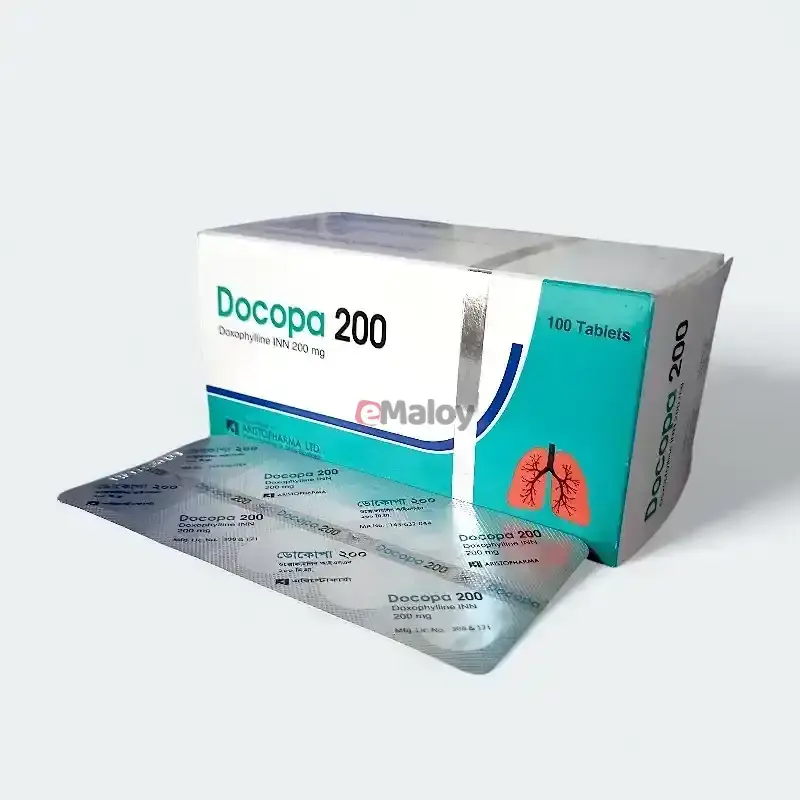
Docopa 200: A Bronchodilator for Respiratory Conditions
Docopa 200 contains Doxophylline, a novel bronchodilator used to treat various respiratory conditions characterized by bronchospasm. It is structurally different from Theophylline, offering a potentially better safety profile.
How Docopa 200 Works (Pharmacology)
Doxophylline is a novel bronchodilator that primarily works by selectively inhibiting phosphodiesterase 4. This action leads to the relaxation of bronchial smooth muscle, thereby widening the airways. Unlike Theophylline, Doxophylline has decreased affinities for adenosine A1 and A2 receptors, which is believed to contribute to its improved safety profile. Doxophylline is also reported to inhibit platelet activating factor (PAF) and the generation of leukotrienes, further contributing to its anti-inflammatory effects in the airways.
Key Indications & Benefits
Docopa is indicated for the treatment of:
- Bronchial asthma
- Bronchospasm
- Chronic obstructive pulmonary disease (COPD)
- Pulmonary disease with spastic bronchial component
Dosage & Administration
The dosage of Docopa depends on the patient's age and condition.
Adults:
- 400 mg tablet two or three times daily, or as prescribed by the physician.
- If a daily dose of 400 mg Doxophylline is required, Doxophylline SR tablet (sustained release) can be taken once daily.
Elderly:
- 200 mg tablet two or three times daily.
Children:
- >12 years of age: 10 ml syrup or 200 mg tablet two or three times daily.
- 6-12 years of age: 6-9 mg/kg body weight two times daily. For example, if body weight is 10 kg, 3 ml (60 mg) two times daily, or as prescribed by the physician.
Always consult a registered physician for medication use.
Important Considerations & Warnings
It is crucial to discuss your full medical history with your doctor before taking Docopa 200.
Contraindications:
- Known hypersensitivity to Doxophylline or other xanthine derivatives.
- Patients with acute myocardial infarction (heart attack).
- Hypotension (low blood pressure).
- During lactation (breastfeeding).
Side Effects: Patients treated with xanthine derivatives (like Doxophylline) may experience:
- Common: Nausea, vomiting, epigastric pain, headache, irritability, insomnia, tachycardia (fast heart rate), extrasystoles (extra heartbeats), tachypnea (rapid breathing).
- Rare cases: Hyperglycemia (high blood sugar) or albuminuria (protein in urine).
- In case of overdose: Severe cardiac arrhythmias and tonic-clonic seizures may occur. These can be the first signs of intoxication.
If side effects appear, treatment may need to be discontinued. If necessary, and at the physician's discretion, treatment may be resumed at lower doses after all signs and symptoms of toxicity have subsided.
Interactions:
- Other xanthine preparations: Should not be administered concurrently.
- Caffeine: Limit consumption of beverages and food containing caffeine.
- Ephedrine or other sympathomimetic drugs: Exercise caution with concurrent administration.
- Drugs that may reduce hepatic clearance (increase Doxophylline levels): Erythromycin, TAO (troleandomycin), lincomycin, clindamycin, allopurinol, cimetidine, influenza vaccine, and propanolol. Dosage adjustment may be necessary.
- Drugs that may increase clearance (reduce Doxophylline levels): Phenytoin, other anticonvulsants, and cigarette smoking. Increased dosage of Docopa may be necessary.
Pregnancy & Lactation:
- Pregnancy: Animal studies show no interference with pre and postnatal growth. However, due to insufficient clinical evidence in pregnant women, use should be carefully evaluated case by case based on the risk-benefit ratio.
- Lactation: The drug is contraindicated during lactation.
Precautions & Warnings:
- Reduced hepatic clearance: Factors that may reduce hepatic clearance of xanthine derivatives and increase plasma levels include age, congestive cardiac decompensation, chronic obstructive pulmonary disease, severe liver disease, concomitant infections, and certain medications (as listed under "Interactions"). Dosage reduction and monitoring of blood levels are recommended in these cases.
- Caution in specific conditions: Administer with caution to patients with cardiac disease, hypertension, severe hypoxemia, hyperthyroidism, chronic corpulmonale, congestive heart failure, liver disease, peptic ulcer, and renal impairment.
- Congestive heart failure: Use with particular caution, as clearance is considerably slower in these patients, and high blood levels may persist for long periods even after discontinuation.
- Dependence: There is no risk of addiction or any other form of dependence.
Overdose Effects:
- Severe cardiac arrhythmias and tonic-clonic seizures are possible in overdose. These may be the first signs of intoxication.
- If overdose occurs, treatment should be symptomatic, focusing on cardiovascular collapse, as there is no specific antidote.
Storage Conditions
Keep in a dry place away from light and heat. Store below 30°C. Keep out of the reach of children. Docopa should be used only on prescription of a specialist physician.



Comment