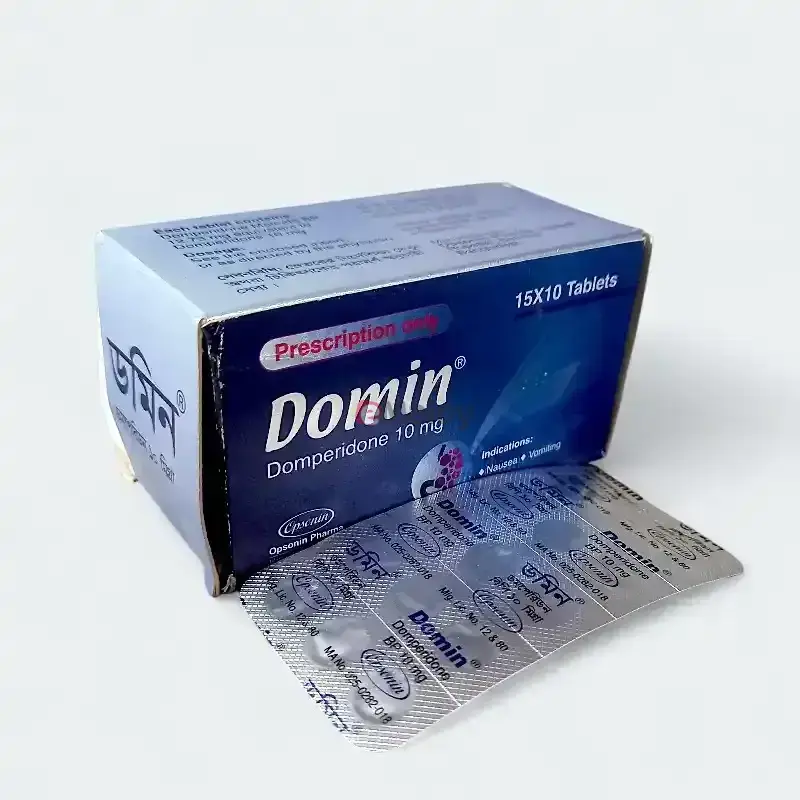
Domin 10mg Tablet: An Overview for Indigestion, Nausea, and Vomiting
Domin 10mg Tablet is a prescription medicine containing Domperidone, a prokinetic agent. It is primarily used to relieve symptoms of indigestion, nausea, and vomiting by improving digestive tract motility and blocking certain signals in the brain.
How Domin 10 Works (Mode of Action/Pharmacology)
Domin 10 (Domperidone) is a peripheral dopamine-receptor blocker. Its primary actions are:
- Anti-emetic effect: It works on the chemoreceptor trigger zone (CTZ) in the brain, a region that controls vomiting. By blocking dopamine receptors here, it helps to prevent the feeling of nausea and the act of vomiting.
- Prokinetic effect: It increases esophageal peristalsis (wave-like contractions), enhances gastroduodenal coordination, and lowers esophageal sphincter pressure. This facilitates gastric emptying (food moving out of the stomach) and decreases small bowel transit time, thereby improving digestion and reducing feelings of fullness and bloating.
Key Indications & Benefits
Domin 10mg Tablet is indicated for the treatment of:
- Indigestion (Non-ulcer dyspepsia)
- Nausea
- Vomiting
- Gastroparesis (delayed stomach emptying)
- Gastritis
- Migraine (for associated nausea/vomiting)
- Lactation (to increase milk production, though this is an off-label use and should be carefully considered)
Dosage & Administration
Domin 10 should be taken empty stomach, typically 15-30 minutes before meals. Swallow the tablet whole; do not chew, crush, or break it. The dose and duration depend on your condition and response to the medicine, as advised by your doctor.
Adult Dose (Oral):
- Nausea and Vomiting: 10-20 mg every 4-8 hours. Maximum: 80 mg/day.
- Non-ulcer Dyspepsia: 10 mg 3-4 times daily. Maximum: 20 mg 3-4 times daily. The last dose should be taken at bedtime.
- Migraine: 20 mg every 4 hours. Maximum: 4 doses/24 hours.
Adult Dose (Rectal - Suppository, if applicable):
- Nausea and Vomiting: 60 mg twice daily.
Child Dose (Oral):
- 0.2 - 0.4 mg/kg every 4 - 8 hours daily.
Child Dose (Rectal - Suppository, if applicable):
- <12 years, >15 kg: 30 mg twice daily.
- >12 years, >35 kg: 60 mg twice daily.
Special Populations:
- Elderly: No dosage adjustment generally needed.
- Hepatic impairment: No dosage adjustment generally needed (for mild impairment, severe may require adjustment, clarify with doctor).
- Renal impairment:
- Mild to moderate: No dosage adjustment needed.
- Severe: Reduce dosing to 1-2 times daily with prolonged treatment.
Missed Dose: If you miss a dose, take it as soon as possible. However, if it is almost time for your next dose, skip the missed dose and go back to your regular schedule. Do not double the dose.
Always consult a registered physician for medication use.
Important Considerations & Warnings
It is crucial to discuss your full medical history with your doctor before taking Domin 10mg Tablet.
Contraindications:
- Hypersensitivity to Domperidone or any component of the product.
- Gastrointestinal hemorrhage, obstruction, or perforation.
- Patients with prolactin-releasing pituitary hormone (prolactinoma).
- Chronic administration or routine prophylaxis of postoperative nausea and vomiting (due to potential cardiac risks with long-term/high-dose use).
Precautions & Warnings:
- Phaeochromocytoma (a tumor of the adrenal gland).
- Children <2 years and elderly patients.
- Patients with renal or hepatic impairment.
- Risk of cardiac arrhythmias and hypokalemia (low potassium) if administered intravenously (though this is typically for IV formulations).
- Pregnancy and lactation (see detailed section below).
- Avoid taking at the same time as an antacid.
- Avoid if suffering from bleeding ulcers of the stomach.
Side Effects: Most common side effects are temporary and usually resolve with time.
- Common: Headache, dry mouth, stomach pain, diarrhea.
- Less common: Drowsiness, extrapyramidal reactions (involuntary movements), galactorrhea (breast milk production in non-nursing women), gynecomastia (breast enlargement in men), constipation, lassitude (lack of energy), decreased libido, skin rash, itch.
- Potentially Serious/Fatal: Convulsions, arrhythmias and cardiac arrest (especially in patients with cardiovascular disease or hypokalemia, or those on cancer chemotherapy), dysrhythmias, seizures, hypertensive crisis in patients with phaeochromocytoma.
Pregnancy & Lactation:
- Pregnancy: Pregnant women should consult their doctor. Observational studies suggest a possible increased risk of major birth defects, particularly cardiac defects, with domperidone exposure during the first trimester. Use during pregnancy should be carefully considered, weighing potential benefits against risks.
- Lactation: Domperidone is excreted in breast milk. Though data suggests minimal infant exposure with typical doses, potential risks to the breastfed infant are a concern. Use during lactation should be carefully evaluated, considering the benefits of breastfeeding and the mother's clinical need for the drug, along with any potential adverse effects on the infant.
Interactions:
- May antagonize the hypoprolactinemic effect of bromocriptine (used to reduce prolactin).
- May antagonize the prokinetic effect with opioid analgesics and antimuscarinics (drugs that slow gut motility).
- Potentially Fatal Interactions:
- Potent CYP3A4 inhibitors (e.g., ketoconazole, erythromycin, ritonavir) may significantly increase serum domperidone levels, which can increase the risk of QT prolongation (a heart rhythm abnormality) and serious cardiac arrhythmias. Co-administration is generally contraindicated.
Quick Tips
- Domin 10 helps relieve nausea, vomiting, and indigestion.
- Take it before meals as prescribed by your doctor.
- It may cause dizziness and sleepiness. Do not drive or do anything that requires mental focus until you know how it affects you.
- Avoid consuming alcohol as it can worsen sleepiness.
- Dry mouth is a common side effect. Frequent mouth rinses, good oral hygiene, increased water intake, and sugarless candy may help.
- Inform your doctor if you experience watery diarrhea, fever, or stomach pain that doesn't go away.
- Do not take it for longer than 7 days without consulting your doctor, especially due to potential cardiac risks with prolonged use.




Comment