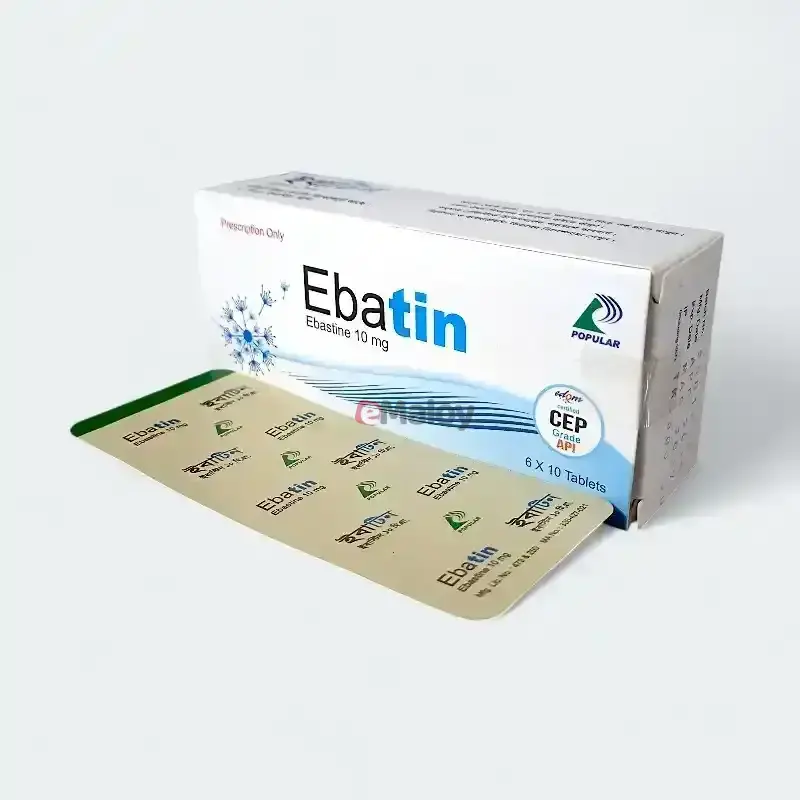
Ebatin 10: A Non-Sedating Antihistamine
Ebatin 10 contains Ebastine, a long-acting and selective H1-histamine receptor antagonist. It is used for the symptomatic treatment of allergic conditions like allergic rhinitis and chronic urticaria.
How Ebatin 10 Works (Pharmacology)
Ebastine is a selective H1-histamine receptor antagonist. After oral administration, it is rapidly absorbed and undergoes extensive first-pass metabolism, almost completely converting into its pharmacologically active acid metabolite, carebastine. This active metabolite then inhibits peripheral H1-histamine receptors, thereby reducing allergic reactions like itching, sneezing, and watery eyes. The inhibition of these receptors remains constant after repeated administration, providing sustained relief.
Key Indications & Benefits
Ebatin is indicated for the symptomatic treatment of:
- Seasonal allergic rhinitis: Allergic reactions that occur during specific seasons, often due to pollen.
- Perennial allergic rhinitis: Allergic reactions that occur year-round, often due to allergens like dust mites or pet dander.
- Chronic idiopathic urticaria: Chronic hives (itchy red welts on the skin) where the cause is unknown.
Dosage & Administration
Ebatin may be taken with or without food. Always consult a registered physician for medication use.
Tablet:
- Adults (more than 12 years of age): 10 mg (one tablet) once daily.
- Children (6-12 years of age): 5 mg (half tablet) once daily.
Syrup:
- Children (2-5 years of age): 2.5 ml once daily (up to 5 ml in severe cases such as Perennial Allergic Rhinitis).
- Children (6-12 years of age): 5 ml once daily (up to 10 ml in severe cases such as Perennial Allergic Rhinitis).
Important Considerations & Warnings
It is crucial to discuss your full medical history with your doctor before taking Ebatin 10.
Contraindications:
- Patients with a known hypersensitivity to Ebastine or any of its ingredients.
Side Effects:
- Most common: Headache, dry mouth, and drowsiness.
- Less commonly reported: Abdominal pain, dyspepsia (indigestion), nausea, and insomnia.
Interactions:
- Ketoconazole or Erythromycin: Concomitant use with Ebatin leads to increased plasma levels of Ebatin and a prolonged QTc interval (a heart rhythm abnormality). This combination should be used with caution or avoided.
- Ebatin does not significantly interact with the pharmacokinetics of theophylline, warfarin, cimetidine, or diazepam.
- The sedation effect of alcohol and diazepam may be enhanced when taken with Ebatin.
Overdose Effects:
- No clinically meaningful signs or symptoms were observed with doses up to 100 mg given once daily.
- There is no specific antidote for Ebatin overdose.
- In case of accidental overdose, gastric lavage (stomach pumping), monitoring of vital functions (including ECG), and symptomatic treatment should be carried out.
Storage Conditions
Store below 30°C at a cool and dry place, away from light. Keep out of reach of children.



Comment