Indications
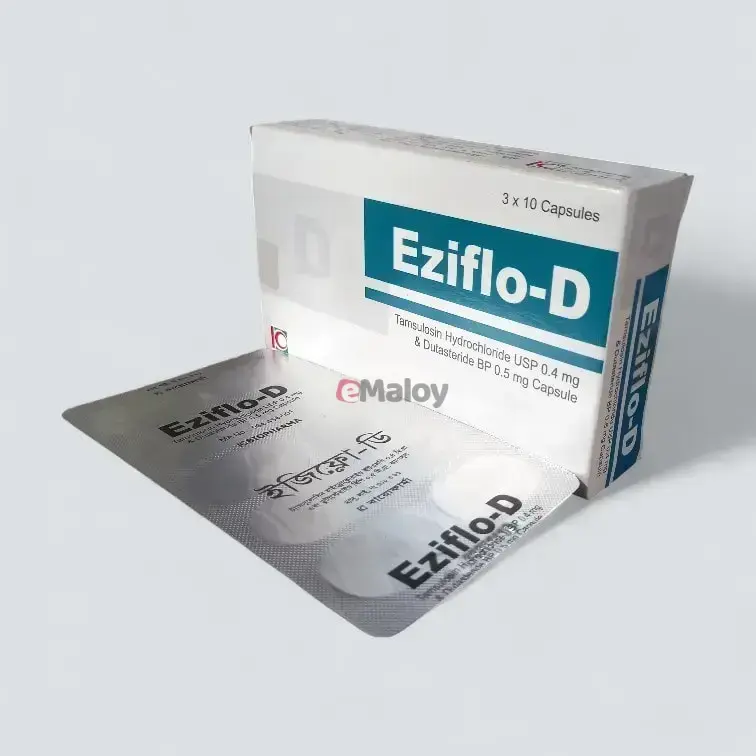
Eziflo-D is a combination of Tamsulosin and Dutasteride indicated for the treatment of benign prostatic hyperplasia (BPH). Its main uses are:
- Treating moderate to severe symptoms of BPH.
- Reducing the risk of acute urinary retention and the need for surgery in patients with BPH symptoms.
Pharmacology
Eziflo-D contains two active ingredients that work together to treat BPH:
- Tamsulosin: An alpha1-adrenoreceptor blocker. It works by relaxing the smooth muscles in the prostate and bladder neck, improving urine flow and reducing BPH symptoms (the dynamic component).
- Dutasteride: A dual 5-alpha reductase inhibitor. It works by blocking the conversion of testosterone to dihydrotestosterone (DHT), a hormone that causes prostate enlargement. This reduces the size of the prostate over time, addressing the underlying cause of BPH (the static component).
Dosage & Administration
- Adults (including elderly): One capsule (0.4 mg Tamsulosin and 0.5 mg Dutasteride) taken orally once daily, approximately 30 minutes after the same meal each day.
- The capsules should be swallowed whole and not chewed or opened.
- Renal impairment: No dosage adjustment is needed for patients with kidney problems.
- Hepatic impairment: Use with caution in patients with mild to moderate liver impairment. It is contraindicated in patients with severe liver impairment.
Interaction
- CYP3A4 inhibitors (e.g., ritonavir, indinavir, ketoconazole, oral erythromycin): These drugs can increase the concentration of Dutasteride in the blood.
- Blood pressure-lowering drugs (including other alpha-blockers and PDE5 inhibitors): Co-administration can lead to enhanced hypotensive (low blood pressure) effects.
- Cimetidine: Can increase the concentration of Tamsulosin in the blood.
- Warfarin: Caution should be exercised with concomitant use, as results from interaction studies are inconclusive.
- Grapefruit juice: Should not be taken with Rupatadine (a component mentioned in previous texts, but not in this one).
Contraindications
Eziflo-D is contraindicated in:
- Women, children, and adolescents.
- Patients with hypersensitivity to Dutasteride, other 5-alpha reductase inhibitors, Tamsulosin, soya, or peanut.
- Patients with a history of orthostatic hypotension (dizziness upon standing).
- Patients with severe liver impairment.
Side Effects
The most common side effects reported were:
- Impotence
- Decreased libido
- Breast disorders (enlargement and tenderness)
- Ejaculation disorders
- Dizziness
Pregnancy & Lactation
This drug is contraindicated for use by women. It can inhibit the development of male external genitalia if a woman carrying a male fetus is exposed to it. Patients should use a condom to prevent semen exposure to a pregnant or potentially pregnant partner. It is not known if the drugs are excreted in human milk.
Precautions & Warnings
- Cardiac Failure: Combination therapy may be associated with an increased risk of cardiac failure.
- Prostate Cancer Detection: The drug lowers PSA levels, which can interfere with prostate cancer detection. A new PSA baseline should be established after 6 months of treatment.
- High-grade Tumors: There is a potential link between Dutasteride and a higher incidence of high-grade prostate cancers, so patients should be regularly evaluated.
- Hypotension: Tamsulosin can cause a drop in blood pressure. Patients should be cautious about dizziness or fainting.
- Intraoperative Floppy Iris Syndrome (IFIS): This can occur during cataract surgery in patients on Tamsulosin. Therapy initiation is not recommended for patients scheduled for cataract surgery.
- Leaking Capsule: Women and children should avoid contact with leaking capsules as Dutasteride is absorbed through the skin.
- Breast Neoplasia: Male breast cancer has been reported in men taking Dutasteride. Any changes in breast tissue should be reported to a physician.
Overdose Effects
Overdose data for the combination is unavailable. Overdose symptoms for the individual components include:
- Dutasteride: Doses up to 40 mg/day have been administered without significant safety concerns.
- Tamsulosin: Overdose may cause acute hypotension, vomiting, and diarrhea. Treatment is supportive.
Therapeutic Class
Eziflo-D is classified as a medication for BPH/Urinary retention.
Storage Conditions
Store in a cool and dry place, protected from light.




Comment