Indications
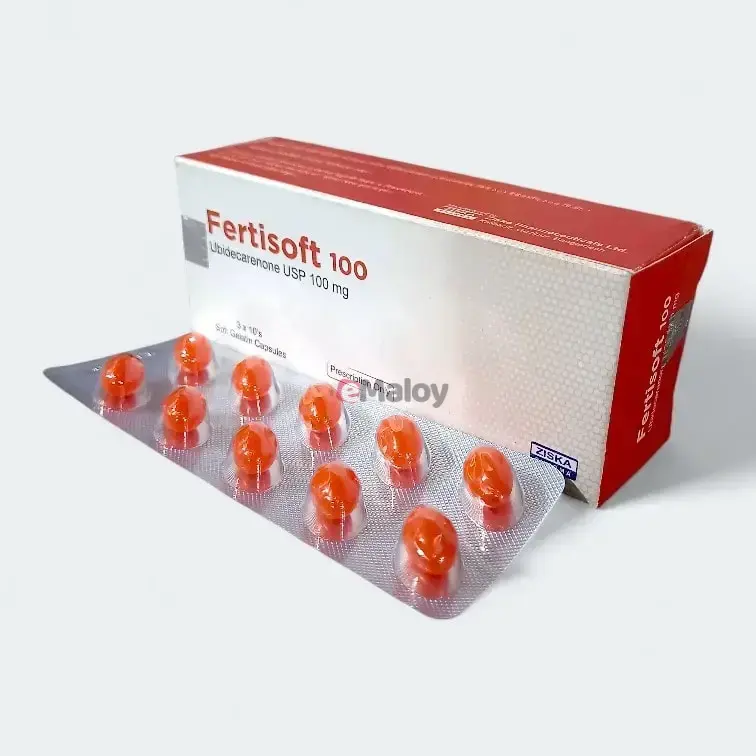
Fertisoft (Coenzyme Q10) is indicated for a wide range of conditions, including:
- Infertility: Female (e.g., poor ovarian reserve, PCOS) and male infertility.
- Neurological disorders: Myopathy, ataxia, muscular dystrophy, migraine, Parkinson's disease, and Alzheimer's disease.
- Cardiovascular disease: Congestive heart failure, hypertension, angina, and cardiomyopathy. It also offers heart protection during surgery.
- Other: Periodontal gum disease, diabetes, and to improve exercise performance. It is also used in the context of cancer and asthma, and for thyroid disorders.
Pharmacology
Coenzyme Q10 (Ubidecarenone) is a fat-soluble, vitamin-like substance found in every cell of the body. It is a vital component of the mitochondrial electron transport system, which is essential for cellular respiration and ATP production. The body's production of CoQ10 decreases with age. It is a lipophilic substance, absorbed more effectively when taken with food high in fat. It is distributed to various tissues with high metabolic activity, such as the heart, muscles, liver, kidney, and brain. The primary route of elimination is through bile, with about 60% of an oral dose excreted in the feces.
Dosage & Administration
- Co-enzyme Q10 deficiency: 150 mg daily.
- Mitochondrial disorders: 150-160 mg or 2 mg/kg/day.
- Heart failure (adults): 100 mg per day, divided into 2-3 doses.
- High blood pressure: 120-200 mg per day, divided into 2 doses.
- Migraine prevention: 100 mg three times daily.
- Parkinson's disease: 300 mg, 600 mg, 1200 mg, and 2400 mg per day in 3-4 divided doses.
- Male infertility: 200-300 mg per day. To minimize side effects, the total daily dose should be divided into smaller amounts taken two or three times a day.
Interaction
- Statins: Statins reduce the body's natural synthesis of CoQ10, so supplementation can help replenish levels without affecting the statin's efficacy.
- Warfarin: May reduce the effectiveness of Warfarin.
- Beta-blockers: Some beta-blockers, particularly propranolol, may inhibit CoQ10-dependent enzymes.
- Antidiabetic medications: May improve blood sugar control, potentially requiring dose adjustments for antidiabetic medications.
- Doxorubicin: May help mitigate the cardiotoxicity of Doxorubicin.
Contraindications
Coenzyme Q10 is contraindicated in patients with:
- Hypersensitivity to the active substance or any of the excipients.
- Patients scheduled for surgery within the next two weeks.
Side Effects
Coenzyme Q10 is generally safe, but can cause mild side effects such as stomach upset, loss of appetite, nausea, vomiting, and diarrhea. It may also cause allergic skin rashes.
Pregnancy & Lactation
Coenzyme Q10 should not be used during pregnancy and breastfeeding.
Precautions & Warnings
- Diabetes/Hypoglycemia: May lower blood sugar levels, so caution is advised in diabetic or hypoglycemic patients.
- Low Blood Pressure: May decrease blood pressure, so caution is advised in patients with low blood pressure or those taking blood pressure medications.
Therapeutic Class
Fertisoft is a herbal and nutraceutical supplement.
Storage Conditions
Keep in a dry place away from light and heat. Keep out of the reach of children.




Comment