


100% Original Products

Fast Delivery within 24-72 Hours

Cash On Delivery Available

24/7 Order Support via whatsapp
Indications:
This combination is indicated for:
Treatment of essential hypertension.
Management of hypertension co-existing with angina pectoris.
Use in post-myocardial infarction (MI) patients.
Treatment of refractory angina pectoris where nitrate therapy has failed.
(Registered physician's advice must be followed for medication use.)
Pharmacology:
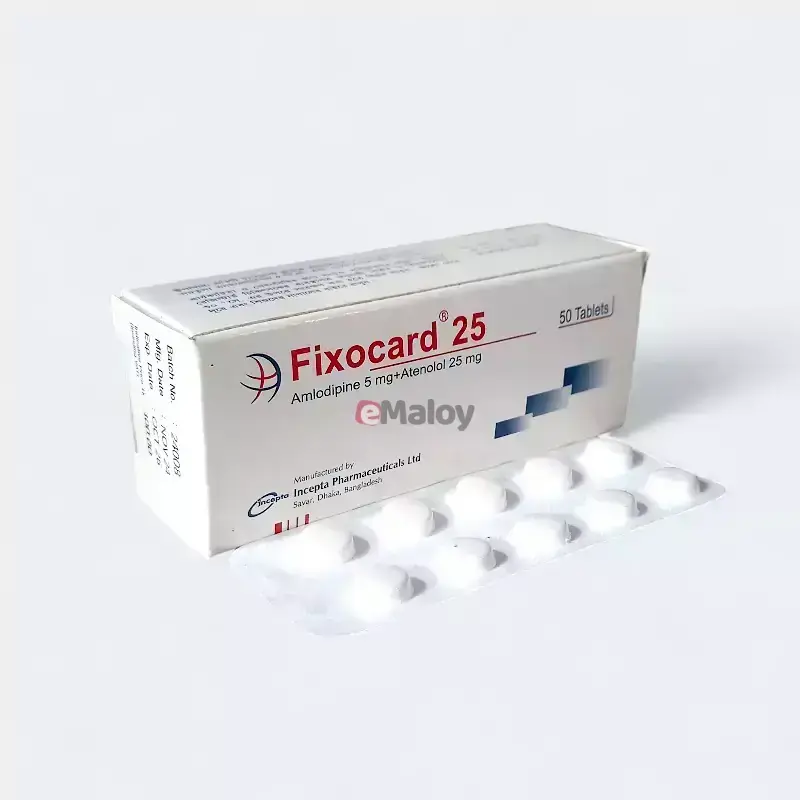
This product is a fixed-dose combination of Amlodipine (a dihydropyridine calcium channel blocker) and Atenolol (a cardioselective beta-blocker).
Amlodipine: Inhibits calcium ion influx into vascular and cardiac smooth muscle, with greater selectivity for vascular smooth muscle. It acts as a peripheral vasodilator, reducing peripheral vascular resistance and blood pressure. Amlodipine decreases vascular tone, reduces coronary vasoreactivity, and lowers cardiac oxygen demand by reducing afterload.
Atenolol: A dose-dependent cardioselective beta-blocker. It reduces blood pressure primarily by decreasing cardiac output, reducing plasma renin activity, and diminishing sympathetic outflow from the CNS. Atenolol also lowers myocardial oxygen demand through its negative inotropic and chronotropic effects.
Dosage & Administration:
The recommended starting dose is one Amlodipine/Atenolol 5 mg/25 mg tablet once daily.
If necessary, the dose may be increased to two tablets (5 mg/25 mg each) once daily, or as directed by the physician.
Dosage must be individualized based on patient response and tolerability.
(Registered physician's advice must be followed for medication use.)
Interactions:
Disopyramide: Atenolol may reduce disopyramide clearance by approximately 20%. Concurrent use may lead to additive negative inotropic effects.
Ampicillin: Doses of 1 gm or higher may reduce Atenolol plasma levels.
Oral Antidiabetics & Insulin: Beta-blockers can potentially decrease tissue sensitivity to insulin and inhibit insulin secretion. Atenolol has a lower propensity for these effects compared to non-selective beta-blockers.
Contraindications:
Hypersensitivity to Amlodipine, Atenolol, or any component; sinus bradycardia; second- or third-degree heart block; cardiogenic shock; hypotension; congestive heart failure; poor left ventricular function.
Side Effects:
The combination is generally well-tolerated. Commonly reported side effects include fatigue, headache, peripheral edema, nausea, drowsiness, anxiety, and depression.
Pregnancy & Lactation:
Pregnancy: Use only if the potential benefit justifies the potential risk to the fetus.
Lactation: This combination is not recommended for nursing mothers. If treatment is essential, breastfeeding should be discontinued.
Precautions & Warnings:
Bronchospasm: Use with caution in patients with a history of airway obstruction (e.g., asthma, COPD).
Renal Impairment: Caution is advised in severe renal impairment (creatinine clearance < 30 ml/min) due to reduced Atenolol excretion. Dose adjustment may be necessary.
Hepatic Impairment: Use cautiously in patients with severe hepatic impairment due to the potential for prolonged elimination of Amlodipine. Dose adjustment may be necessary.
Drug Withdrawal: Abrupt discontinuation should be avoided, especially in patients with coronary artery disease (which may be unrecognized). Withdrawal should be gradual and monitored.
Overdose:
Symptoms may include hypotension and, less frequently, congestive cardiac failure. Management includes gastric lavage or activated charcoal administration to remove unabsorbed drug. Treatment is primarily supportive and symptomatic.
Therapeutic Class:
Combined Antihypertensive Preparations.
Your email address will not be published. Required fields are marked *
Please login to write review!
Looks like there are no reviews yet.
Comment