Indications
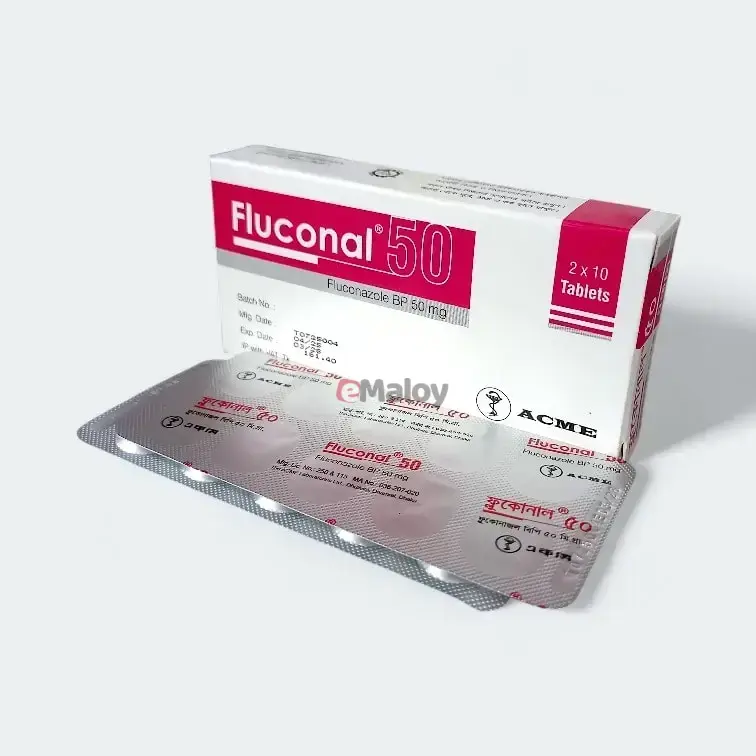
Fluconal (Fluconazole) is an azole antifungal medication indicated for the treatment and prevention of various fungal infections, including:
- Candidal infections: Vaginal, oropharyngeal, and esophageal candidiasis, as well as invasive and systemic candidiasis.
- Tinea infections: Tinea corporis, tinea cruris, tinea pedis, and Pityriasis versicolor.
- Other infections: Kerion, onychomycosis, cryptococcal infections (including meningitis), fungal urinary tract infections, coccidioidomycosis, and histoplasmosis.
- Prophylaxis: Prevention of cryptococcal meningitis and fungal infections in immunocompromised patients, including neutropenic cancer patients.
Pharmacology
Fluconazole is a triazole antifungal agent that works by inhibiting fungal cytochrome P-450 dependent enzymes. This enzyme system is essential for the synthesis of ergosterol, a crucial component of the fungal cell membrane. By inhibiting this process, Fluconazole leads to the death of the fungal cell.
Dosage & Administration
- Adults:
- Vaginal Candidiasis: 150 mg as a single dose.
- Oropharyngeal Candidiasis: 200 mg on day 1, then 100 mg daily for 14 days.
- Systemic/Invasive Infections: 400 mg on day 1, then 200-400 mg daily.
- Tinea Infections: Doses and durations vary. For example, Tinea corporis is 150 mg weekly for 4-6 weeks.
- Children (over 1 year):
- Superficial Candidiasis: 1-2 mg/kg daily.
- Systemic/Invasive Infections: 3-6 mg/kg daily. Doses up to 12 mg/kg daily (max 400 mg) have been used for serious infections in children aged 5-13.
- Renal Impairment: No dose adjustment is needed for single-dose therapy. For multiple-dose therapy, the dosage interval should be adjusted based on creatinine clearance. For example, a creatinine clearance of 21-40 ml/min requires a 48-hour dosage interval.
Interaction
- Anticoagulants (Warfarin): May increase prothrombin time; careful monitoring is recommended.
- Oral Sulfonylureas: May prolong their half-life, potentially causing hypoglycemia.
- Hydrochlorothiazide: Increases fluconazole plasma concentrations.
- Phenytoin: May increase phenytoin levels to a clinically significant degree.
- Rifampicin: Decreases fluconazole's half-life and AUC; an increase in the fluconazole dose may be necessary.
- Theophylline: May decrease the clearance of theophylline; monitor for signs of toxicity.
- Cyclosporin: May slowly increase cyclosporin concentrations; monitoring is recommended.
Contraindications
Fluconazole should not be used in patients with a known hypersensitivity to Fluconazole or other related triazole compounds.
Side Effects
Fluconal is generally well-tolerated. The most common side effects are gastrointestinal, including nausea, abdominal discomfort, diarrhea, and flatulence. Other side effects such as rash are rare.
Pregnancy & Lactation
- Pregnancy: Adverse fetal effects have been observed in animals at high doses. It should not be used in pregnant women or women of child-bearing potential unless adequate contraception is employed.
- Lactation: Fluconazole is found in breast milk at concentrations similar to plasma, so its use in nursing mothers is not recommended.
Precautions & Warnings
- Hepatic/Renal Function: Abnormalities in liver and renal function tests have been observed, particularly in seriously ill patients. The risk-benefit ratio should be assessed if a significant rise in liver enzymes occurs.
- Skin Reactions: Rarely, patients may develop severe exfoliative cutaneous reactions such as Stevens-Johnson Syndrome. Discontinue the drug if a rash develops.
Overdose Effects
In the event of an overdose, supportive measures and symptomatic treatment, including gastric lavage, are recommended. Hemodialysis can reduce plasma levels by approximately 50%.
Therapeutic Class
Fluconal is a drug for subcutaneous and mycoses.
Storage Conditions
Keep in a dry place, away from light and heat. Keep out of the reach of children.



Comment