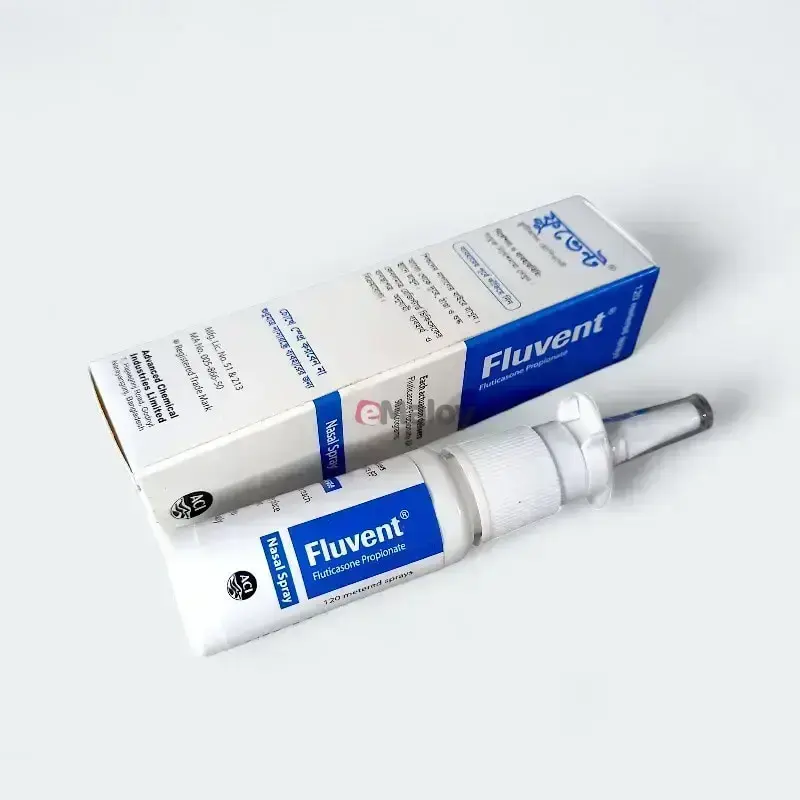
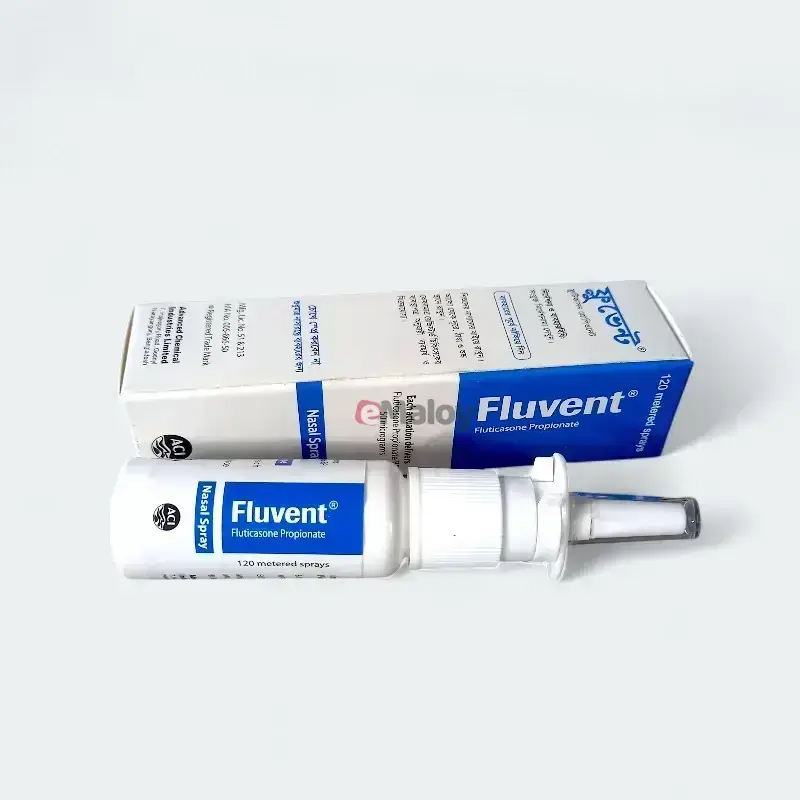
Fluvent (Fluticasone Propionate): A Nasal Steroid for Rhinitis
Fluvent contains Fluticasone Propionate, a synthetic trifluorinated corticosteroid with anti-inflammatory activity. It is indicated for the prophylaxis and treatment of seasonal and perennial allergic rhinitis, including hay fever. Its action is primarily on the nasal mucosa, with minimal systemic effects. Fluvent belongs to the therapeutic class of Nasal Steroid Preparations.
How Fluvent Works (Pharmacology)
Fluticasone Propionate's mechanism of action is to produce anti-inflammatory and vasoconstrictor effects in the nasal passages:
- Anti-inflammatory effects: While the exact mechanism is not fully known, it is believed to reduce the number of inflammatory cells (e.g., basophils, eosinophils) and their activity in the nasal mucosa.
- Vasoconstrictor effects: It inhibits the dilation and permeability of capillaries, which helps to reduce swelling and congestion.
- Reduces Symptoms: These actions work together to reduce the inflammation that causes symptoms like sneezing, nasal congestion, and a runny nose.
Key Indications & Benefits
Fluvent is indicated for:
- Prophylaxis and treatment of seasonal allergic rhinitis, including hay fever.
- Prophylaxis and treatment of perennial rhinitis.
Dosage & Administration
The dosage of Fluvent varies with age and should be used at regular intervals for maximum effectiveness. It is administered as a spray into each nostril.
- Adults & children over 12 years: The usual dose is two sprays in each nostril once a day. The dose can be increased to two sprays in each nostril twice daily, but should not exceed four sprays in total per day.
- Children (4-11 years): One spray in each nostril once a day. The maximum daily dose should not exceed four sprays.
- Children under 4 years: The safety and effectiveness have not been established.
Detailed instructions on how to use and clean the nasal spray device are also provided.
Important Considerations & Warnings
It is crucial to discuss your full medical history with your doctor before using Fluvent.
Contraindications:
- Known hypersensitivity to any of its ingredients.
Side Effects:
- Common: Drying of the nose and throat, unpleasant taste and smell, and an increase in the incidence of nosebleeds.
- Rare: Wheezing, nasal septum perforation, cataracts, glaucoma, and increased intraocular pressure have been reported with intranasal corticosteroids.
Pregnancy & Lactation:
- Pregnancy: It should be used during pregnancy only if the potential benefit justifies the potential risk to the fetus.
- Lactation: It is unknown if it is excreted in human breast milk, but caution should be exercised as other corticosteroids are.
Precautions & Warnings:
- Systemic Effects: While systemic effects are minimal at recommended doses, the potential risk increases with larger doses. Avoid using more than the recommended dosage.
- Long-Term Use: Rare instances of wheezing, nasal septum perforation, cataracts, glaucoma and increased intraocular pressure have been reported with long-term use of intranasal corticosteroids.
Storage Conditions
Store in a cool and dry place, protected from light. Keep out of the reach of children.




Comment