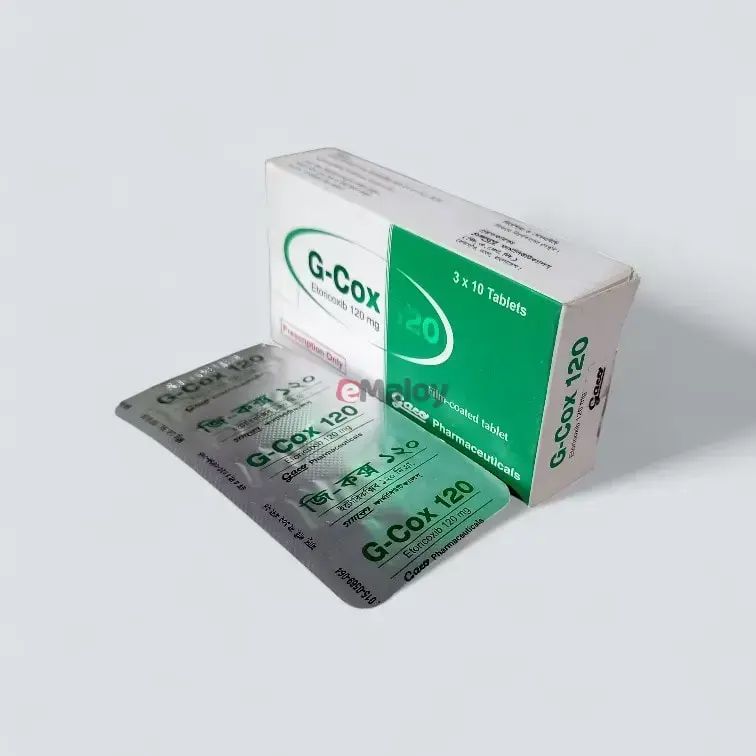
G-Cox (Etoricoxib): A COX-2 Specific NSAID
G-Cox contains Etoricoxib, a potent and selective cyclooxygenase-2 (COX-2) inhibitor. It belongs to the class of non-steroidal anti-inflammatory drugs (NSAIDs) and is used for the symptomatic relief of pain and inflammation. Unlike nonselective NSAIDs, it specifically targets the COX-2 enzyme, which is primarily responsible for pain and inflammation, while having less effect on COX-1, which is involved in stomach protection.
How G-Cox Works (Pharmacology)
Etoricoxib's mechanism is based on selective enzyme inhibition:
- COX-2 Inhibition: It potently and specifically inhibits the COX-2 enzyme. COX-2 is primarily responsible for producing prostaglandins that cause pain, inflammation, and fever.
- Reduced Side Effects: By selectively inhibiting COX-2, Etoricoxib decreases these symptoms with a reduced potential for gastrointestinal toxicity and effects on platelet aggregation compared to nonselective NSAIDs.
- Minimal COX-1 Inhibition: At clinical doses, it does not inhibit the COX-1 enzyme, which is responsible for protective functions in the stomach.
Key Indications & Benefits
G-Cox is indicated for the symptomatic relief of:
- Osteoarthritis (OA).
- Rheumatoid arthritis (RA).
- Ankylosing spondylitis.
- Pain and inflammation associated with acute gouty arthritis.
- Short-term treatment of moderate pain associated with dental surgery.
Dosage & Administration
The dosage of G-Cox varies depending on the condition. The lowest effective dose should be used for the shortest possible duration to minimize cardiovascular risks.
- Osteoarthritis: 30 mg once daily, may be increased to 60 mg once daily if needed.
- Rheumatoid Arthritis & Ankylosing Spondylitis: 90 mg once daily.
- Acute Gouty Arthritis: 120 mg once daily, for a maximum of 8 days.
- Postoperative Dental Pain: 90 mg once daily, for a maximum of 3 days.
Important Considerations & Warnings
It is crucial to discuss your full medical history with your doctor before taking G-Cox.
Contraindications:
- Hypersensitivity to Etoricoxib or any excipients.
- Active peptic ulceration or gastrointestinal bleeding.
- History of allergic-type reactions to aspirin or other NSAIDs.
- Pregnancy and lactation.
- Severe hepatic dysfunction, severe renal impairment, inflammatory bowel disease, or congestive heart failure (NYHA II-IV).
- Uncontrolled hypertension or established cardiovascular/cerebrovascular disease.
- Children and adolescents under 16 years of age.
Side Effects:
- Common: Palpitation, fatigue, flu-like symptoms, dry mouth, taste disturbance, abdominal pain.
- Less common: Atrial fibrillation, chest pain, cough, anxiety, myalgia, arthralgia.
- Rare: Confusion and hallucinations.
Pregnancy & Lactation:
- Contraindicated in women who are pregnant, breastfeeding, or attempting to conceive.
Precautions & Warnings:
- Cardiovascular Risks: Use with caution in patients with significant risk factors for cardiovascular events (e.g., hypertension, high cholesterol, diabetes, smoking).
- Gastrointestinal Risks: Caution is advised in elderly patients or those with a history of GI disease.
- Renal Function: May impair renal function. Monitor patients with pre-existing renal impairment.
- Liver Function: Monitor patients with signs of liver dysfunction. Discontinue if signs of hepatic insufficiency occur.
- Hypersensitivity: Discontinue at the first sign of rash or other allergic reactions.
- Masks Inflammation: May mask fever and other signs of inflammation.
Drug Interactions:
- Oral Anticoagulants (e.g., Warfarin): May increase prothrombin time.
- Diuretics, ACE Inhibitors, Angiotensin II Antagonists: May reduce their effect.
- Aspirin: Can be used concomitantly for cardiovascular prophylaxis, but increases the risk of GI complications.
- Cyclosporin and Tacrolimus: May increase nephrotoxic effects.
- Lithium: Decreases lithium excretion, increasing its plasma levels.
Overdose Effects
- Overdoses up to 500 mg did not show significant toxicity.
- Treatment: Symptomatic and supportive measures should be used.
Storage Conditions
Store at a temperature below 30°C, protected from light and moisture. Keep out of reach of children.



Comment