Indications
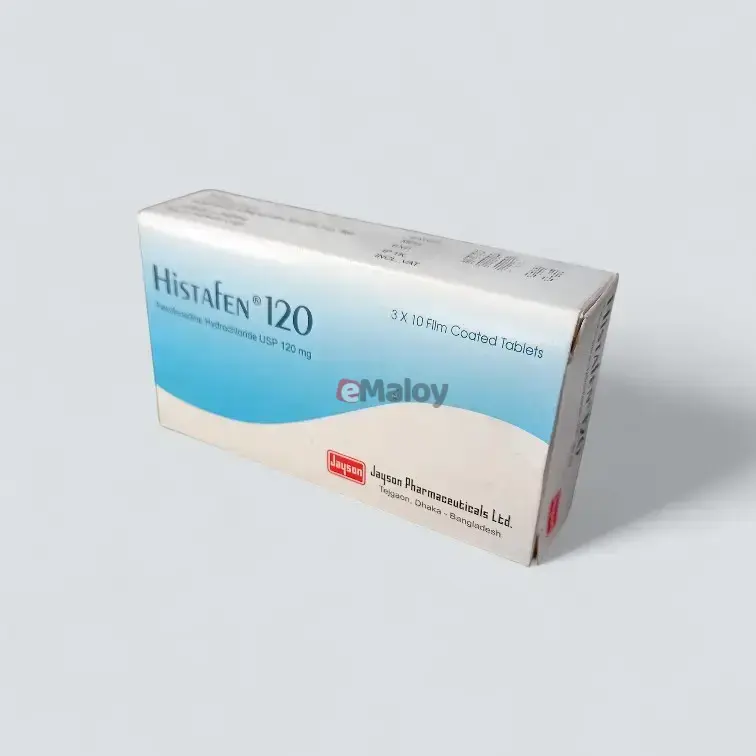
Histafen (Fexofenadine) is a non-sedating antihistamine that provides relief for:
- Allergic Rhinitis: It effectively treats symptoms of seasonal and perennial allergic rhinitis, such as sneezing, runny nose, itchy eyes, and an itchy throat, in adults and children 12 years and older.
- Chronic Idiopathic Urticaria: It significantly reduces the signs and symptoms of chronic hives and itching in adults and children 12 years and older.
Pharmacology
Histafen works by acting as a selective H1-histamine receptor inverse agonist. This means it binds to H1 receptors and keeps them inactive, preventing histamine from causing allergic symptoms. Because it doesn't cross the blood-brain barrier, it is unlikely to cause the significant drowsiness often associated with older antihistamines.
Dosage & Administration
- Adults & Children 12 and older: The typical dose is 60 mg twice daily or 120 mg or 180 mg once daily. For those with impaired kidney function, a dose of 60 mg once daily is recommended.
- Children 6-11 years: 30 mg twice daily or 60 mg once daily. With kidney impairment, the dose is 30 mg once daily.
- Children 6 months to 11 years (Suspension):
- 2-11 years: 30 mg (5 ml) twice daily.
- 6 months to <2 years: 15 mg (2.5 ml) twice daily.
- For children in these age groups with kidney impairment, the dose is given once daily instead of twice.
Interactions
- Combining Histafen with certain antibiotics or antifungal medications like erythromycin or ketoconazole can increase the levels of fexofenadine in the blood.
- Taking antacids containing aluminum and magnesium hydroxide within 2 hours of Histafen can reduce its effectiveness. It's best to separate these medications by at least 2 hours.
Contraindications & Side Effects
- Contraindications: Do not use if you have a known hypersensitivity to fexofenadine or any of its ingredients.
- Side Effects: The most common side effects are mild and similar to those of a placebo, including headache, drowsiness, dizziness, and nausea. Less common, but more serious, side effects reported include hypersensitivity reactions, insomnia, and heart palpitations.
Precautions
- Special Populations: Limited data exists for use in elderly patients and those with renal or hepatic impairment, so it should be used with care in these groups.
- Cardiovascular Disease: Patients with a history of heart conditions should be aware that antihistamines have been associated with heart-related adverse reactions like tachycardia.
- Pregnancy & Lactation: Histafen should be avoided during pregnancy unless absolutely necessary. It's not recommended for nursing mothers as fexofenadine can pass into breast milk.
Overdose
An overdose may lead to dizziness, drowsiness, fatigue, and dry mouth. There is no specific antidote, so treatment is focused on managing symptoms. Hemodialysis is not effective at removing the drug from the blood.




Comment