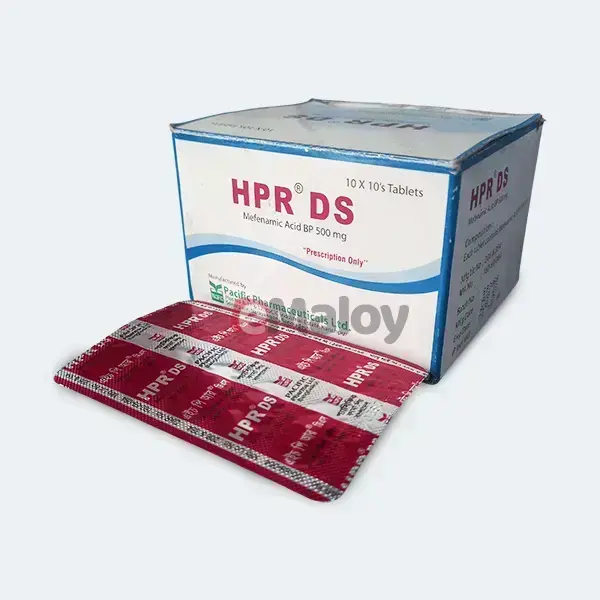
HPR DS 500 is a tablet containing Mefenamic Acid 500 mg. It is a non-steroidal anti-inflammatory drug (NSAID) and is manufactured by Pacific Pharmaceuticals Ltd. in Bangladesh.
Indications
HPR DS 500 is used to relieve mild to moderate pain, inflammation, and fever. It is indicated for:
- Fever
- Headache, including Migraine
- Toothache
- Dysmenorrhoea (painful menstrual periods)
- Menorrhagia (excessive menstrual bleeding)
- Mild to moderate pain in rheumatoid arthritis and osteoarthritis
- Traumatic pain
- Low-back pain
- Juvenile chronic arthritis in children
Pharmacology
Mefenamic acid is an NSAID that exhibits analgesic (pain-relieving), anti-inflammatory, and antipyretic (fever-reducing) activities. Its action is due to its dual effect on prostaglandins. It inhibits the enzymes of prostaglandin synthetase (which produce prostaglandins) and also antagonizes the actions of prostaglandins at their receptor sites. Prostaglandins are chemicals that play a key role in pain, inflammation, and fever.
Dosage and Administration
HPR DS 500 tablets should be taken orally, preferably with food or milk to minimize gastrointestinal upset. Treatment should generally not be continued for more than 7 days, unless advised by a physician.
- Adults: 500 mg (1 tablet) up to three times per day (totaling 1.5 gm daily) with meals. The dosage may sometimes be reduced to 250 mg (half a tablet or lower strength tablet) three times daily.
- For Menorrhagia: 500 mg three times daily with meals, starting from the onset of menses and continued as per the physician's judgment.
Side Effects
Like other NSAIDs, HPR DS 500 can cause side effects, which are generally dose-dependent and vary in severity. The most frequently reported adverse effects (occurring in approximately 1-10% of patients) are gastrointestinal.
- Common (Gastrointestinal): Abdominal pain, constipation, diarrhea, dyspepsia (indigestion), flatulence, nausea, vomiting, gastrointestinal ulcers.
- Less common/Other: Dizziness, altered renal function (kidney problems), pruritus (itching), rashes.
- Serious (Rare but possible):
- Serious cardiovascular thrombotic events (e.g., heart attack, stroke), especially with long-term use and higher doses.
- Gastrointestinal bleeding, ulceration, and perforation, which can be fatal.
- Kidney problems or worsening of existing kidney disease.
- Liver problems (e.g., elevated liver enzymes).
- Blood disorders (e.g., hemolytic anemia, thrombocytopenia).
- Severe skin reactions.
Contraindications
HPR DS 500 is contraindicated in patients with:
- Known hypersensitivity to Mefenamic Acid, aspirin, or other NSAIDs (due to potential for bronchospasm, skin rashes, or other allergic reactions).
- Active peptic ulcer or inflammatory bowel disease.
- Severe hepatic (liver) or renal (kidney) impairment.
- Patients with a history of gastrointestinal bleeding or perforation related to previous NSAID therapy.
- Known cardiovascular disease or risk factors for cardiovascular disease, especially in the setting of peri-operative pain in the setting of coronary artery bypass graft (CABG) surgery.
Precautions and Warnings
- Cardiovascular Risk: NSAIDs may increase the risk of serious cardiovascular thrombotic events, myocardial infarction, and stroke, which can be fatal. This risk may increase with duration of use.
- Gastrointestinal Risk: NSAIDs cause an increased risk of serious gastrointestinal adverse events including bleeding, ulceration, and perforation of the stomach or intestines, which can be fatal. These events can occur at any time during use and without warning symptoms.
- Renal/Hepatic Impairment: Use with caution in patients with mild to moderate renal or hepatic impairment. Close monitoring of kidney and liver function is advised.
- Fluid Retention & Edema: Use with caution in patients with hypertension or heart failure, as NSAIDs can cause fluid retention and edema.
- Asthma: Use with caution in patients with asthma or other allergic disorders, as NSAIDs can precipitate bronchospasm.
- Blood Disorders: Discontinue if diarrhea, rashes, cholestatic jaundice, thrombocytopenia (low platelet count), or hemolytic anemia occur.
- Elderly: Elderly patients are at greater risk for serious adverse events.
Pregnancy and Lactation
- Pregnancy (US FDA Pregnancy Category C; Category D in the third trimester or near delivery): The safety of mefenamic acid during pregnancy has not been established. It should be used only if the potential benefits justify the potential risks to the fetus. Avoid use in the third trimester due to potential effects on the fetal cardiovascular system (premature closure of ductus arteriosus).
- Lactation: Trace amounts of mefenamic acid may be present in breast milk. Due to potential adverse effects on the infant's cardiovascular system, mefenamic acid should generally be avoided by nursing mothers.
Drug Interactions
- Aspirin and other NSAIDs: Concomitant use is generally not recommended due to increased risk of side effects.
- Anticoagulants (e.g., Warfarin): Mefenamic acid can inhibit platelet aggregation and may prolong prothrombin time, increasing the risk of bleeding.
- Diuretics and ACE Inhibitors: NSAIDs may reduce the natriuretic effect of diuretics and the antihypertensive effect of ACE inhibitors.
- Lithium: NSAIDs can increase plasma lithium levels.
- Methotrexate: NSAIDs can increase methotrexate levels, leading to toxicity.
- Cyclosporine/Tacrolimus: Increased risk of nephrotoxicity.
- Corticosteroids: Increased risk of gastrointestinal ulceration or bleeding.
Storage Conditions
Store at or below 30°C, protected from light and moisture. Keep out of reach of children.
Note: This information is for general knowledge and informational purposes only and does not substitute professional medical advice. Always consult your doctor or pharmacist for specific instructions and guidance regarding your medication.



Comment