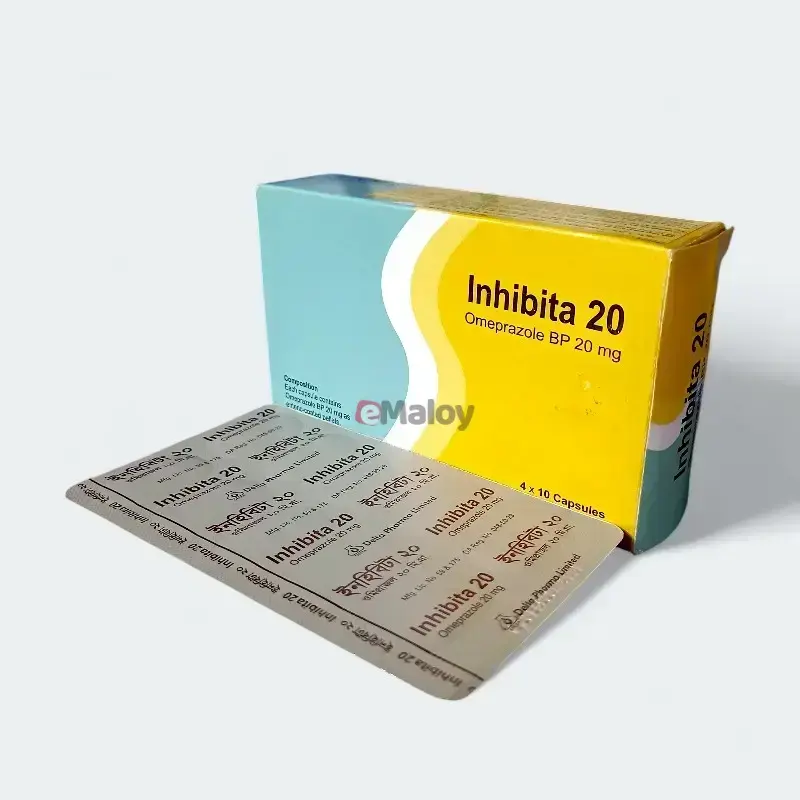
Inhibita (Omeprazole): A Proton Pump Inhibitor (PPI)
Inhibita contains Omeprazole, a substituted benzimidazole and a proton pump inhibitor. It is indicated for the treatment of various acid-related conditions, including gastric and duodenal ulcers, NSAID-associated ulcers, and gastro-esophageal reflux disease (GERD). It is also used for the long-term management of acid reflux, Zollinger-Ellison syndrome, acid-related dyspepsia, and for the eradication of Helicobacter pylori. Inhibita belongs to the therapeutic class of Proton Pump Inhibitors.
How Inhibita Works (Pharmacology)
Omeprazole's mechanism of action is to inhibit gastric acid secretion at its source:
- Blocks the H+/K+ ATPase: It works by blocking the hydrogen-potassium-adenosine triphosphatase (H+/K+ ATPase) enzyme system, commonly known as the "proton pump."
- Inhibits Acid Secretion: This enzyme is found in the gastric parietal cells and is responsible for the final step of acid production. By inhibiting this pump, omeprazole effectively stops the secretion of gastric acid.
- Long-lasting Effect: The onset of the anti-secretory effect occurs within one hour, with the maximum effect within two hours, and the inhibition of secretion lasts up to 72 hours. When the drug is discontinued, secretory activity returns gradually over 3 to 5 days.
Key Indications & Benefits
Inhibita is indicated for:
- Benign gastric and duodenal ulcers.
- NSAID-associated ulcers and their prophylaxis.
- Gastro-esophageal reflux disease (GERD) and its long-term management.
- Acid-related dyspepsia.
- Severe ulcerating reflux esophagitis.
- Prophylaxis of acid aspiration during general anesthesia.
- Zollinger-Ellison syndrome.
- Eradication of Helicobacter pylori-induced peptic ulcer (as part of a combination therapy).
Dosage & Administration
Inhibita is available in both oral and intravenous forms. The dosage and duration of treatment vary depending on the condition. Always consult a registered physician for specific dosage instructions.
- Gastric and Duodenal Ulcer (Oral): 20 mg once daily for 4 to 8 weeks, with higher doses (40 mg) for severe cases.
- GERD (Oral): 20 mg once daily for 4 weeks, with maintenance doses of 20 mg daily.
- Zollinger-Ellison Syndrome (Oral): Initially 60 mg once daily, with a usual range of 20-120 mg daily. Doses over 80 mg should be divided.
- H. pylori Eradication: 20 mg twice daily in combination with specific antimicrobial agents for one week.
- Pediatric Use: For severe ulcerating reflux esophagitis in children over one year, the dose is weight-based (10-40 mg daily for 4-12 weeks).
Important Considerations & Warnings
It is crucial to discuss your full medical history with your doctor before taking Inhibita.
Contraindications:
- Known hypersensitivity to Omeprazole.
- When gastric ulcer is suspected, the possibility of malignancy should be excluded before treatment, as Omeprazole may mask symptoms and delay diagnosis.
Side Effects:
- Generally mild and reversible.
- Common: Diarrhea, headache, constipation, nausea/vomiting, flatulence, and abdominal pain.
- Rare: Skin rashes, photosensitivity, bullous eruptions, angioedema, and alopecia.
- Other reactions: Dizziness, somnolence, insomnia, mental confusion (in severely ill patients), and myalgic symptoms.
Pregnancy & Lactation:
- Pregnancy: Results from three studies show no adverse effects on pregnancy. Omeprazole can be used during pregnancy.
- Lactation: It is unknown if it passes into breast milk. Breastfeeding should be discontinued if the use of omeprazole is considered essential.
Precautions & Warnings:
- Clopidogrel: Avoid concomitant use with clopidogrel, as the pharmacological activity of clopidogrel is reduced.
- Osteoporosis: Observational studies suggest that PPI therapy may be associated with an increased risk of osteoporosis-related fractures.
- Atrophic Gastritis: This has been noted in some patients on long-term treatment.
- Methotrexate: Concomitant use with methotrexate may lead to toxicities.
Drug Interactions:
- Reduced Absorption: The absorption of drugs where gastric pH is important for bioavailability (e.g., ketoconazole) may be reduced.
- Increased Levels: It can delay the elimination of diazepam, phenytoin, and warfarin, so monitoring is recommended.
- Digoxin: Simultaneous treatment with digoxin may lead to a 10% increase in digoxin's bioavailability.
- H. pylori Eradication: Concomitant administration with clarithromycin increases the plasma concentrations of both drugs, which is considered a useful interaction.
Storage Conditions
Keep in a dry place, away from light and heat. Keep out of the reach of children.




Comment