Indications
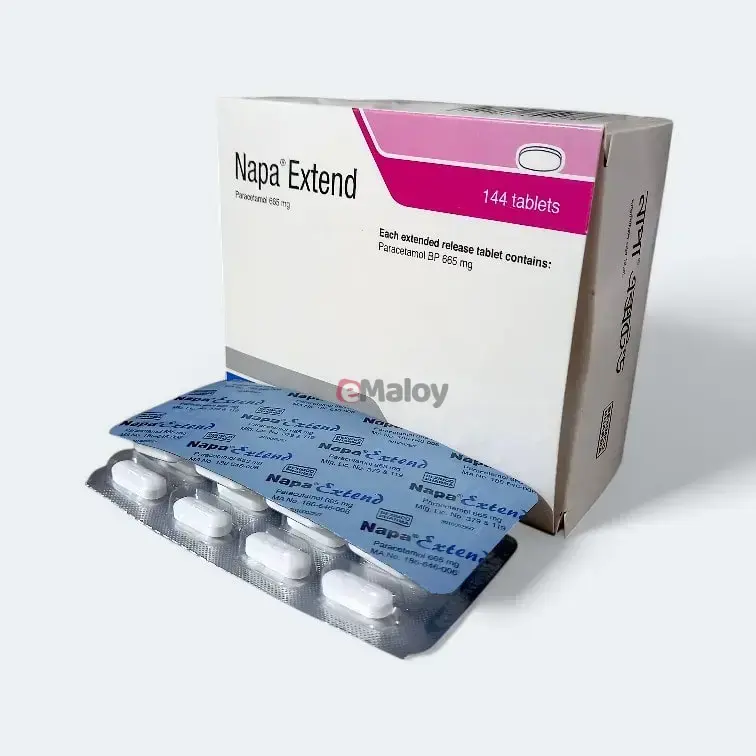
Napa Extend (Paracetamol) is indicated for fever, common cold and influenza, and various types of pain including:
- Headache, toothache, earache, bodyache, myalgia, neuralgia, and dysmenorrhea.
- Sprains, colic pain, back pain, post-operative pain, and postpartum pain.
- Inflammatory pain and post-vaccination pain in children. It is also indicated for rheumatic and osteoarthritic pain and stiffness of joints.
Pharmacology
Paracetamol (Acetaminophen) primarily acts in the central nervous system (CNS) to increase the pain threshold and produce an antipyretic (fever-reducing) effect. It is thought to work by inhibiting cyclooxygenase (COX) enzymes, particularly COX-3, which are involved in prostaglandin synthesis. Unlike NSAIDs, it has weak anti-inflammatory activity in peripheral tissues.
Dosage & Administration
- Extended Release Tablet:
- Adults & Children over 12 years: Two tablets, swallowed whole, every 6 to 8 hours. The maximum is 6 tablets in 24 hours. Do not crush the tablet.
- Tablet (Standard):
- Adults: 1-2 tablets every 4-6 hours, up to a maximum of 4 gm daily.
- Children (6-12 years): ½ to 1 tablet 3-4 times daily.
- Syrup/Suspension:
- Children (3 months to below 1 year): ½ to 1 teaspoonful 3-4 times daily.
- Children (1-5 years): 1-2 teaspoonfuls 3-4 times daily.
- Suppository:
- Adults & children over 12 years: 0.5-1 gm 4 times daily.
- IV Infusion:
- Adults > 50 kg: 1000 mg every 6 hours or 650 mg every 4 hours.
Interaction
- Alcohol: Can increase the hepatotoxicity of a Napa Extend overdose.
- Barbiturates, tricyclic antidepressants, and anticonvulsants: These may diminish the ability to metabolize large doses of Napa Extend.
- Oral steroid contraceptives: May increase the clearance of Napa Extend.
Contraindications
Napa Extend is contraindicated in patients with known hypersensitivity to Paracetamol.
Side Effects
Side effects are usually mild. Rare haematological reactions have been reported, including thrombocytopenia and agranulocytosis. Pancreatitis, skin rashes, and other allergic reactions can occur occasionally.
Pregnancy & Lactation
- Pregnancy: Epidemiological studies have shown no ill effects when used at the recommended dosage, but pregnant patients should consult a doctor.
- Lactation: The drug is excreted in breast milk in clinically insignificant amounts, and it does not contraindicate breastfeeding.
Precautions & Warnings
- Liver/Kidney Impairment: Use with caution in patients with severe renal or hepatic impairment. The risk of overdose is higher in those with non-cirrhotic alcoholic liver disease.
- Overdose: Do not exceed the stated dose. Overdose can lead to severe hepatic injury and death.
- Anaphylaxis: Life-threatening anaphylaxis has been reported. Discontinue immediately if symptoms of allergy or hypersensitivity occur.
Use in Special Populations
- Geriatric Use: No significant differences in safety or effectiveness have been noted between elderly and younger patients.
- Hepatic Impairment: Contraindicated in severe hepatic impairment. Use with caution, and a reduced daily dose may be necessary.
- Renal Impairment: A reduced total daily dose and longer dosing intervals may be needed in severe renal impairment (creatinine clearance < 30 ml/min).
Overdose Effects
Liver damage is possible with an overdose of 10 g or more in adults. Symptoms in the first 24 hours include pallor, nausea, vomiting, anorexia, and abdominal pain. Liver damage may become apparent 12-48 hours later. Treatment with activated charcoal within 1 hour or N-acetylcysteine within 8 hours is crucial.
Therapeutic Class
Napa Extend is a non-opioid analgesic.
Storage Conditions
Keep in a dry place away from light and heat. Keep out of the reach of children.



Comment