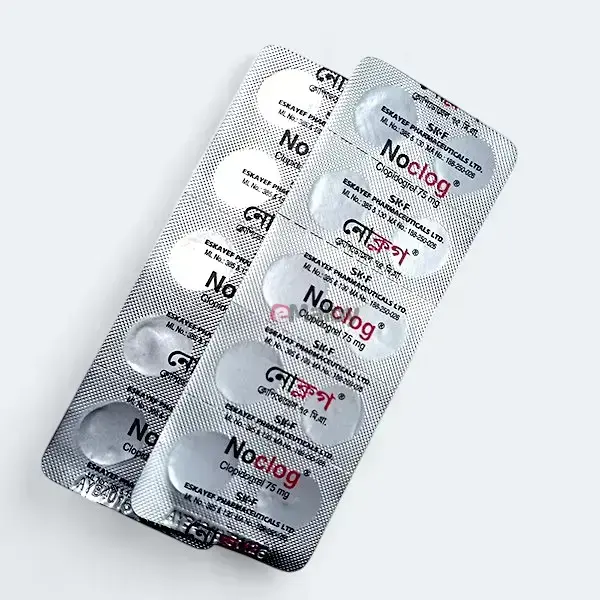
Noclog 75 is a brand name for a medication containing Clopidogrel Bisulphate 75 mg . It is manufactured by Eskayef Pharmaceuticals Ltd. in Bangladesh.
What it is: Clopidogrel is an antiplatelet medication, often referred to as a blood thinner. It helps to prevent the formation of harmful blood clots.
Indications:
Noclog 75 is indicated to reduce the risk of serious heart and blood vessel problems in adults with:
- Acute Coronary Syndrome (ACS): This includes unstable angina (severe chest pain) and non-ST-segment elevation myocardial infarction (NSTEMI), as well as ST-segment elevation myocardial infarction (STEMI).
- Recent Myocardial Infarction (MI) or Stroke.
- Established Peripheral Arterial Disease (poor circulation in the legs).
It works by preventing platelets (a type of blood cell) from sticking together and forming clots that can block arteries.
Dosage and Administration:
The dosage of Noclog 75 depends on the condition being treated:
- For Acute Coronary Syndrome (ACS): A loading dose of 300 mg (usually 4 tablets) is often given initially, followed by a maintenance dose of 75 mg once daily. Starting without a loading dose will delay the antiplatelet effect.
- For Recent MI, Recent Stroke, or Established Peripheral Arterial Disease: The usual dose is 75 mg once daily, without a loading dose.
Noclog 75 tablets are taken orally, with or without food. It is important to take it at the same time each day.
Contraindications:
Noclog 75 is contraindicated in patients with:
- Hypersensitivity to clopidogrel or any other component of the product.
- Active pathological bleeding, such as a peptic ulcer or bleeding in the brain.
Side Effects:
Noclog 75 is generally well-tolerated. Common side effects may include:
- Bleeding (such as nosebleeds, bruising easily, prolonged bleeding from cuts).
- Diarrhea.
- Gastrointestinal discomfort.
- Skin reactions.
Rare but serious side effects can occur. Seek immediate medical attention if you experience:
- Unusual or prolonged bleeding.
- Signs of internal bleeding (black, tarry stools; blood in urine; vomiting blood or material that looks like coffee grounds).
- Signs of an allergic reaction (rash, itching, swelling, difficulty breathing).
- Yellowing of the skin or eyes.
- Fever and weakness.
Precautions:
- Inform your doctor if you have any risk factors for bleeding, such as a history of ulcers or bleeding disorders, recent surgery or injury.
- Caution is advised if you are taking other medications that can increase the risk of bleeding, such as NSAIDs (e.g., ibuprofen, naproxen), warfarin, SSRIs, or SNRIs.
- Genetic variations in the CYP2C19 enzyme can affect how well clopidogrel works. Certain medications like omeprazole and esomeprazole can also reduce its effectiveness.
- Inform your doctor before any surgery or dental procedure, as you may need to stop taking Noclog 75 for a short period.
- Use in pregnancy should only occur if clearly needed, and it is unknown if clopidogrel passes into breast milk.
Note: This information is for general knowledge and informational purposes only and does not substitute professional medical advice. Always consult your doctor or pharmacist for specific instructions and guidance regarding your medication



Comment