Odmon (Montelukast): A Leukotriene Receptor Antagonist for Asthma and Allergic Rhinitis
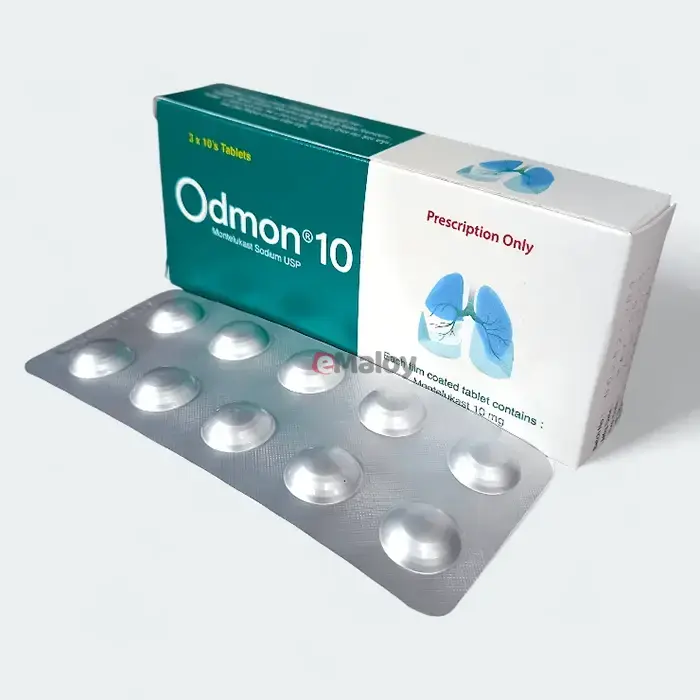
Odmon contains Montelukast, a selective and orally active leukotriene receptor antagonist. It is indicated for the prophylaxis and chronic treatment of asthma, acute prevention of exercise-induced bronchoconstriction (EIB), and relief of symptoms of allergic rhinitis (seasonal & perennial).
How Odmon Works (Pharmacology)
Montelukast primarily works by inhibiting the cysteinyl leukotriene receptor (CysLT1). Cysteinyl leukotrienes (LTC4, LTD4, LTE4) are inflammatory mediators released from cells like mast cells and eosinophils as part of arachidonic acid metabolism.
- Pathophysiology: These leukotrienes and their receptor occupation are correlated with the pathophysiology of asthma and allergic rhinitis. They contribute to airway edema (swelling), smooth muscle contraction (leading to bronchospasm), and altered cellular activity associated with the inflammatory process.
- Mechanism of Action: By blocking the CysLT1 receptor, Montelukast prevents these leukotrienes from binding and exerting their effects, thereby reducing inflammation and improving airway function in asthma and alleviating symptoms of allergic rhinitis.
Key Indications & Benefits
Odmon is indicated for:
- Prophylaxis and chronic treatment of asthma.
- Acute prevention of Exercise-Induced Bronchoconstriction (EIB).
- Relief of symptoms of Allergic Rhinitis (AR): Both Seasonal Allergic Rhinitis and Perennial Allergic Rhinitis.
Dosage & Administration
Always consult a registered physician for medication use.
- Adults and adolescents (15 years of age and older) with asthma or seasonal allergic rhinitis: Montelukast 10 mg tablet once daily.
- Pediatric patients with asthma or seasonal allergic rhinitis:
- 6 to 14 years of age: Montelukast 5 mg tablet once daily.
- 2 years to 5 years of age: Montelukast 4 mg tablet once daily.
- 6 months to 5 years of age: Montelukast 4 mg oral granules once daily. Can be administered directly in the mouth, or mixed with a spoonful of cold water or soft food at room temperature.
Special Populations:
- Pediatric patients: Safety and efficacy have been established in children 6 months to 14 years, with profiles similar to adults.
- Hepatic Insufficiency: No dosage adjustment is required in patients with mild-to-moderate hepatic insufficiency.
- Renal Insufficiency: No dosage adjustment is recommended.
- Elderly use: No dosage adjustment is required, as the pharmacokinetic profile is similar to younger adults, despite a slightly longer plasma half-life.
Important Considerations & Warnings
It is crucial to discuss your full medical history with your doctor before taking Odmon.
Contraindications:
- Patients who are hypersensitive to any component of this product.
Side Effects:
- Common: Diarrhea, fever, gastrointestinal discomfort, headache, nausea, vomiting, skin reactions, upper respiratory tract infection.
- Uncommon: Akathisia (restlessness), anxiety, arthralgia (joint pain), asthenia (weakness), abnormal behavior, depression, dizziness, drowsiness, dry mouth, hemorrhage, irritability, malaise, muscle complaints, edema (swelling), seizure, abnormal sensation, sleep disorders.
- Rare: Angioedema (swelling under the skin), impaired concentration, disorientation, eosinophilic granulomatosis with polyangiitis (a rare inflammatory disorder), erythema nodosum (skin inflammation), hallucination, hepatic disorders, memory loss, palpitations, pulmonary eosinophilia (increased eosinophils in lungs), suicidal tendencies, tremor.
Pregnancy & Lactation:
- Pregnancy: Montelukast crosses the placenta in animal studies. However, there are no adequate and well-controlled studies in pregnant women. Use during pregnancy only if clearly needed.
- Lactation: Many drugs are excreted in human milk. Caution should be exercised when Montelukast is given to a nursing mother.
Precautions & Warnings:
- Not for Acute Asthma Attacks: Odmon is not indicated for use in the reversal of bronchospasm in acute asthma attacks, including status asthmaticus. Patients should be advised to have appropriate rescue medication available.
- Continuity of Treatment: Therapy with Odmon can be continued during acute exacerbations of asthma.
- Not a Corticosteroid Substitute: Odmon should not be abruptly substituted for inhaled or oral corticosteroids. If inhaled corticosteroid doses are to be reduced, this should be done gradually under medical supervision.
- Exercise-Induced Bronchospasm (EIB): Odmon should not be used as monotherapy for the treatment and management of EIB.
- Aspirin Sensitivity: Patients with known aspirin sensitivity should continue avoidance of aspirin or non-steroidal anti-inflammatory agents while taking Odmon. Although it improves airway function in asthmatics with aspirin sensitivity, it does not truncate the bronchoconstrictor response to aspirin and other NSAIDs in these patients.
Drug Interactions:
- Odmon has been administered with other routine asthma therapies with no apparent increase in adverse reactions.
- No clinically important effects on the pharmacokinetics of: theophylline, prednisone, prednisolone, oral contraceptives (norethindrone 1mg/ethinyl estradiol 35mcg), terfenadine, digoxin, and warfarin.
- Concomitant use with thyroid hormones, sedative hypnotics, non-steroidal anti-inflammatory agents, benzodiazepines, and decongestants in clinical studies showed no clinical adverse interactions.
- Phenobarbital: Decreased the AUC (area under the curve, a measure of drug exposure) of Odmon by approximately 40% after a single 10mg dose.No dosage adjustment for Odmon is recommended. However, appropriate clinical monitoring is reasonable when potent cytochrome P450 enzyme inducers (e.g., phenobarbital or rifampin) are co-administered.
Overdose Effects
- Symptoms: Most overdose reports showed no adverse experiences. The most frequent adverse experiences were consistent with the safety profile and included abdominal pain, somnolence (drowsiness), thirst, headache, vomiting, and psychomotor hyperactivity.
- Management: In the event of overdose, employ usual supportive measures, such as removing unabsorbed material from the gastrointestinal tract, clinical monitoring, and instituting supportive therapy if required.
Storage Conditions
Store in a cool & dry place below 30°C, protect from light & moisture. Keep out of reach of children.




Comment