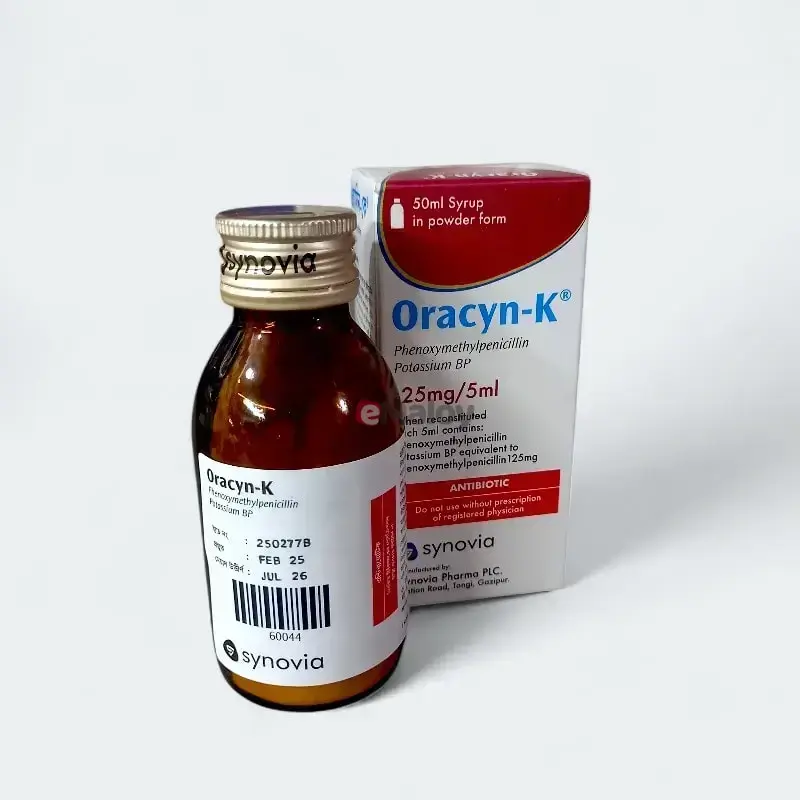
Oracyn-K (Phenoxymethyl Penicillin): An Oral Penicillin Antibiotic
Oracyn-K contains Phenoxymethyl Penicillin (also known as Penicillin V). It is an acid-stable oral antibiotic indicated for the treatment of mild to moderately severe bacterial infections caused by penicillin-susceptible pathogens. It is effective against a range of infections, including those of the ear, nose, throat, respiratory tract, skin, and oral cavity. It is also used for the prophylaxis of scarlet fever, rheumatic fever, and for preventing infections after dental procedures in high-risk patients. Oracyn-K belongs to the therapeutic class of Benzylpenicillin & Phenoxymethyl penicillin.
How Oracyn-K Works (Pharmacology)
Phenoxymethyl Penicillin is an acid-stable antibiotic that works by inhibiting bacterial cell wall synthesis. Its potassium salt is well-absorbed from the upper part of the small intestine. It has an advantage over Penicillin G in its resistance to inactivation by gastric acid, making it suitable for oral administration. For maximum absorption, it is best taken on an empty stomach.
Key Indications & Benefits
Oracyn-K is indicated for the treatment and prophylaxis of infections caused by penicillin-susceptible pathogens, such as:
- Infections of the ear, nose, and throat: Tonsillitis, pharyngitis, otitis media.
- Infections of the lower respiratory tract: Bronchitis and pneumonia.
- Skin infections: Pyodermia, erysipelas.
- Infections of the oral cavity and jaws.
- Prophylaxis: To prevent scarlet fever, recurrences of rheumatic fever, and infection after dental or oral surgical procedures in at-risk patients.
Dosage & Administration
The dosage of Phenoxymethyl Penicillin should be adjusted based on the severity of the infection and the patient's clinical response. It is best taken on an empty stomach. Always consult a registered physician for specific dosage instructions.
- Adults: 250-500 mg every 6 hours.
- Children (above 1 year): 125-250 mg every 6 hours.
- Infants (below 1 year): 62.5-125 mg every 6 hours.
- The suspension should be shaken vigorously before each use.
Important Considerations & Warnings
It is crucial to discuss your full medical history with your doctor before taking Oracyn-K.
Contraindications:
- Hypersensitivity to penicillins or any of the product's excipients.
- Severe gastrointestinal disorders with vomiting and diarrhea.
Side Effects:
- Hypersensitivity reactions: Skin rashes (e.g., urticaria), drug fever, eosinophilia, and in some cases, severe anaphylactic or anaphylactoid reactions.
- Gastrointestinal disturbances: Nausea, vomiting, abdominal pain, and diarrhea.
- Pseudomembranous Colitis: Severe, persistent diarrhea may indicate pseudomembranous colitis, which requires immediate discontinuation of the drug and medical treatment.
- Other: Changes in blood picture (e.g., leucopenia), transient tooth discoloration, and a risk of encephalopathy, especially with overdose or renal impairment.
Pregnancy & Lactation:
- Pregnancy: It crosses the placenta and can be used at any time during pregnancy if indicated.
- Lactation: It passes into breast milk in small amounts. It can be used during lactation, but caution is advised as it may cause diarrhea and yeast colonization in the infant.
Precautions & Warnings:
- Cross-allergy: The possibility of a cross-allergy with cephalosporins should be considered.
- Potassium content: The potassium content should be considered for patients with heart disease or serious electrolyte imbalances.
- Prolonged Use: Prolonged use may lead to the proliferation of resistant microorganisms.
- Renal Impairment: Patients with renal impairment are at an increased risk of encephalopathy, particularly in case of overdose.
Drug Interactions:
- Food: Food reduces the rate of absorption.
- Methotrexate: Concomitant use may increase methotrexate levels and toxicity.
- Oral Contraceptives: May temporarily reduce the effectiveness of oral contraceptives.
- Warfarin: Combined use with oral anticoagulants may prolong prothrombin time.
Overdose Effects
- The toxicity is low, but an overdose can lead to a risk of encephalopathy, especially with renal impairment.
- In the event of an overdose, the medication should be discontinued. Hemodialysis can be used to eliminate phenoxymethylpenicillin.
Storage Conditions
Store in a cool and dry place, protected from light.



Comment