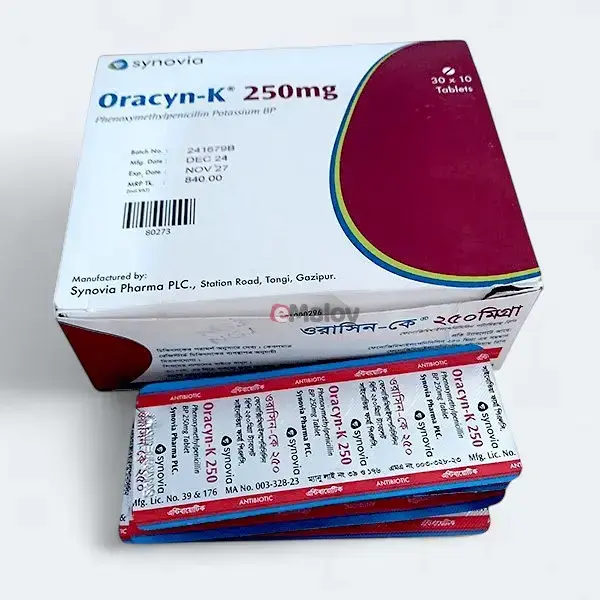
Oracyn-K (Phenoxymethyl Penicillin): An Oral Penicillin Antibiotic
Oracyn-K contains Phenoxymethyl penicillin (Penicillin V), which is an acid-stable oral penicillin. It is indicated for the treatment of mild to moderately severe bacterial infections caused by penicillin-susceptible pathogens, and for certain prophylactic uses. It belongs to the therapeutic class of Benzylpenicillin & Phenoxymethyl penicillin.
How Oracyn-K Works (Pharmacology)
Phenoxymethyl penicillin is an antibiotic that belongs to the penicillin class. Its mechanism of action involves interfering with the synthesis of bacterial cell walls, leading to bacterial cell death.
- Absorption: The potassium salt of Phenoxymethyl penicillin (as in Oracyn-K) is well-absorbed from the upper part of the small intestine. It is acid-stable, unlike penicillin G, making it suitable for oral administration.
- Optimal Absorption: Maximum absorption is achieved when the drug is administered orally at least 1 hour before or 2 hours after a meal.
- Spectrum of Activity: Offers a convenient means of treating Gram-positive infections.
Key Indications & Benefits
Oracyn-K is indicated for the treatment and prophylaxis of various bacterial infections that are susceptible to penicillin:
- Infections of the ear, nose, and throat (ENT) regions: e.g., tonsillitis, pharyngitis, laryngitis, otitis media, sinusitis.
- Infections of the lower respiratory tract: e.g., bronchitis, pneumonia, bronchopneumonia.
- Infections due to beta-hemolytic streptococci of group A: e.g., scarlet fever, erysipelas, rheumatic fever.
- Skin infections: e.g., pyodermia, furunculosis, phlegmon, erysipeloid, erythema migrans (Lyme disease rash), if the micro-organisms are penicillin-susceptible.
- Lymphadenitis and lymphangitis of bacterial origin.
- Infections of the buccal cavity, gums, or jaws: e.g., inflammatory infiltrates, delayed dentition stages II and III, antral fistulae, secondary bacterial infection with Gram-positive pathogens following virus-induced gingivitis or stomatitis.
- Prophylaxis of scarlet fever and to prevent recurrences of rheumatic fever.
- Prophylaxis of infection after dental and oral surgical procedures or dental extractions in certain high-risk patients (e.g., with congenital cardiac defects, artificial heart valves, rheumatic endocarditis). In some cases, combination with another appropriate antibiotic may be indicated.
Dosage & Administration
Phenoxymethyl Penicillin is best taken on an empty stomach, preferably at least 1 hour before or 2 hours after a meal to maximize absorption. Tablets are swallowed whole with sufficient liquid. For syrup, shake the bottle vigorously before each use. Always consult a registered physician for medication use.
- Adults: 250-500 mg every 6 hours.
- Children (above 1 year):
- 125-250 mg every 6 hours.
- 125 mg/5 ml powder for suspension: 1-2 teaspoonful (5-10 ml) every 6 hours.
- 250 mg/5 ml powder for suspension: ½-1 teaspoonful (2.5-5 ml) every 6 hours.
- Infants (below 1 year):
- 62.5-125 mg every 6 hours.
- 125 mg/5 ml powder for suspension: ½-1 teaspoonful (2.5-5 ml) every 6 hours, or as prescribed by the physician.
Important Considerations & Warnings
It is crucial to discuss your full medical history with your doctor before taking Oracyn-K.
Contraindications:
- Patients with hypersensitivity to penicillins or any of the excipients.
- Severe gastrointestinal disorders accompanied by vomiting and diarrhea.
Side Effects:
- Common (hypersensitivity reactions): Skin reactions (e.g., urticaria, morbilliform or scarlatiniform rashes, pruritus), eosinophilia.
- More serious allergic reactions (rare but possible): Drug fever, vasculitis, serum sickness, interstitial nephritis.
- Anaphylactic/Anaphylactoid reactions (rare but severe): Angioneurotic edema, laryngeal edema, bronchial spasm, shock. If these occur, treatment must be terminated immediately.
- Skin and mucous membrane inflammation: Skin rashes, inflammation of mucous membranes (especially around the mouth - stomatitis); rarely dry mouth, taste disorders.
- Severe bullous skin reactions (isolated cases): Stevens-Johnson syndrome, Lyell's syndrome.
- Gastrointestinal disturbances: Nausea, vomiting, abdominal pain, loose stools, or diarrhea.
- Enterocolitis: Diarrhea may be a symptom of enterocolitis, possibly hemorrhagic. Pseudomembranous colitis (due to Clostridium difficile) can occur; if severe, persistent diarrhea occurs during or after treatment, halt administration immediately and seek medical attention. Drugs inhibiting intestinal peristalsis must not be taken.
- Blood picture changes (isolated cases, especially with high/prolonged doses): Reduction in white blood cells (leukopenia, granulocytopenia, agranulocytosis), erythrocytes (hemolytic anemia), thrombocytes; pancytopenia, myelosuppression.
- Herxheimer's reaction: May develop during treatment for spirochetal infections (fever, chills, headache, joint pains).
- Drug-induced aseptic meningitis: Isolated cases.
- Transient tooth discoloration: Extremely rare cases.
- Proliferation of resistant microorganisms: Possible with prolonged antibiotic administration.
- Encephalopathy risk (Beta-lactams): May include convulsions, confusion, impairment of consciousness, movement disorders, particularly with overdose or renal impairment.
Pregnancy & Lactation:
- Pregnancy: Phenoxymethylpenicillin crosses the placenta. Can be used at any time throughout pregnancy if indicated.
- Lactation: Passes into breast milk in small amounts. Can be used during lactation; however, diarrhea and yeast colonization of mucous membranes may occur in the infant.
Precautions & Warnings:
- Cross-allergy: Consider possibility of cross-allergy between cephalosporins and penicillins.
- Potassium content: Consider potassium content in patients with heart diseases or serious electrolyte disturbances.
- Encephalopathy Risk: Beta-lactams predispose to encephalopathy risk, especially with overdose or renal impairment. If adverse reactions like encephalopathy occur, patients should not operate machines or drive a vehicle.
- Resistant microorganisms: Prolonged antibiotic administration may lead to proliferation of resistant microorganisms. Monitor patient condition regularly; take appropriate measures if secondary infection occurs.
- Diabetes mellitus: Consider sugar content of Oracyn-K syrup in diabetic patients.
- Driving/Operating machinery: No indication of impaired ability to drive or operate machinery, unless encephalopathy occurs.
Drug Interactions:
- Food: Concurrent food intake reduces absorption rate. Take on an empty stomach.
- Methotrexate: Concomitant administration may lead to increased serum levels and potentiate its toxic effects. Monitor methotrexate serum levels.
- Diarrhea: May disturb absorption and impair efficacy of other orally administered drugs.
- Bacteriostatic chemotherapeutics/antibiotics (e.g., tetracyclines, chloramphenicol): May attenuate or abolish penicillin activity.
- Probenecid: Inhibits renal excretion of penicillins, leading to higher levels.
- Indomethacin, phenylbutazone, salicylates, sulfinpyrazone: May cause elevated and prolonged serum levels of phenoxymethylpenicillin.
- Oral Contraceptives: May cause a transient reduction in plasma concentrations of estrogens and gestagens, making effectiveness of oral contraceptives uncertain.
- Aminoglycosides (e.g., neomycin) for intestinal sterilization: Absorption of Oracyn-K may be reduced if these have just been or are still being used.
- Oral anticoagulants (e.g., warfarin): Combined use may prolong prothrombin time/INR.
Interference with laboratory and diagnostic tests:
- Non-enzymatic urine glucose determinations and tests for urobilinogen may give false-positive results.
Overdose Effects
- Low toxicity: Phenoxymethylpenicillin has low toxicity and a broad therapeutic range.
- Acute toxicity: No acute toxicity with a single oral overdose of multiple therapeutic doses.
- Encephalopathy: Risk of encephalopathy with beta-lactam antibiotics, especially in overdose or renal impairment.
- Management: Discontinuation of medication is usually sufficient. Elimination can be achieved through hemodialysis.
Storage Conditions
Store in a cool and dry place, protect from light.



Comment