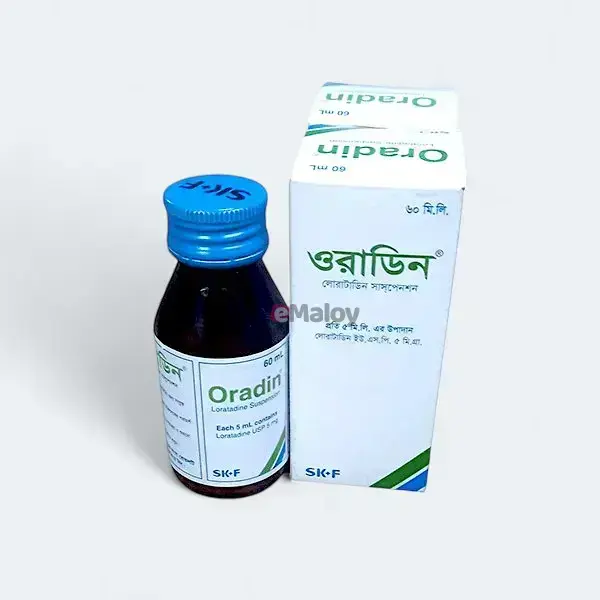
Oradin (Loratadine): A Non-Sedating Antihistamine for Allergy Relief
Oradin contains Loratadine, a non-sedating histamine H1-receptor antagonist. It provides fast and effective relief from symptoms of various allergies, including seasonal and perennial allergic rhinitis, and skin allergies like chronic urticaria. It is classified as a Non-sedating antihistamine.
How Oradin Works (Pharmacology)
Loratadine is a long-acting tricyclic antihistamine with the following key properties:
- Selective Peripheral H1-receptor Antagonism: It selectively blocks histamine H1 receptors located in the periphery of the body. This prevents histamine, a chemical released during allergic reactions, from binding to these receptors and causing symptoms like sneezing, itching, and runny nose.
- Non-sedating: Unlike many older antihistamines, Loratadine has no central sedative effect due to its limited penetration of the blood-brain barrier.
- No Anticholinergic Effect: It also lacks anticholinergic effects.
- Rapid and Long-lasting: It is rapidly effective and long-lasting, allowing for once-a-day administration.
Key Indications & Benefits
Oradin tablet provides fast, effective relief from the symptoms of:
- Seasonal allergic rhinitis (hay fever)
- Perennial allergic rhinitis (year-round allergies)
- Skin allergies, including chronic urticaria (hives).
- Alleviates symptoms of allergic rhinitis such as sneezing, nasal discharge, itching, ocular itching, and burning.
- Relieves nasal and ocular signs and symptoms rapidly after oral administration.
- Also indicated in idiopathic urticaria.
- In children over 2 years, it's indicated for symptomatic relief of seasonal allergic rhinitis and allergic skin conditions such as urticaria and nettle rash.
Dosage & Administration
Oradin is usually administered in the morning or when symptoms require treatment. Always consult a registered physician for medication use.
- Adults and children over 12 years of age: One Loratadine tablet once daily.
- Children 2-12 years:
- Body weight over 30 kg: one Loratadine tablet once daily.
- Body weight below 30 kg: half Loratadine tablet once daily.
- Below 2 years of age: Loratadine tablet is not recommended for use, as safety and efficacy have not been established.
Important Considerations & Warnings
It is crucial to discuss your full medical history with your doctor before taking Oradin.
Contraindications:
- Patients who have shown hypersensitivity or idiosyncrasy to Loratadine or any of its components.
Side Effects:
- During controlled clinical studies, the incidence of adverse events, including sedation and anticholinergic effects, was comparable to placebo.
- Studies on driving performance and cognitive/psychomotor functioning have shown it to be comparable to placebo. (This indicates it is generally well-tolerated with minimal side effects typical of older antihistamines.)
Pregnancy & Lactation:
- Pregnancy: There is no experience of Loratadine use in human pregnancy. Therefore, its use during pregnancy is not advisable.
- Lactation: Loratadine is excreted in breast milk in a very small amount. Nursing mothers are advised not to take the drug.
Precautions & Warnings:
- Liver Impairment or Renal Insufficiency: Caution should be taken in patients with liver impairment or renal insufficiency (estimated Glomerular Filtration Rate (eGFR) < 30 ml/min).
Drug Interactions:
- No reports of potentially hazardous interactions with other drugs.
- Alcohol: Unlike many other histamine H1 receptor antagonists, Oradin has no potentiating effects when administered concurrently with alcohol (as measured by psychomotor performance studies).
- CYP450 Inhibitors (e.g., cimetidine, erythromycin, ketoconazole): Concomitant therapy with drugs that inhibit or are metabolized by hepatic cytochromes P450 3A4 and 2D6 may elevate plasma concentrations of either drug, potentially resulting in adverse effects. Cimetidine inhibits both enzymes, while erythromycin or ketoconazole inhibit P450 3A4. These drugs increase Oradin serum concentrations, but no adverse effects have been reported in such cases.
Overdose Effects
- Adults (overdose > 10 mg): Somnolence (drowsiness), tachycardia (rapid heart rate), and headache have been reported.
- Children (overdose > 10 mg): Extrapyramidal signs (involuntary movements) and palpitations have been reported.
- Management: In the event of overdosage, general symptomatic and supportive measures should be promptly instituted and maintained. It is reasonable to treat patients presenting early after large overdoses with oral activated charcoal. Conscious patients may be induced to vomit or gastric lavage may be performed.
Storage Conditions
Keep in a dry place away from light and heat. Keep out of the reach of children.



Comment