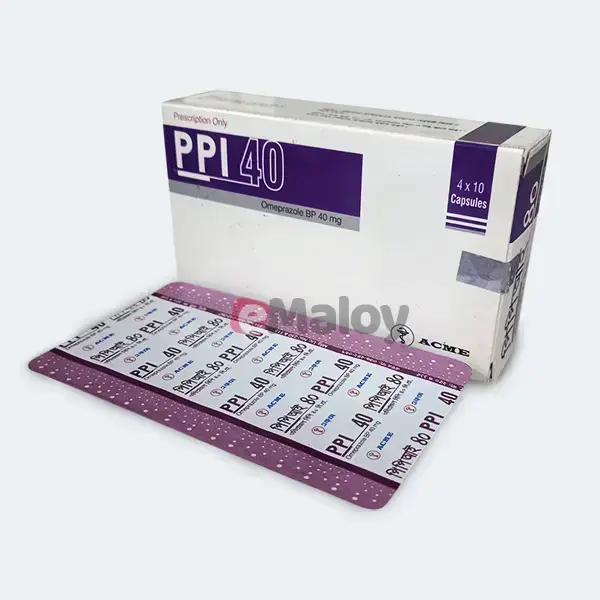
PPI 40 Capsule (Enteric Coated) 40 mg contains Omeprazole 40 mg. It is manufactured by The ACME Laboratories Ltd. in Bangladesh.
Indications:
Omeprazole works by significantly decreasing the amount of acid produced in the stomach. The 40 mg strength is typically used for more severe or resistant acid-related conditions, including:
- Severe Gastro-oesophageal Reflux Disease (GERD) / Reflux Esophagitis: Especially for severe erosive esophagitis (inflammation and damage to the esophagus due to acid reflux) or cases refractory (unresponsive) to lower doses. It's also used for the long-term management of healed reflux esophagitis.
- Gastric and Duodenal Ulcers: Particularly for severe or recurrent cases, or NSAID (Non-Steroidal Anti-inflammatory Drug)-associated ulcers, when a 20 mg dose is insufficient.
- Zollinger-Ellison Syndrome: A rare condition characterized by excessive gastric acid secretion, often requiring higher doses.
- Prophylaxis of acid aspiration syndrome: To reduce gastric acid during general anesthesia.
- H. pylori Eradication: Often used as part of a multi-drug regimen (e.g., with antibiotics) to eradicate Helicobacter pylori bacteria, which can cause peptic ulcers.
- Prevention of upper gastrointestinal tract bleeding in seriously ill patients.
Pharmacology:
Omeprazole is a proton pump inhibitor (PPI). It achieves its effect by irreversibly binding to and inhibiting the H+/K+-ATPase enzyme system (the "proton pump") in the parietal cells of the stomach lining. This pump is responsible for secreting gastric acid. By blocking this final step, Omeprazole effectively reduces both basal (resting) and stimulated acid secretion, providing prolonged acid suppression.
Dosage and Administration:
PPI Capsule (Omeprazole) should be taken orally before a meal, preferably in the morning. The capsule must be swallowed whole and not chewed, crushed, or opened, as this would compromise the enteric coating and reduce its effectiveness.
Typical dosages for adults and adolescents (15 years and older) include:
- Gastric Ulcer: 40 mg once daily for 8 weeks.
- Severe Reflux Esophagitis (GERD refractory to other treatment): 40 mg once daily for 8 weeks.
- Zollinger-Ellison Syndrome: Initially 60 mg once daily; the dose can be adjusted based on the patient's response, ranging from 20 mg to 120 mg daily. For daily doses exceeding 80 mg, it is usually divided into two doses.
- Prophylaxis of acid aspiration: 40 mg on the evening before surgery, followed by another 40 mg 2-6 hours before surgery.
- H. pylori Eradication: Often 20 mg twice daily (but some regimens may use 40 mg once daily depending on the specific antibiotic combination) as part of a 7-14 day triple therapy.
Use in Children: For severe ulcerating reflux esophagitis in children over 1 year with a body weight over 20 kg, 20-40 mg once daily for 4-12 weeks may be prescribed under strict medical supervision.
Side Effects:
Omeprazole is generally well-tolerated. Most side effects are mild and transient.
Common side effects (may affect up to 1 in 10 people):
- Headache
- Abdominal pain, constipation, diarrhea, flatulence, nausea/vomiting
- Benign stomach polyps (fundic gland polyps)
Serious (but less common) side effects (seek medical attention if experienced):
- Neuropsychiatric events: Dizziness, lightheadedness, somnolence (drowsiness), insomnia, agitation, confusion, depression, aggression, hallucinations, suicidal thoughts and behavior (rare, but important to monitor).
- Bone fractures: Increased risk of hip, wrist, or spine fractures with long-term, high-dose use (especially over 1 year).
- Hypomagnesemia: Low magnesium levels (especially with prolonged use), which can lead to muscle spasms, irregular heartbeat, and seizures.
- Kidney problems: Acute interstitial nephritis (inflammation of the kidney) has been reported.
- Liver problems: Increased liver enzymes, hepatitis (with or without jaundice), hepatic failure.
- Severe skin reactions: Stevens-Johnson syndrome, toxic epidermal necrolysis.
- Blood disorders: Leukopenia, thrombocytopenia, agranulocytosis.
- Clostridium difficile-associated diarrhea: Severe, watery, bloody stools.
- Allergic reactions: Fever, angioedema (swelling of face/throat), anaphylaxis.
Contraindications:
- Known hypersensitivity to Omeprazole, other substituted benzimidazoles (other PPIs like Pantoprazole, Lansoprazole, Esomeprazole, Rabeprazole), or any component of the formulation.
- Concomitant use with Nelfinavir or Atazanavir (antiretroviral drugs for HIV) due to significant reduction in their plasma concentrations.
Precautions and Warnings:
- Malignancy Exclusion: Symptomatic response to Omeprazole does not rule out the presence of gastric malignancy. If gastric ulcer is suspected, the possibility of cancer should be excluded before starting treatment.
- Long-term Use: Prolonged use (over 1 year) is associated with increased risks of bone fractures, hypomagnesemia, and potentially vitamin B12 deficiency.
- Driving/Operating Machinery: May cause dizziness or visual disturbances; patients should be cautious.
- Children: Use in children, especially for this 40 mg strength, requires strict medical supervision and careful weight-based dosing.
Pregnancy and Lactation:
- Pregnancy: While studies have not consistently shown an increased risk of major birth defects, Omeprazole should be used during pregnancy only if clearly needed and after a thorough discussion with a physician.
- Lactation: Omeprazole is excreted into breast milk. Caution should be exercised. A decision to continue or discontinue nursing or the drug should consider the importance of the drug to the mother.
Drug Interactions:
Omeprazole is metabolized by CYP enzymes (primarily CYP2C19 and CYP3A4) and can affect the metabolism and absorption of other drugs.
- Antiretrovirals (Nelfinavir, Atazanavir, Rilpivirine): Concurrent use with Nelfinavir/Atazanavir is contraindicated. Concomitant use with Rilpivirine is not recommended.
- Clopidogrel: Omeprazole may reduce the antiplatelet effect of clopidogrel by inhibiting its activation. Concomitant use is generally discouraged.
- Warfarin: Increased INR and prothrombin time, increasing bleeding risk. Close monitoring is required.
- Digoxin: Increased absorption of digoxin, potentially leading to toxicity.
- Methotrexate: May increase and prolong serum concentrations of methotrexate, potentially leading to toxicity. Consider temporary withdrawal of Omeprazole during high-dose methotrexate administration.
- Drugs requiring gastric acidity for absorption: (e.g., Ketoconazole, Itraconazole, Posaconazole, Erlotinib) - Omeprazole reduces gastric acidity, which can decrease the absorption and efficacy of these drugs.
- Tacrolimus, Diazepam, Phenytoin, Cilostazol: Omeprazole can increase the systemic exposure of these drugs.
- CYP2C19 inhibitors/inducers: Drugs that inhibit (e.g., Citalopram, Voriconazole) or induce (e.g., Rifampicin, St. John's Wort) CYP2C19 may alter Omeprazole levels.
Storage Conditions:
Store below 30°C in a dry place, protected from light and moisture. Keep out of reach of children.
Note: This information is for general knowledge and informational purposes only and does not substitute professional medical advice. Always consult your doctor or pharmacist for specific instructions and guidance regarding your medication.




Comment