

100% Original Products

Fast Delivery within 24-72 Hours

Cash On Delivery Available

24/7 Order Support via whatsapp
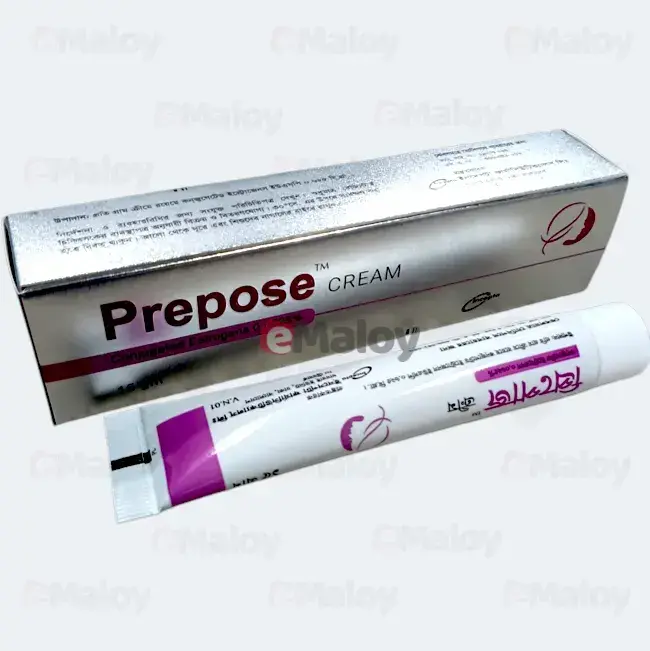
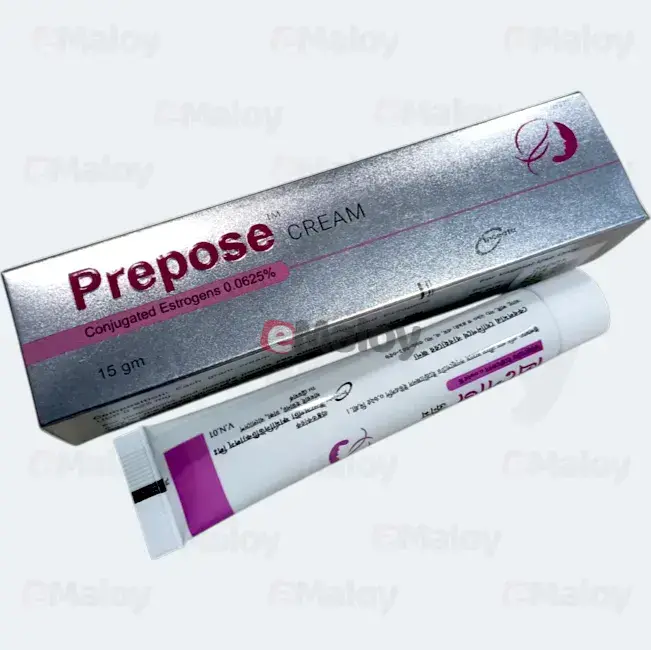
Indications: Prepose cream is indicated for moderate-to-severe vasomotor symptoms associated with estrogen deficiency, prevention and management of osteoporosis associated with estrogen deficiency, atrophic vaginitis and kraurosis vulvae, female hypoestrogenism, and treatment of moderate to severe dyspareunia.
Description: Prepose for vaginal administration is a mixture of estrogens, obtained exclusively from natural sources, blended to represent the average composition of material derived from pregnant mares' urine. It contains the sodium salts of water-soluble sulfate esters of estrone, equilin, and 17 alpha-dihydroequilin, together with smaller amounts of 17 alpha-estradiol, equilenin, 17 alpha-dihydroequilenin, 17 beta-dihydroequilin, 17 beta-dihydroequilenin, 17 beta-estradiol, and delta 8,9-dehydroestrone.
Pharmacology: Estrogens are important in the development and maintenance of the female urogenital system and secondary sex characteristics. They promote growth and development of the vagina, uterus, and fallopian tubes, and enlargement of the breasts. Indirectly, they contribute to the shaping of the skeleton, maintenance of tone and elasticity of urogenital structures, changes in the epiphyses of the long bones associated with the pubertal growth spurt and its termination, growth of axillary and pubic hair, and pigmentation of the nipples and genital tissues. However, in the preovulatory or anovulatory cycle, estrogen is the primary determinant in the onset of menstruation. Estrogen also affects the release of pituitary gonadotropins. The pharmacologic effects of conjugated estrogens are similar to those of endogenous estrogens. In responsive tissues, such as female urogenital organs, breasts, hypothalamus, and pituitary, estrogens enter the cell and are transported into the nucleus, resulting in specific RNA and protein synthesis.
Osteoporosis Associated with Estrogen Deficiency: Estrogen replacement therapy is the most effective single modality for the prevention of osteoporosis (loss of bone mass) in postmenopausal women. Estrogen reduces bone resorption and retards or halts postmenopausal bone loss. One clinical study demonstrated that even when estrogen was started as late as fifteen years after menopause, further loss of bone mass was prevented, though no restoration of bone mass was observed. The effect on bone mass conservation is sustained only as long as conjugated estrogen therapy is continued. Different ethnic groups are at different risk for osteoporosis.
Atrophic Vaginitis and Kraurosis Vulvae: In the absence of estrogen stimulation, the vulvar and vaginal tissues shrink, the vaginal walls become thin and dry, and rugal folds disappear. Tenderness and pruritus, with resulting dysuria and dyspareunia, may occur. Fissures and ulcerations of tissue with spotting or bleeding may result from coitus. These changes are reversible with the administration of estrogen replacement therapy.
Female Hypoestrogenism: Estrogen replacement therapy is indicated in hypoestrogenism related to female hypogonadism or primary ovarian failure. Primary ovarian failure starting early in life will lead to delayed closure of the epiphyses and retarded bone maturation. Long term estrogen deficiency in any age group will usually lead to osteoporosis. Estrogen therapy is associated with the appearance of female characteristics in these patients.
Atrophic Vaginitis and Kraurosis Vulvae: Administer a cyclic regimen (daily for 21 days followed by 7 days off) intravaginally. Start at 0.5 gm dosage strength, and dosage may be adjusted from 0.5 to 2 gm based on individual response.
Moderate to Severe Dyspareunia: Treats symptoms of vulvar and vaginal atrophy due to menopause. Administer 0.5 gm intravaginally in a twice-weekly regimen (such as Monday and Thursday) continuously, or in a cyclic regimen of daily administration for 21 days followed by 7 days off.
Step 1: Remove cap from tube.
Step 2: Screw nozzle end of applicator onto tube.
Step 3: Gently squeeze tube from the bottom to force sufficient cream into the barrel to provide the prescribed dose.
Step 4: Unscrew applicator from tube.
Step 5: Place the applicator into the vaginal opening.
Step 6: To deliver medication, press plunger downward.
Cleansing Instructions: Pull plunger to remove it from barrel. Wash with mild soap and warm water. Do not boil.
Drug Interactions: Rifampin reportedly decreases estrogenic activity during concomitant use with estrogen. This effect has been attributed to enhanced metabolism of estrogen, presumably by induction of hepatic microsomal enzymes.
Contraindications: Known or suspected cancer of the breast.
Contraindications: Known or suspected estrogen-dependent neoplasia.
Contraindications: Known or suspected pregnancy.
Contraindications: Undiagnosed abnormal genital bleeding.
Contraindications: Active thrombophlebitis or thromboembolic disorders.
Contraindications: Hypersensitivity to any of the components of Conjugated Estrogen vaginal cream.
Genitourinary System Reactions: Breakthrough bleeding, spotting, change in menstrual flow, amenorrhea.
Breast Reactions: Tenderness, enlargement, secretion.
Gastrointestinal Reactions: Nausea, vomiting, abdominal cramps, bloating, cholestatic jaundice.
Skin Reactions: Chloasma or melasma which may persist when drug is discontinued, alopecia, rash.
Eye Reactions: Steepening of the corneal curvature and intolerance to contact lenses.
Central Nervous System Reactions: Headache, migraine, dizziness, chorea.
Miscellaneous Reactions: Increase or decrease in weight, edema, changes in libido, aggravation of porphyria.
Common Side Effects: Headache, breast pain, irregular vaginal bleeding or spotting, stomach or abdominal cramps, bloating, nausea and vomiting, hair loss, fluid retention, vaginal yeast infection, and application site reactions such as vaginal burning, irritation, and itching.
Uncommon Side Effects: Heart attack, stroke, blood clots, dementia, breast cancer, cancer of the lining of the uterus, cancer of the ovary, high blood pressure, high blood sugar, gallbladder disease, enlargement of benign tumors of the uterus, and severe allergic reactions.
Pregnancy: Estrogen should not be used during pregnancy. Estrogen therapy during pregnancy is associated with an increased risk of congenital defects in the reproductive organs of the male and female fetus, an increased risk of vaginal adenosis, squamous cell dysplasia of the cervix, and vaginal cancer in the female later in life. There is no indication for estrogen therapy during pregnancy, nor are estrogens effective in the prevention or treatment of threatened or habitual abortion.
Lactation: As a general principle, the administration of any drug to nursing mothers should be done only when clearly necessary since many drugs are excreted in human milk.
Precautions and Warnings: Estrogen therapy without the addition of a progestogen in women with a uterus has been reported to increase the risk of endometrial hyperplasia or carcinoma. The risk appears to depend on both duration of treatment and estrogen dose. The patient should be reassessed at least on an annual basis. Studies have indicated a reduced risk of endometrial cancer when a progestogen is administered with estrogen replacement therapy. There are possible additional risks which may be associated with the inclusion of a progestogen in hormone replacement therapy regimens, including adverse effects on carbohydrate and lipid metabolism. An increased risk of gallbladder disease in women receiving postmenopausal estrogen has been reported. Some studies have suggested a possible increased incidence of breast cancer in women on estrogen therapy taking higher doses for prolonged periods of time. Women on this therapy should have regular breast examinations and should be instructed in breast self-examination. Doses of Prepose used should not exceed the recommended doses. A complete medical and family history should be obtained prior to the initiation of any estrogen therapy. The pretreatment and periodic physical examinations should include special reference to blood pressure, breasts, abdomen, and pelvic organs, and should include a Papanicolaou smear. Where no pathologic cause is found for abnormal vaginal bleeding, dose reduction or cycling may be indicated. Estrogen may be poorly metabolized in patients with impaired liver function and should be administered with caution in such patients.
Overdose Effects: Overdosage of estrogen may cause nausea, vomiting, breast tenderness, abdominal pain, drowsiness, and fatigue. Withdrawal bleeding may also occur in women. Treatment of overdose consists of discontinuation of Prepose therapy with institution of appropriate symptomatic care.
Therapeutic Class: Female Sex Hormones
Storage Conditions: Store in a cool (below 30°C) and dry place, protected from light and moisture.
Your email address will not be published. Required fields are marked *
Please login to write review!
Looks like there are no reviews yet.
Cookie preferences
Comment