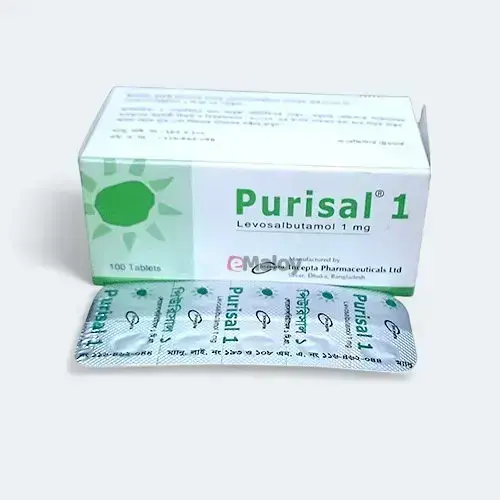
Purisal (Levosalbutamol): A Short-acting Selective β2-adrenoceptor Stimulant
Purisal contains Levosalbutamol, which is a single-isomer beta-2 agonist. It is indicated for the treatment or prevention of bronchospasm in adults, adolescents, and children 6 years of age and older with reversible obstructive airway disease. It belongs to the therapeutic class of short-acting selective β2-adrenoceptor stimulants.
How Purisal Works (Pharmacology)
Levosalbutamol works by:
- Selective β2-Agonism: It selectively stimulates β2-adrenergic receptors found primarily in the smooth muscles of the airways.
- Bronchodilation: Stimulation of these receptors leads to relaxation of the bronchial smooth muscles, resulting in bronchodilation (widening of the airways). This helps to relieve and prevent bronchospasm.
- Single Isomer Advantage: Levosalbutamol is the (R)-enantiomer of racemic salbutamol. The (S)-salbutamol isomer in racemic salbutamol is considered inactive or potentially detrimental. By eliminating the (S)-isomer, Levosalbutamol allows for comparable bronchodilation with lower doses, potentially reducing β-mediated side effects associated with the (S)-isomer.
Key Indications & Benefits
Purisal is indicated for:
- Treatment of bronchospasm in patients with reversible obstructive airway disease.
- Prevention of bronchospasm in patients with reversible obstructive airway disease.
- It is specifically for adults, adolescents, and children 6 years of age and older.
Dosage & Administration
Purisal is available in tablet and syrup forms. Always consult a registered physician for medication use.
Tablet:
- Adults and adolescents above 12 years: 1-2 mg three times daily.
- Children (6-11 years): 1 mg three times daily.
Syrup:
- Adults: 5-10 ml three times daily.
- Children (6-11 years): 5 ml three times daily.
Important Considerations & Warnings
It is crucial to discuss your full medical history with your doctor before taking Purisal.
Contraindications:
- Patients with a history of hypersensitivity to levosalbutamol or any of its components.
Side Effects:
- Common: Hypokalemia (low potassium), palpitation, fine tremors of the skeletal muscle, and muscle cramps.
- Other likely side effects: Nausea, vomiting, burning substernal or epigastric pain, and diarrhea.
Pregnancy & Lactation:
- Pregnancy: The drug should be used during pregnancy only if the potential benefit justifies the potential risk to the fetus.
- Lactation: It is not known whether Levosalbutamol is excreted in human milk. Caution should be exercised when oral Levosalbutamol is administered to a nursing woman.
Precautions & Warnings:
- Acute Severe Asthma: Particular caution is advised in acute severe asthma, as the risk of hypokalemia may be potentiated by hypoxia and by concomitant treatment with xanthine derivatives (e.g., theophylline), steroids, and diuretics.
- Serum Potassium Monitoring: Serum potassium levels should be monitored in such situations due to the risk of hypokalemia.
Drug Interactions:
- Other short-acting sympathomimetic bronchodilators or epinephrine: Should be used with caution due to the risk of additive cardiovascular effects.
- Other adrenergic drugs (by any route): Use with caution to avoid deleterious cardiovascular effects.
- Xanthine derivatives, steroids, and diuretics: Concomitant use may potentiate the hypokalemic effect of Purisal, especially in acute severe asthma.
Overdose Effects
- Expected symptoms with overdosage: Those of excessive beta-adrenergic stimulation, and the symptoms listed under side effects (e.g., palpitation, tremors, hypokalemia).
- Management: In the event of serious poisoning, the stomach should be emptied (gastric lavage or emesis is recommended). If necessary, a beta-blocker may be administered with caution in patients with a history of bronchospasm. Otherwise, general supportive treatment is required.
Storage Conditions
Keep all medicines out of reach of children. Store in a cool and dry place, protected from light.



Comment