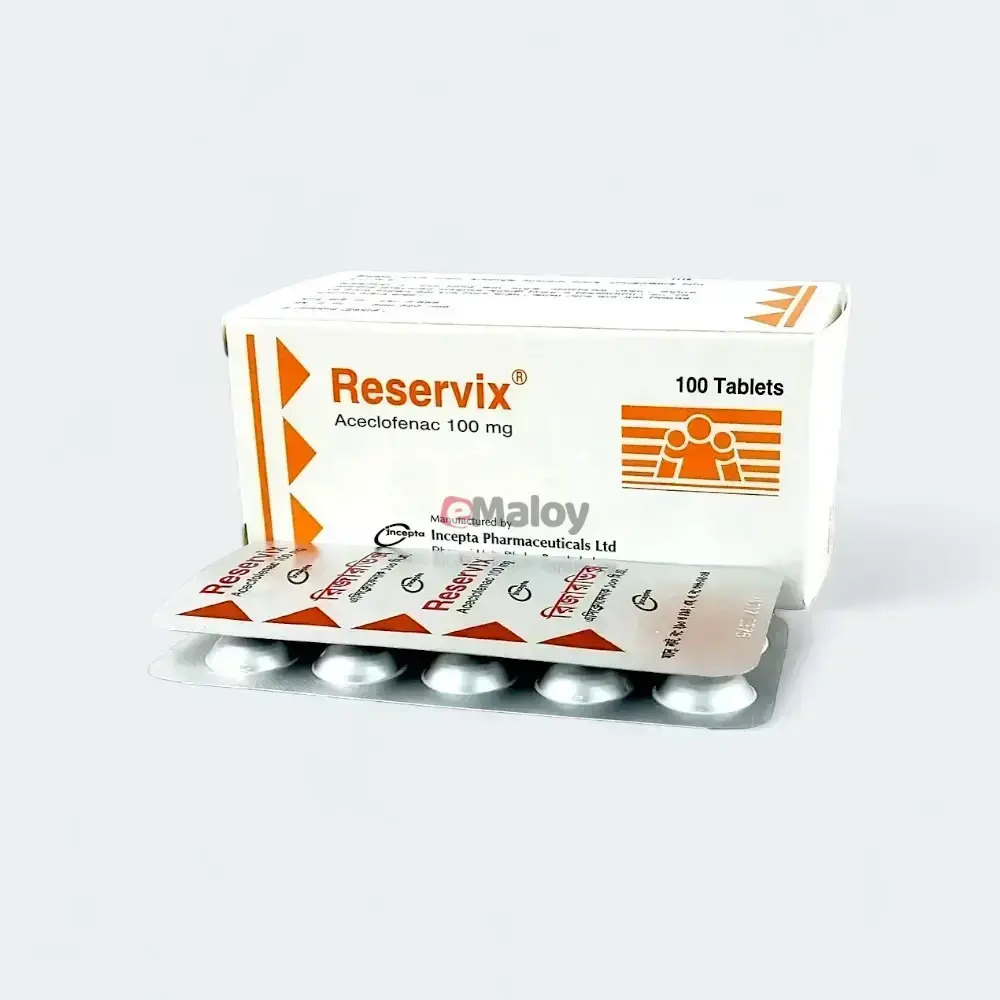
Reservix (Aceclofenac): A Non-steroidal Anti-inflammatory Drug (NSAID)
Reservix contains Aceclofenac, a non-steroidal drug with anti-inflammatory and analgesic properties. It is indicated for the relief of pain and inflammation in various musculoskeletal conditions and other painful states. It belongs to the therapeutic class of Non-steroidal Anti-inflammatory Drugs (NSAIDs), and also listed under Drugs for Osteoarthritis and Drugs used for Rheumatoid Arthritis.
How Reservix Works (Pharmacology)
Aceclofenac works by:
- Inhibiting Cyclooxygenase (COX): It is a potent inhibitor of the enzyme cyclooxygenase (COX).
- Reducing Prostaglandin Production: COX is crucially involved in the production of prostaglandins, which are key mediators of pain, inflammation, and fever. By inhibiting COX, Aceclofenac reduces prostaglandin synthesis, thereby exerting its anti-inflammatory and analgesic effects.
- Rapid Absorption: After oral administration, it is rapidly and completely absorbed as an unchanged drug.
Key Indications & Benefits
Reservix is indicated for the relief of pain and inflammation in:
- Osteoarthritis
- Rheumatoid arthritis
- Ankylosing spondylitis
- Toothache
- Trauma
- Lumbago
Dosage & Administration
The dosage of Reservix varies depending on the tablet form. Always consult a registered physician for specific dosage instructions.
- Extended-release tablet: The recommended dose in adults is one 200 mg Aceclofenac tablet daily.
- Film-coated tablet: The recommended dose in adults is 100 mg, twice daily.
Important Considerations & Warnings
It is crucial to discuss your full medical history with your doctor before taking Reservix.
Contraindications:
- Patients with known hypersensitivity to Aceclofenac.
- Patients in whom aspirin or other NSAIDs precipitate attacks of asthma, urticaria, or acute rhinitis (cross-hypersensitivity).
- The provided text from "Side Effects" section appears to be a duplicate of "Pharmacology". Common side effects of Aceclofenac, typical of NSAIDs, generally include gastrointestinal issues (e.g., indigestion, abdominal pain, nausea, diarrhea), dizziness, and skin reactions.
Pregnancy & Lactation:
- The use of Aceclofenac should be avoided in pregnancy and lactation unless the potential benefits to the mother clearly outweigh the possible risks to the fetus/infant.
Precautions & Warnings:
- Peptic Ulcer/Gastrointestinal Bleeding: Caution should be exercised in patients with active or suspected peptic ulcer or gastrointestinal bleeding.
- Hepatic Impairment: Caution is needed in patients with moderate to severe hepatic impairment.
- Cardiac or Renal Impairment: Caution should be exercised in patients with cardiac or renal impairment.
- Dizziness or Urticaria: Caution should also be exercised in patients suffering from dizziness or urticaria.
Drug Interactions:
While no significant drug interactions have been observed, close monitoring is required when Reservix is used with:
- Lithium and Digoxin: May increase plasma concentration of lithium and digoxin.
- Diuretics: May interact with the activity of diuretics, potentially reducing their effect.
- Anticoagulants (e.g., Warfarin): May enhance the activity of anticoagulants, increasing the risk of bleeding.
- Methotrexate: May increase the plasma level of methotrexate, potentially leading to toxicity.
Use in Special Populations
- Children: There are no clinical data on the use of Reservix in children.
Storage Conditions
Keep in a dry place away from light and heat. Keep out of the reach of children.



Comment