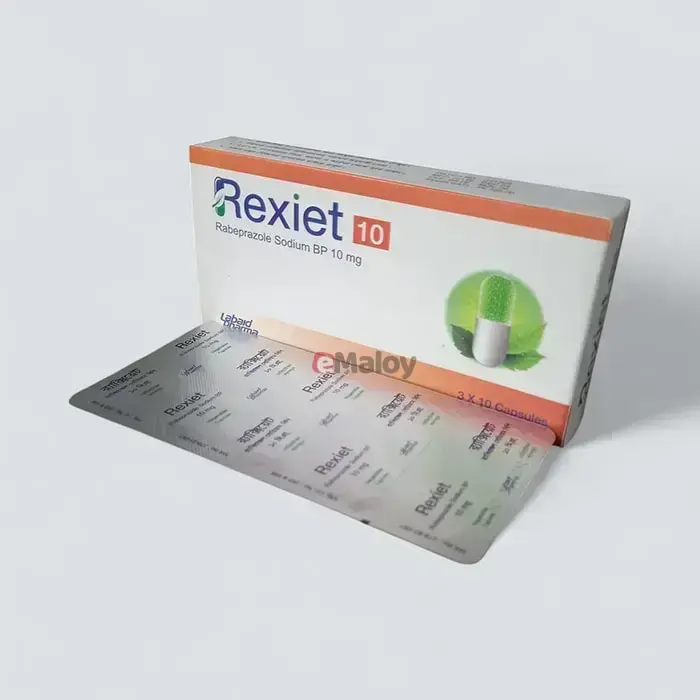
Rexiet (Rabeprazole): A Proton-Pump Inhibitor (PPI)
Rexiet contains Rabeprazole, a gastric proton-pump inhibitor (PPI). It works by suppressing gastric acid secretion, providing relief from a variety of acid-related conditions. It is indicated for the treatment of ulcers, gastro-esophageal reflux disease (GERD), Zollinger-Ellison Syndrome, and in combination with other antibiotics for the eradication of Helicobacter pylori.
How Rexiet Works (Pharmacology)
Rabeprazole suppresses gastric acid secretion by targeting the acid pump in the stomach:
- Inhibits H+/K+-ATPase: It works by inhibiting the gastric H+/K+-ATPase at the secretory surface of the gastric parietal cells. This enzyme is commonly known as the acid (proton) pump.
- Reduces Acid Secretion: By inhibiting this pump, Rabeprazole effectively suppresses the final step of gastric acid production, leading to a profound and long-lasting reduction in stomach acid.
Key Indications & Benefits
Rexiet is indicated for the treatment of:
- Active duodenal and benign gastric ulcers.
- Erosive or ulcerative gastro-esophageal reflux disease (GERD) and its long-term management.
- Symptomatic treatment of moderate to very severe GERD.
- Zollinger-Ellison Syndrome.
- Eradication of Helicobacter pylori in combination with appropriate antibacterial regimens.
Dosage & Administration
The dosage of Rexiet varies depending on the condition being treated. The tablets should be swallowed whole and not chewed or crushed. For once-daily treatment, it is best taken in the morning before eating to facilitate compliance.
- Duodenal and Gastric Ulcers: 20 mg once daily.
- GERD: 20 mg once daily for 4 to 8 weeks. For long-term maintenance, 10 mg or 20 mg once daily.
- Zollinger-Ellison Syndrome: Starting dose is 60 mg once daily, which can be titrated up to 120 mg/day.
- H. pylori Eradication: 20 mg twice daily for 7 days, in a three-drug regimen with clarithromycin and amoxicillin.
- Pediatric GERD (1-11 years): 5-10 mg once daily for 12 weeks, depending on weight.
Important Considerations & Warnings
It is crucial to discuss your full medical history with your doctor before taking Rexiet.
Contraindications:
- Hypersensitivity to the active substance or any excipients.
- Pregnancy and breastfeeding.
- Co-administration with atazanavir.
Side Effects:
- Common: Headache, diarrhea, abdominal pain, vomiting, constipation, dry mouth, muscle pain, and dizziness.
- Serious: Post-marketing reports of blood dyscrasias (thrombocytopenia and neutropenia), hepatic enzyme abnormalities, and severe hypomagnesaemia.
Pregnancy & Lactation:
- Pregnancy: It is contraindicated in pregnant women.
- Lactation: It is contraindicated during breastfeeding.
Precautions & Warnings:
- Malignancy: Before starting treatment, the possibility of a gastric or esophageal malignancy should be excluded.
- Long-term use: Long-term treatment (over a year) may increase the risk of hip, wrist, and spine fractures, especially in the elderly. It may also lead to hypomagnesaemia and reduced absorption of Vitamin B12.
- Liver & Renal Impairment: Exercise caution in patients with severe hepatic dysfunction. No dosage adjustment is necessary for renal or hepatic impairment.
- Children: Not recommended for general use in children due to lack of safety and efficacy data, though a specific GERD indication exists for ages 1-11.
- Drug Interactions: Co-administration with ketoconazole or itraconazole may significantly decrease their plasma levels. Co-administration with atazanavir is not recommended.
Overdose Effects
- Overdose effects are generally minimal and reversible.
- There is no specific antidote.
- Rabeprazole is not dialysable.
- Treatment should be symptomatic and supportive.
Storage Conditions
Store below 30°C, away from light and moisture. Keep out of the reach of children.




Comment