Rostatin (Rosuvastatin): A Statin for Lipid Management and Cardiovascular Risk Reduction
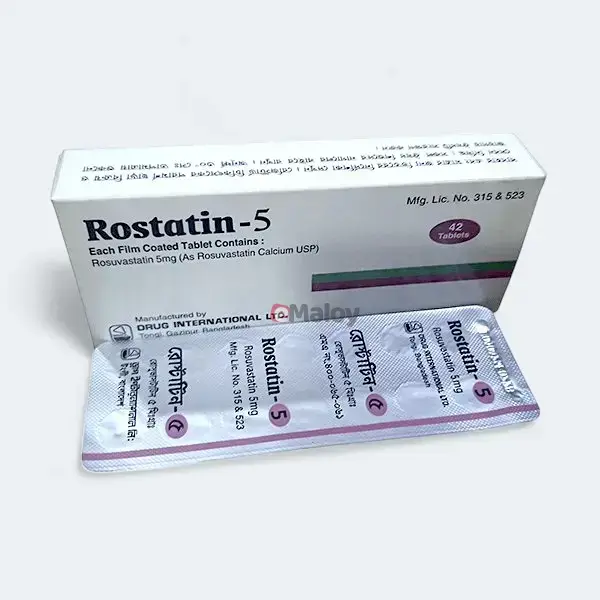
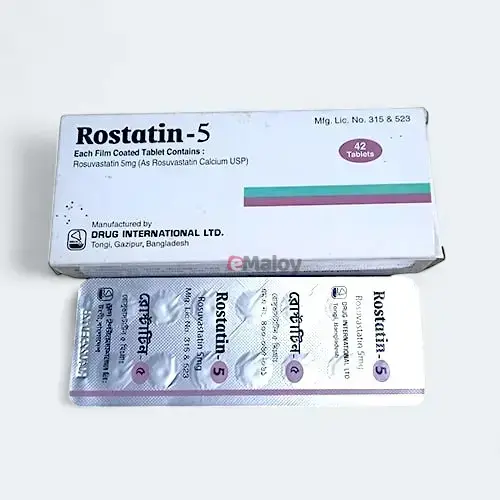
Rostatin contains Rosuvastatin, a selective and competitive inhibitor of HMG-CoA reductase. It is indicated for reducing elevated cholesterol and triglyceride levels, increasing "good" cholesterol (HDL-C), slowing atherosclerosis progression, and reducing the risk of cardiovascular events like MI and stroke in at-risk patients. It belongs to the therapeutic class of Statins.
How Rostatin Works (Pharmacology)
Rosuvastatin, as an HMG-CoA reductase inhibitor, reduces cholesterol levels through two main mechanisms:
- Inhibits Cholesterol Synthesis: It blocks HMG-CoA reductase, the rate-limiting enzyme in the liver responsible for producing mevalonate, a precursor of cholesterol. This directly reduces the liver's cholesterol synthesis.
- Increases LDL Receptor Uptake: By reducing internal cholesterol production, Rosuvastatin prompts the liver to increase the number of LDL receptors on its cell surfaces. These receptors enhance the uptake and breakdown of LDL (low-density lipoprotein, "bad" cholesterol) from the bloodstream.
- Reduces VLDL Synthesis: Rosuvastatin also inhibits the hepatic synthesis of VLDL (very low-density lipoprotein), which in turn reduces the total number of VLDL and LDL particles.
The combined effect is a significant reduction in total-C, LDL-C, ApoB, non-HDL-C, and TG levels, along with an increase in HDL-C.
Key Indications & Benefits
Rostatin is indicated for:
- Primary hyperlipidemia and mixed dyslipidemia: As an adjunct to diet to reduce elevated total-C, LDL-C, ApoB, non-HDL-C, and TG levels, and to increase HDL-C.
- Hypertriglyceridemia: As an adjunct to diet.
- Primary dysbetalipoproteinemia (Type III hyperlipoproteinemia): As an adjunct to diet.
- Homozygous Familial Hypercholesterolemia (HoFH): To reduce LDL-C, total-C, and ApoB.
- Slowing the progression of atherosclerosis: As part of a treatment strategy to lower total-C and LDL-C, as an adjunct to diet.
- Pediatric patients (10 to 17 years of age) with Heterozygous Familial Hypercholesterolemia (HeFH): To reduce elevated total-C, LDL-C, and ApoB after failing adequate diet therapy.
- Risk reduction of Myocardial Infarction (MI), stroke, and arterial revascularization procedures: In patients without clinically evident Coronary Heart Disease (CHD) but with multiple risk factors.
Dosage & Administration
Rostatin dosage is individualized based on the therapeutic goal and patient characteristics. Always consult a registered physician for specific dosage instructions.
- Heterozygous Familial Hypercholesterolemia (Pediatric Patients 10-17 years): The usual dose range of Rosuvastatin is 5-20 mg/day; the maximum recommended dose is 20 mg/day (doses greater than 20 mg have not been studied in this patient population). Adjustments should be made at intervals of 4 weeks or more.
- Very High Cholesterol and High Risk of MI or Stroke: 40 mg once daily.
- Homozygous Familial Hypercholesterolemia: The recommended starting dose is 20 mg once daily. Response to therapy should be estimated from preapheresis LDL-C levels.
- Asian Patients: Consider initiating therapy with 5 mg once daily.
- Use with Cyclosporine: Limit Rostatin dose to 5 mg once daily.
- Use with Lopinavir/Ritonavir or Atazanavir/Ritonavir: Limit Rostatin dose to 10 mg once daily.
- Concomitant Lipid-Lowering Therapy:
- Niacin or Fenofibrate: Consider a reduction in Rostatin dosage due to increased risk of skeletal muscle effects.
- Gemfibrozil: Combination should be avoided. If used, limit Rostatin dose to 10 mg once daily due to increased Rosuvastatin exposure.
- Severe Renal Impairment (ClCr<30 mL/min/1.73 m² not on hemodialysis): Start at 5 mg once daily and do not exceed 10 mg once daily.
Important Considerations & Warnings
It is crucial to discuss your full medical history with your doctor before taking Rostatin.
Contraindications:
- Known hypersensitivity to product components.
- Liver disease, including unexplained persistent elevations in hepatic transaminase levels.
- Pregnant women and women who may become pregnant.
- Nursing mothers.
Side Effects:
- Rostatin is generally well tolerated.
- Most frequent adverse events: Headache, myalgia (muscle pain), constipation, asthenia (weakness), abdominal pain, and nausea.
Pregnancy & Lactation:
- Pregnancy: Rosuvastatin is contraindicated in pregnant women. Women of childbearing age should use effective contraception and be informed of potential hazards. If pregnancy occurs, discontinue therapy immediately.
- Lactation: It is not known whether Rosuvastatin is excreted in human milk, but a small amount of other statins does pass into breast milk. Therefore, it is contraindicated in nursing mothers.
Precautions & Warnings:
- Myopathy/Rhabdomyolysis Risk:
- Prescribe with caution in patients with predisposing factors for myopathy (e.g., age >65 years, inadequately treated hypothyroidism, renal impairment).
- Risk of myopathy increases with concurrent administration of certain other lipid-lowering therapies (Fibrates or Niacin), Gemfibrozil, Cyclosporine, Lopinavir/Ritonavir, or Atazanavir/Ritonavir.
- Discontinue therapy if markedly elevated creatinine kinase (CK) levels occur or myopathy is diagnosed or suspected.
- Temporarily withhold therapy in any patient with an acute, serious condition suggestive of myopathy or predisposing to renal failure secondary to rhabdomyolysis (e.g., sepsis, hypotension, dehydration, major surgery, trauma, severe metabolic, endocrine, and electrolyte disorders, or uncontrolled seizures).
- Liver Enzyme Monitoring: Liver enzyme tests are recommended before and at 12 weeks following both initiation of therapy and any dose elevation, and periodically (e.g., semiannually) thereafter.
Drug Interactions:
- Cyclosporine: Increases Rostatin exposure; limit Rostatin dose to 5 mg once daily.
- Gemfibrozil: Avoid co-administration. If used, limit Rostatin dose to 10 mg once daily.
- Lopinavir/Ritonavir or Atazanavir/Ritonavir: Increase Rostatin exposure; limit Rostatin dose to 10 mg once daily.
- Coumarin anticoagulants (e.g., Warfarin): May prolong International Normalized Ratio (INR). Achieve stable INR before starting Rostatin. Monitor INR frequently upon initiation or alteration of Rostatin therapy.
- Concomitant lipid-lowering therapies (Fibrates and Niacin): May increase the risk of skeletal muscle effects.
Overdose Effects
- There is no specific treatment for Rostatin overdose.
- Management: Treat symptomatically and institute supportive measures as required.
- Hemodialysis: Does not significantly enhance the clearance of Rostatin.
Storage Conditions
Keep below 30°C temperature, protected from light & moisture. Keep out of the reach of children.



Comment