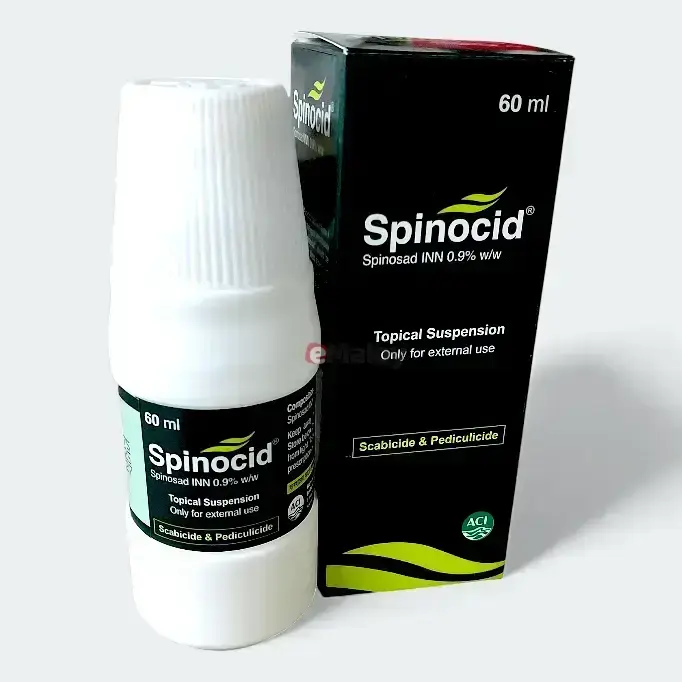
Spinocid Topical Suspension (Spinosad)
Therapeutic Class: Topical Antifungal preparations (Note: The indication is for scabies and lice, which are parasitic infestations, making it a pediculicide/scabicide, despite the provided class.)
Indications Spinocid is a topical suspension indicated for the treatment of two types of infestations:
- Scabies Infestations (Scabicide): For topical treatment in patients 4 years of age and older.
- Head Lice Infestations (Pediculicide): For topical treatment in patients 6 months of age and older.
Pharmacology and Action Spinosad works by causing neuronal excitation in insects. This leads to periods of hyperexcitation, after which the lice and mites become paralyzed and die.
- Pharmacokinetics: When applied topically, Spinosad shows minimal absorption into the bloodstream, meaning it acts primarily on the surface of the skin and scalp with very low systemic exposure.
Dosage and Administration (For Topical Use Only)
1. Scabies Infestations:
- Shake the bottle well before use.
- Thoroughly rub the medication into the entire body from the neck down to the soles of the feet.
- Patients with a balding scalp should also apply it to the scalp, hairline, temples, and forehead.
- Allow the medication to absorb and dry for 10 minutes before dressing.
- Avoid bathing for at least 6 hours after application.
2. Head Lice Infestations:
- Shake the bottle well before use.
- Apply the medicine thoroughly to dry hair so the scalp is completely covered.
- After 10 minutes, rinse the hair with warm water.
- Repeat the treatment if live lice are observed 7 days after the first application.
Precautions and Safety
- NEONATES/INFANTS WARNING: Spinocid contains benzyl alcohol and is not approved for use in neonates and infants below the age of 6 months due to the risk of serious adverse reactions associated with systemic exposure to benzyl alcohol in this age group.
- Pregnancy: Pregnancy category B.
- Breastfeeding: Breastfeeding women should remove the suspension from the breast with soap and water before breastfeeding.
- Side Effects: Most common adverse reactions include application site irritation (scabies) and application site erythema (redness) and ocular erythema (lice).
- Interactions: Generally minimal drug interactions due to low systemic absorption. Using it with other topical medications (like corticosteroids) could increase the risk of local skin irritation.
Storage Conditions: Keep out of the reach of children. Store in a dry place, below 25°C temperature, and protected from light.



Comment