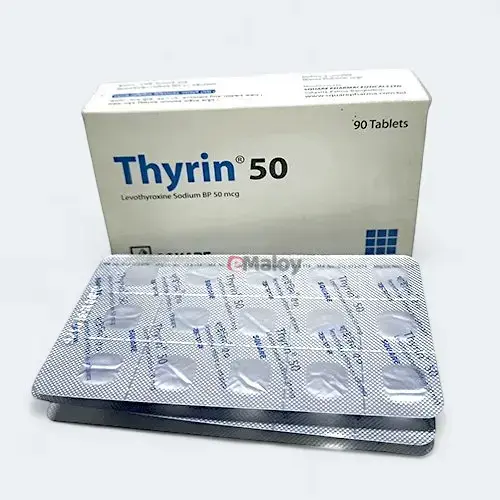
Thyrin (Levothyroxine): A Thyroid Hormone Replacement Therapy
Thyrin contains Levothyroxine (T4), a synthetic thyroid hormone identical to the natural hormone produced by the thyroid gland. It is a thyroid drug and hormone indicated as a replacement therapy for hypothyroidism of any etiology. It is also used to suppress TSH levels in various thyroid disorders and as a diagnostic aid.
How Thyrin Works (Pharmacology)
Levothyroxine works by replacing the hormone the thyroid gland is not producing sufficiently:
- Hormone Replacement: It is a synthetic version of Thyroxine (T4). Approximately 30% of T4 is converted in peripheral tissues to the more active hormone, Triiodothyronine (T3).
- Binding and Half-Life: T4 binds extensively to Thyroxine Binding Globulin (TBG) and other plasma proteins. This binding protects T4 from metabolism and gives it a long half-life of 6-7 days. Due to this long half-life, a steady blood level can be maintained with a single daily dose.
- Metabolism and Excretion: The liver is the primary site of degradation. T4 is conjugated and excreted in the urine, with some enterohepatic circulation.
Key Indications & Benefits
Thyrin is indicated for:
- Replacement therapy in hypothyroidism of any etiology, but not for transient hypothyroidism during subacute thyroiditis.
- Suppression of Thyroid Stimulating Hormone (TSH) levels in the presence of goiters, nodules, and after treatment for thyroid cancer.
- Suppression of the goitrogenic effects of other drugs like Lithium.
- As a diagnostic aid in suppression tests.
Dosage & Administration
Dosage is highly individualized and depends on the patient's age, weight, and specific condition. Doses are adjusted gradually based on clinical and laboratory assessments (e.g., TSH levels). Always consult a registered physician for specific dosage instructions.
- Adults (Initial dose): 25-50 mcg/day, with gradual increments every 6-8 weeks. The dose is adjusted until the patient is clinically euthyroid and serum TSH is normalized.
- Adults >50 years or with cardiac disease: The starting dose should be lower, typically 1.7 mcg/kg/day.
- Newborns: Recommended starting dose is 10-15 mcg/kg/day, with adjustments based on response.
- Infants and Children: Dosage is based on body weight (mcg/kg/day), with gradual increments to minimize hyperactivity.
Important Considerations & Warnings
It is crucial to discuss your full medical history with your doctor before taking Thyrin.
Contraindications:
- Untreated subclinical or overt Thyrotoxicosis (hyperthyroidism).
- Acute Myocardial Infarction.
- Uncorrected Adrenal failure.
Side Effects:
- Adverse reactions are primarily signs of hyperthyroidism from a therapeutic overdose.
- General: Fatigue, increased appetite, weight loss, heat intolerance, fever.
- CNS: Headache, hyperactivity, nervousness, anxiety, insomnia.
- Cardiovascular: Palpitations, tachycardia, arrhythmias, increased pulse and blood pressure.
- Other: Diarrhea, vomiting, hair loss, flushing.
Pregnancy & Lactation:
- Pregnancy: Classified as Category A. Levothyroxine requirements may increase during pregnancy.
- Lactation: Thyroid hormones are minimally excreted in human milk. Caution should be exercised, but adequate replacement doses are often needed to maintain normal lactation.
Precautions & Warnings:
- Adrenal Insufficiency: In patients with pituitary-related hypothyroidism, underlying adrenocortical insufficiency should be treated with corticosteroids before starting Thyrin to prevent acute adrenal crisis.
- Cardiovascular Disease: In patients with cardiovascular disease, the initial dose should be chosen with great care to avoid the development or worsening of angina, arrhythmias, or myocardial infarction.
- Monitoring: The correct dosage for primary hypothyroidism is generally established by monitoring the serum TSH level. It is important to remember that a "high" normal T4 level may be necessary to obtain a normal T3 level.
- Weight Change: Any significant body weight change requires dosage adjustment.
Drug Interactions:
- Antidepressants: Concurrent use of tri/tetracyclic antidepressants may increase therapeutic and toxic effects of both drugs.
- Sertraline: May increase Thyrin requirements.
- Antidiabetic Agents/Insulin: Adding Thyrin may increase the required dose of antidiabetic drugs or insulin.
- Digitalis Glycosides: Serum levels and therapeutic effects of digitalis glycosides may be reduced.
Overdose Effects
- Symptoms: Signs and symptoms are those of hyperthyroidism, including agitation, confusion, headache, sweating, tachycardia, and arrhythmias. In severe cases, cerebral embolism, shock, and coma can occur.
- Treatment: The dose should be reduced or discontinued temporarily. Treatment is symptomatic.
Storage Conditions
Store below 30°C in a dry place, protected from light. Keep out of the reach of children.



Comment