Indications
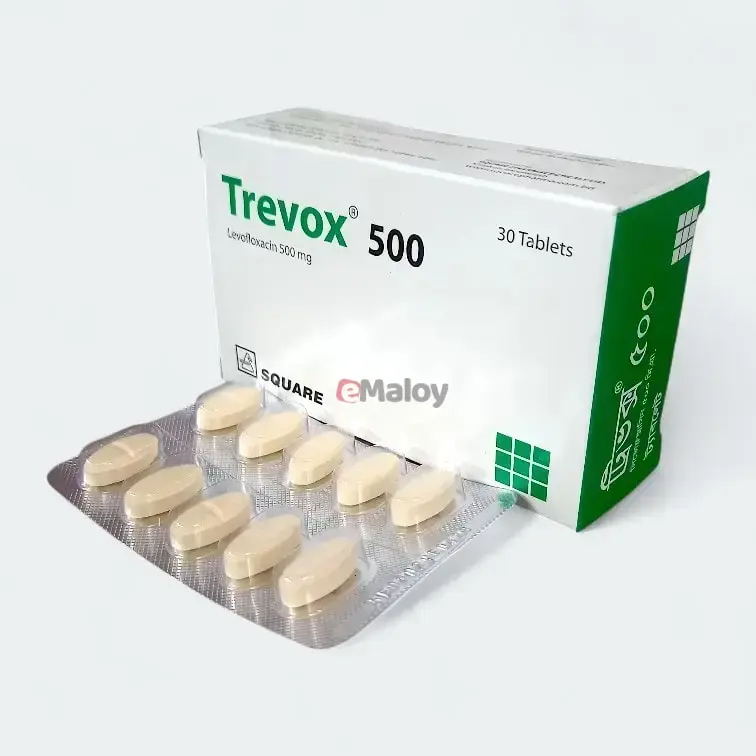
Trevox (Levofloxacin) is a synthetic, broad-spectrum fluoroquinolone antibiotic used to treat mild, moderate, and severe infections caused by susceptible microorganisms. Its indications include:
- Respiratory Tract Infections: Acute maxillary sinusitis, acute bacterial exacerbation of chronic bronchitis, and community-acquired pneumonia.
- Urinary Tract Infections: Uncomplicated and complicated urinary tract infections and acute pyelonephritis.
- Skin and Soft Tissue Infections: Both uncomplicated and complicated infections, including abscesses, cellulitis, and impetigo.
- Enteric Infections: Caused by Enterobacter, E. coli, Vibrio cholerae, and Shigella.
Pharmacology
Levofloxacin is a third-generation fluoroquinolone antibiotic. It works by inhibiting two essential bacterial enzymes: DNA gyrase and topoisomerase IV. These enzymes are crucial for DNA replication, transcription, repair, and recombination. By inhibiting these enzymes, Levofloxacin exerts a powerful antibacterial effect against a wide range of both Gram-positive and Gram-negative microorganisms.
Dosage & Administration
- Oral:
- Tablets: 250 mg, 500 mg, or 750 mg once daily. Can be taken with or without food.
- Oral Solution: Take 1 hour before or 2 hours after eating.
- Intravenous (IV) Infusion:
- 250 mg or 500 mg: Administer over 60 minutes every 24 hours.
- 750 mg: Administer over 90 minutes every 24 hours.
- Not for intramuscular, intrathecal, intraperitoneal, or subcutaneous administration.
- Specific Adult Doses:
- Acute sinusitis: 500 mg daily for 10-14 days, or 750 mg daily for 5 days.
- Community-acquired pneumonia: 500 mg daily for 7-14 days, or 750 mg daily for 5 days.
- Enteric fever: 500 mg daily for 7-14 days.
- Children:
- 6 months to <5 years: 10 mg/kg every 12 hours.
- >5 years: 10 mg/kg every 24 hours.
Interaction
- Multivalent Cations: Do not co-administer with solutions containing multivalent cations (e.g., magnesium) through the same IV line.
- Antacids, Iron, Adsorbents: Reduce the absorption of Trevox.
- NSAIDs: May increase the risk of CNS stimulation.
- Warfarin: May increase the risk of bleeding.
Contraindications
Trevox is contraindicated in patients with a history of hypersensitivity to levofloxacin, other quinolone antimicrobial agents, or any other components of the product.
Side Effects
Trevox is generally well-tolerated. Rare side effects include:
- Ocular: Risk of retinal detachment.
- Gastrointestinal: Nausea, vomiting, diarrhea, abdominal pain, and flatulence.
- Other: Phototoxicity (0.1%), tremors, depression, anxiety, and confusion.
Pregnancy & Lactation
Trevox is not recommended for use during pregnancy or nursing, as the effects on the unborn child or nursing infant are unknown.
Precautions & Warnings
- Administer IV infusion slowly (60-90 minutes).
- Maintain adequate hydration to avoid concentrated urine.
- Dose adjustment is required for patients with renal insufficiency.
Overdose Effects
Trevox has a low potential for acute toxicity. In case of overdose, the stomach should be emptied, and the patient should be kept under observation with appropriate hydration maintained.
Therapeutic Class
Trevox belongs to the therapeutic class of 4-Quinolone preparations.
Storage Conditions
Keep below 30°C, away from light and moisture. Keep out of the reach of children.



Comment