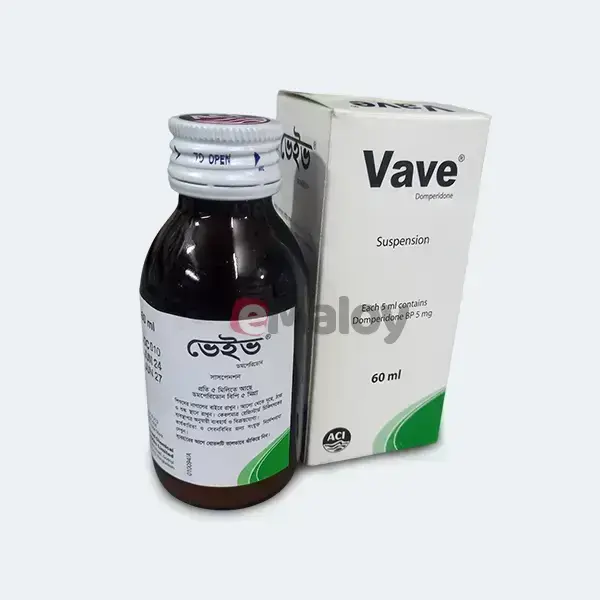
Vave is an oral suspension containing Domperidone BP 5 mg per 5 ml. It is manufactured by ACI Limited in Bangladesh.
Indications:
Vave (Domperidone) is a dopamine receptor antagonist with gastroprokinetic and antiemetic (anti-nausea/vomiting) properties. It works by blocking dopamine receptors in the chemoreceptor trigger zone (CTZ) in the brain and in the stomach, which helps to increase motility in the upper gastrointestinal tract and prevent nausea and vomiting.
It is indicated for:
- Dyspeptic symptom complex: This includes symptoms often associated with delayed gastric emptying, gastroesophageal reflux, and esophagitis, such as:
- Epigastric fullness, abdominal distension, upper abdominal pain
- Belching, flatulence, early satiety
- Nausea and vomiting
- Heartburn, with or without regurgitation of gastric contents.
- Non-ulcer dyspepsia.
- Acute nausea and vomiting: Due to various causes including functional, organic, infectious, dietetic origin, or induced by radiotherapy, drug therapy, or migraine.
- Parkinson's disease: For dopamine-agonist induced nausea and vomiting.
- Radiological studies: To speed up barium transit in follow-through radiological examinations.
Pharmacology:
Domperidone acts as a peripheral dopamine receptor blocker. It promotes gastric emptying, enhances antral and duodenal peristalsis, and regulates pylorus contraction. It also increases esophageal peristalsis and lowers esophageal sphincter pressure, preventing gastric content regurgitation. Its limited ability to cross the blood-brain barrier helps avoid psychotropic and neurological side effects often associated with other dopamine antagonists.
Dosage and Administration:
Vave suspension should be taken 15-30 minutes before meals and, if necessary, before bedtime.
- For Dyspeptic Symptoms:
- Adults: 10-20 mg (10-20 ml of suspension) every 6-8 hours daily. The maximum daily dose is 80 mg.
- Children: 0.2-0.4 mg/kg (2-4 ml suspension per 10 kg body weight) every 6-8 hours daily.
- For Acute Nausea and Vomiting (acute and sub-acute conditions):
- Adults: 20 mg (20 ml suspension) every 6-8 hours daily.
- Children: 0.2-0.4 mg/kg (2-4 ml suspension per 10 kg body weight) every 6-8 hours daily.
- The maximum treatment period for acute nausea and vomiting should not exceed 12 weeks.
Important Considerations:
- Dose and frequency should be adjusted based on the severity and duration of symptoms.
- Do not exceed the prescribed dose or duration without consulting a doctor.
Side Effects:
Most side effects are mild and transient, often resolving as the body adjusts to the medication.
- Common: Dry mouth, headache, drowsiness, stomach cramps, diarrhea.
- Less common/Rare (but more serious):
- Hyperprolactinemia (increased prolactin levels) which may lead to galactorrhea (milk discharge), breast enlargement, and soreness, and reduced libido.
- Extrapyramidal reactions (involuntary movements), though rare due to limited blood-brain barrier penetration.
- Cardiac arrhythmias (irregular heartbeats), including QTc prolongation (risk of serious ventricular arrhythmias). This risk is higher with higher doses and in patients with pre-existing heart conditions or electrolyte imbalances.
- Anaphylactic reactions.
Contraindications:
Vave is contraindicated in patients with:
- Known hypersensitivity to Domperidone or any component of the formulation.
- Gastrointestinal hemorrhage, mechanical obstruction, or perforation, where gastrointestinal stimulation could be dangerous.
- Prolactin-releasing pituitary tumor (prolactinoma).
- Moderate or severe hepatic (liver) impairment.
- Known existing prolongation of cardiac conduction intervals (e.g., QTc), significant cardiac disease (e.g., congestive heart failure), or concurrent use with drugs that prolong the QT interval or potent CYP3A4 inhibitors.
- Children under 2 years of age (especially infants, due to undeveloped metabolic and blood-brain barrier functions).
Precautions and Warnings:
- Cardiac Effects: Domperidone has been associated with a small increased risk of serious ventricular arrhythmias and sudden cardiac death, particularly in patients over 60 years old, those taking daily doses over 30 mg, or those with pre-existing heart conditions or electrolyte imbalances. It should be used at the lowest effective dose for the shortest duration.
- Renal Impairment: In severe renal insufficiency, the elimination half-life of domperidone is prolonged. Dosage reduction (1-2 times daily) or extended dosing intervals may be needed.
- Hepatic Impairment: Use with caution in patients with mild hepatic impairment. Contraindicated in moderate to severe hepatic impairment.
- Elderly: Use with caution due to increased risk of cardiac adverse effects.
- Concomitant medications: Avoid concomitant use with drugs that prolong the QT interval or potent CYP3A4 inhibitors (see Drug Interactions).
Pregnancy and Lactation:
- Pregnancy: The safety of domperidone during pregnancy has not been definitively established. It should only be used during the first trimester if clearly justified by the anticipated therapeutic benefit.
- Lactation: Domperidone is excreted in breast milk and can reach the infant. While the amount is generally small, the potential risk to the infant (especially for cardiac effects) should be weighed against the benefit to the mother.
Drug Interactions:
- QT-prolonging drugs: Concomitant use with drugs known to prolong the QT interval (e.g., certain antiarrhythmics, antipsychotics, antidepressants, antibiotics like erythromycin, antifungals like ketoconazole) is contraindicated.
- Potent CYP3A4 inhibitors: Concomitant use with strong CYP3A4 inhibitors (e.g., ketoconazole, erythromycin, clarithromycin, ritonavir, nelfinavir, verapamil, diltiazem, amiodarone) is contraindicated as they can increase domperidone levels and enhance cardiac risk.
- Anticholinergic drugs: May counteract the antidyspeptic effects of domperidone.
- Antacids and antisecretory drugs: Should not be administered concurrently as they can reduce the oral bioavailability of domperidone. Take Domperidone 15-30 minutes before meals and antacids/antisecretory drugs after meals.
- Dopaminergic agonists (e.g., Bromocriptine, L-dopa): Domperidone can suppress their unwanted peripheral effects (nausea, vomiting) without counteracting their central properties.
Storage Conditions:
Store below 30°C, protected from light and moisture. Keep out of reach of children.
Note: This information is for general knowledge and informational purposes only and does not substitute professional medical advice. Always consult your doctor or pharmacist for specific instructions and guidance regarding your medication, especially given the cardiac risks associated with Domperidone.



Comment