

100% Original Products

Fast Delivery within 24-72 Hours

Cash On Delivery Available

24/7 Order Support via whatsapp
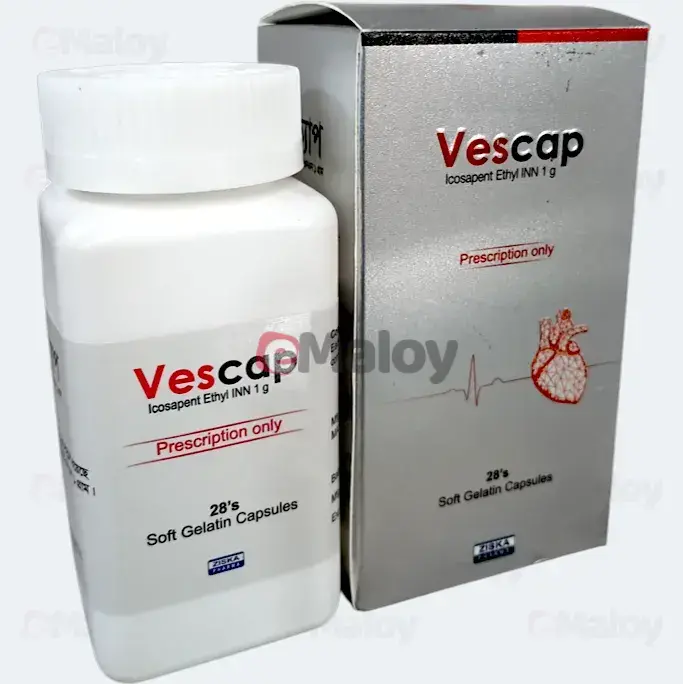
Vescap is indicated as an adjunct to maximally tolerated statin therapy to reduce the risk of myocardial infarction, stroke, coronary revascularization, and unstable angina requiring hospitalization in adult patients with elevated triglyceride (TG) levels (≥150 mg/dL) and established cardiovascular disease, or diabetes mellitus and 2 or more additional risk factors for cardiovascular disease. It is also indicated as an adjunct to diet to reduce TG levels in adult patients with severe (≥500 mg/dL) hypertriglyceridemia.
Limitations of use: The effect of Vescap on the risk for pancreatitis in patients with severe hypertriglyceridemia has not been determined.
Icosapent Ethyl is an ethyl ester of the omega-3 fatty acid eicosapentaenoic acid (EPA). EPA reduces hepatic very low-density lipoprotein triglycerides (VLDL-TG) synthesis and/or secretion and enhances TG clearance from circulating VLDL particles. Potential mechanisms of action include increased beta-oxidation, inhibition of acyl-CoA:1,2-diacylglycerol acyltransferase (DGAT), decreased lipogenesis in the liver, and increased plasma lipoprotein lipase activity.
The daily dose of Vescap is 4 grams per day taken as two 1 gm capsules twice daily with food. Patients should swallow capsules whole and avoid breaking open, crushing, dissolving, or chewing them.
Renal Impairment: Icosapent ethyl has not been studied in patients with renal impairment.
Hepatic Impairment: In patients with hepatic impairment, alanine aminotransferase (ALT) and aspartate aminotransferase (AST) levels should be monitored periodically during therapy with Icosapent ethyl.
Pediatric Use: Safety and effectiveness in pediatric patients have not been established.
Geriatric Use: Icosapent ethyl is safe and effective in geriatric patients.
Increased Bleeding Risk with Anticoagulants and Antiplatelet Agents: Some published studies with omega-3 fatty acids have demonstrated prolongation of bleeding time. Patients receiving Vescap and concomitant anticoagulants and/or antiplatelet agents should be monitored for bleeding.
This drug is contraindicated in patients with known hypersensitivity (such as an anaphylactic reaction) to Icosapent Ethyl or any of its components.
Common adverse reactions in the cardiovascular outcomes trial include musculoskeletal pain, peripheral edema, constipation, gout, and atrial fibrillation. Common adverse reactions in the hypertriglyceridemia trials include arthralgia and oropharyngeal pain.
Pregnancy: Use during pregnancy only if the potential benefit justifies the potential risk to the fetus.
Lactation: Studies have detected omega-3 fatty acids, including EPA, in human milk. Because of the potential adverse effects on the nursing infant, a decision should be made whether to discontinue nursing or discontinue the drug, taking into account the importance of the drug to the mother.
Atrial Fibrillation or Flutter: Vescap was associated with an increased risk of atrial fibrillation or atrial flutter requiring hospitalization in a double-blind, placebo-controlled trial. The incidence of atrial fibrillation was greater in patients with a previous history of atrial fibrillation or atrial flutter.
Potential for Allergic Reactions in Patients with Fish Allergy: Vescap contains ethyl esters of the omega-3 fatty acid, eicosapentaenoic acid (EPA), obtained from fish oil. It is not known whether patients with allergies to fish and/or shellfish are at an increased risk of an allergic reaction to Vescap. If patients have known hypersensitivity to fish and/or shellfish, they should be informed about the potential for allergic reactions and should discontinue Vescap and seek medical attention if a reaction occurs.
Bleeding: Vescap was associated with an increased risk of bleeding in a double-blind, placebo-controlled trial. The incidence of bleeding was greater in patients receiving concomitant antithrombotic medications, such as aspirin, clopidogrel, or warfarin.
Anti-anginal and lipid lowering drugs
Do not store above 25°C. Protect from light. Keep out of the reach of children.
Your email address will not be published. Required fields are marked *
Please login to write review!
Looks like there are no reviews yet.
Cookie preferences
Comment