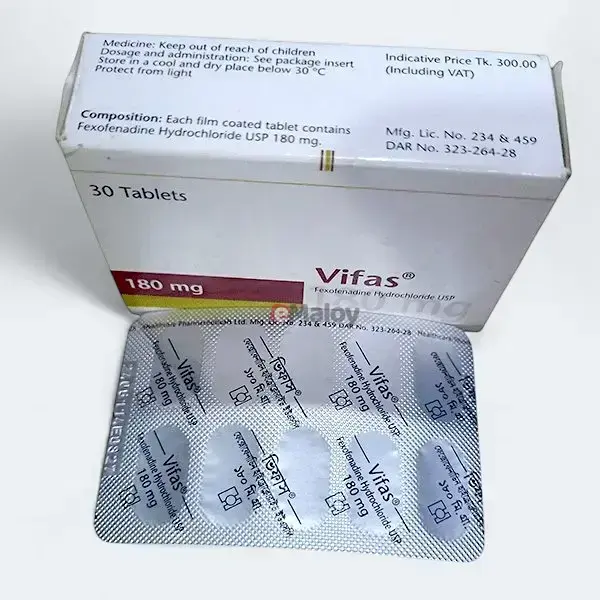
Vifas (Fexofenadine): A Non-Sedating Antihistamine
Vifas contains Fexofenadine Hydrochloride, a non-sedating antihistamine. It is indicated for the relief of symptoms associated with seasonal and perennial allergic rhinitis and chronic idiopathic urticaria (hives). Fexofenadine is a selective H1 histamine receptor inverse agonist, meaning it works by blocking the action of histamine, a substance in the body that causes allergic symptoms. It belongs to the therapeutic class of Non-sedating antihistamines.
How Vifas Works (Pharmacology)
Fexofenadine's mechanism of action is to block the H1 histamine receptor:
- H1 Receptor Inverse Agonist: It binds to the H1 histamine receptor and stabilizes its inactive form, preventing histamine from activating it.
- Blocks Allergic Symptoms: This prevents the release of pro-inflammatory cytokines and downstream effects that cause allergic symptoms like sneezing, runny nose, watery eyes, and itching.
- Non-Sedating: Fexofenadine does not cross the blood-brain barrier, so it is unlikely to cause significant central nervous system effects such as drowsiness.
- No Other Blocking Activity: It lacks antidopaminergic, antiserotonergic, anticholinergic, or adrenergic blocking activity.
Key Indications & Benefits
Vifas is indicated for the relief of symptoms associated with:
- Seasonal and perennial allergic rhinitis: Effective for symptoms like sneezing, runny nose, itchy and watery eyes, and itchy nose/palate/throat.
- Chronic idiopathic urticaria: Significantly reduces signs and symptoms, the number of wheals (hives), and pruritus (itching).
Dosage & Administration
The dosage of Vifas varies based on age and the condition being treated. It is available in tablet and suspension forms. Doses should be adjusted for patients with impaired renal function. Always consult a registered physician for specific dosage instructions.
- Allergic Rhinitis (Adults & children 12+): 60 mg twice daily, or 120 mg or 180 mg once daily.
- Allergic Rhinitis (Children 6-11): 30 mg twice daily or 60 mg once daily.
- Allergic Rhinitis (Children 2-11): 30 mg or 5 ml suspension twice daily.
- Chronic Idiopathic Urticaria (Adults & children 12+): 60 mg twice daily, or 120 mg or 180 mg once daily.
- Chronic Idiopathic Urticaria (Children 6 months to <2 years): 15 mg or 2.5 ml suspension twice daily.
- Renal Impairment: Doses should be reduced, for example, 60 mg once daily for adults.
Important Considerations & Warnings
It is crucial to discuss your full medical history with your doctor before taking Vifas.
Contraindications:
- Known hypersensitivity to Fexofenadine Hydrochloride or any of its ingredients.
Side Effects:
- Common: Headache, drowsiness, dizziness, and nausea.
- Post-marketing reports (frequency not known): Hypersensitivity reactions (e.g., angioedema, rash, itching, urticaria), insomnia, nervousness, palpitations, and diarrhea.
Pregnancy & Lactation:
- Pregnancy: There is limited data on its use in pregnant women. It should only be used if clearly necessary.
- Lactation: Fexofenadine is not recommended for nursing mothers as it can be found in breast milk.
Precautions & Warnings:
- Special Populations: Use with care in elderly patients and those with renal or hepatic impairment due to limited data.
- Cardiovascular Disease: Patients with a history of heart disease should be aware that antihistamines have been associated with tachycardia (fast heart rate) and palpitations.
- Driving/Operating Machines: While objective tests show no significant effect on the central nervous system, it is advisable to check for individual reactions before driving or performing complicated tasks.
Drug Interactions:
- Erythromycin or Ketoconazole: Co-administration can increase Fexofenadine plasma levels.
- Antacids with aluminum and magnesium hydroxide: These can reduce Fexofenadine's bioavailability. It is recommended to take Vifas at least 2 hours apart from these antacids.
Overdose Effects
- Overdose symptoms include dizziness, drowsiness, fatigue, and dry mouth.
- In case of overdose, symptomatic and supportive treatment is recommended. Hemodialysis does not effectively remove Fexofenadine from the blood.
Storage Conditions
Keep in a dry place away from light and heat. Keep out of the reach of children.



Comment