Indications
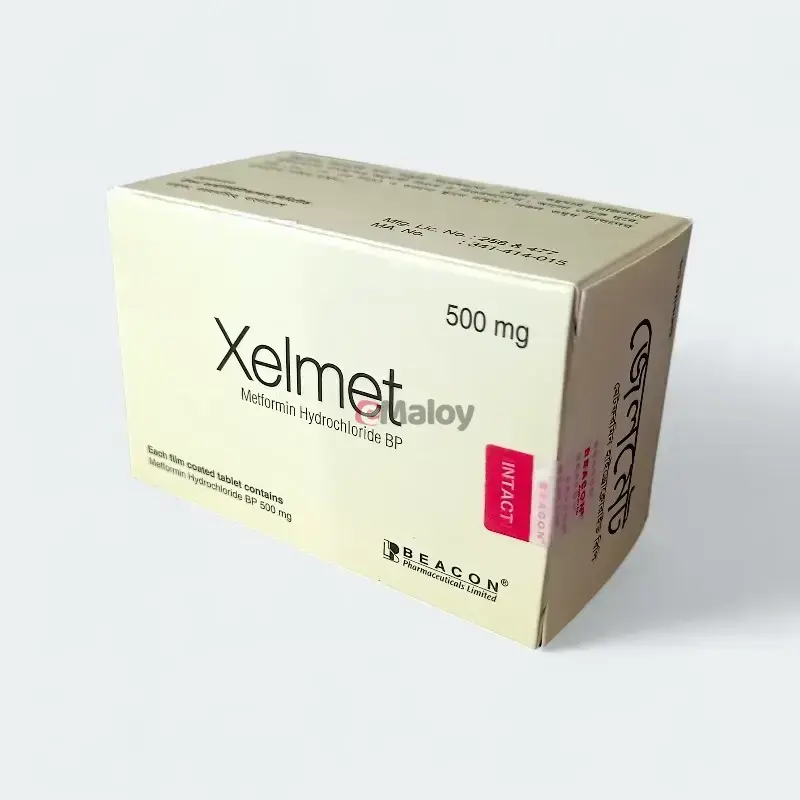
Xelmet (Metformin) is indicated for the treatment of type 2 diabetes mellitus, particularly in overweight patients when diet and exercise alone are insufficient for glycemic control.
- Adults: Can be used as a monotherapy, or in combination with other oral antidiabetic agents or insulin.
- Children (10 years and older): Can be used as a monotherapy or in combination with insulin.
Pharmacology
Metformin is a biguanide oral antihyperglycemic drug. It lowers both basal and postprandial plasma glucose without causing hypoglycemia. Its mechanism of action involves:
- Decreasing hepatic glucose production.
- Decreasing intestinal absorption of glucose.
- Improving insulin sensitivity by increasing peripheral glucose uptake and utilization.
Dosage & Administration
- Immediate Release Tablet (Adult):
- Initial dose: 500 mg twice a day or 850 mg once a day, with meals.
- Increments: Increase by 500 mg weekly or 850 mg every 2 weeks.
- Maximum dose: 2550 mg per day, given in divided doses. Doses above 2000 mg may be better tolerated when given three times a day.
- Immediate Release Tablet (Children):
- Initial dose: 500 mg twice a day, with meals.
- Increments: Increase by 500 mg weekly.
- Maximum dose: 2000 mg per day, given in divided doses.
- Extended Release Tablet (Adult):
- Initial dose: 500 mg once daily with the evening meal.
- Increments: Increase by 500 mg weekly.
- Maximum dose: 2000 mg once daily. Tablets should be swallowed whole and not crushed or chewed.
- Extended Release Tablet (Children): Not studied in children.
- Renal Impairment: Do not use in patients with an eGFR below 30 mL/min/1.73 m2. Assess risk/benefit if eGFR falls below 45 mL/min/1.73 m2.
Interaction
- Cationic drugs: Drugs eliminated by renal tubular secretion (e.g., amiloride, digoxin) may interact with Xelmet by competing for common transport systems.
- Hyperglycemia-causing drugs: Certain drugs like thiazides, corticosteroids, and diuretics can cause a loss of glycemic control.
Contraindications
Xelmet is contraindicated in patients with:
- Hypersensitivity to the active substance or excipients.
- Acute metabolic acidosis (lactic acidosis, diabetic ketoacidosis).
- Severe renal failure (GFR < 30 mL/min).
- Conditions that can alter renal function or cause tissue hypoxia (e.g., dehydration, severe infection, cardiac/respiratory failure, recent myocardial infarction, shock).
- Hepatic insufficiency, acute alcohol intoxication, or alcoholism.
Side Effects
- Very Common: Gastrointestinal disorders such as nausea, vomiting, diarrhea, abdominal pain, and loss of appetite, which often resolve spontaneously.
- Very Rare: Lactic acidosis, decreased Vitamin B12 absorption (leading to megaloblastic anemia), liver function abnormalities or hepatitis, and skin reactions like erythema and urticaria.
- Common: Taste disturbance.
Pregnancy & Lactation
- Pregnancy: Uncontrolled diabetes during pregnancy is associated with an increased risk of congenital abnormalities. Insulin is the recommended treatment during pregnancy to maintain blood glucose levels.
- Breastfeeding: Metformin is excreted into human breast milk. Due to limited data, breastfeeding is not recommended during treatment.
Precautions & Warnings
- Renal Function: Regular monitoring of renal function is crucial. The risk of drug accumulation and lactic acidosis increases with impaired renal function.
- Lactic Acidosis: A rare but serious complication. The risk is increased in conditions that may cause dehydration, serious infection, or trauma.
- Surgery/Radiological Studies: Xelmet therapy should be stopped 2-3 days before surgery or clinical investigations involving contrast media and reinstated only after renal function is confirmed to be normal.
- Vitamin B12: Long-term use may lower Vitamin B12 levels, and annual monitoring is recommended.
- Hypoglycemia: The risk of hypoglycemia increases when used in combination with insulin or other insulin secretagogues.
Use in Special Populations
- Elderly: The dosage should be adjusted based on renal function, which should be assessed regularly.
- Pediatric Population: The diagnosis of type 2 diabetes must be confirmed before treatment. Careful follow-up is recommended for potential effects on growth and puberty.
Overdose Effects
Overdoses up to 85 grams of Xelmet have not caused hypoglycemia, but lactic acidosis can occur. Lactic acidosis is a medical emergency. Hemodialysis is the most effective method for removal of the drug and lactate.
Therapeutic Class
Xelmet is a biguanide.
Storage Conditions
Keep at a temperature below 30°C, protected from light and moisture. Keep out of the reach of children.




Comment