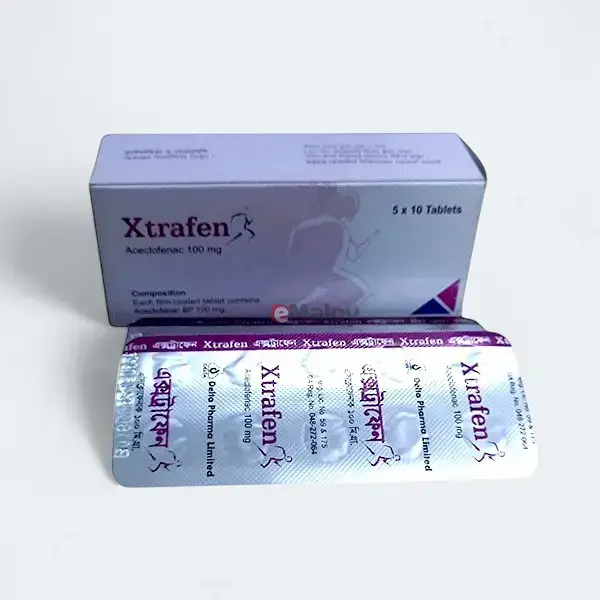
Xtrafen (Aceclofenac): A Non-Steroidal Anti-inflammatory Drug (NSAID)
Xtrafen contains Aceclofenac, a non-steroidal drug with anti-inflammatory and analgesic (pain-relieving) properties. It is indicated for the relief of pain and inflammation associated with conditions such as osteoarthritis, rheumatoid arthritis, ankylosing spondylitis, toothache, trauma, and lumbago. Xtrafen belongs to the therapeutic class of Non-steroidal Anti-inflammatory Drugs (NSAIDs).
How Xtrafen Works (Pharmacology)
Aceclofenac's mechanism of action is to inhibit an enzyme involved in inflammation:
- Inhibits Cyclooxygenase (COX): It is a potent inhibitor of the cyclooxygenase enzyme.
- Reduces Prostaglandin Production: This enzyme is involved in the production of prostaglandins, which are compounds that play a key role in causing pain and inflammation.
- Anti-inflammatory and Analgesic Effects: By inhibiting prostaglandin production, Aceclofenac reduces inflammation and relieves pain.
- Rapid Absorption: After oral administration, it is rapidly and completely absorbed as an unchanged drug.
Key Indications & Benefits
Xtrafen is indicated for the relief of pain and inflammation in:
- Osteoarthritis
- Rheumatoid arthritis
- Ankylosing spondylitis
- Toothache
- Trauma
- Lumbago
Dosage & Administration
The dosage of Xtrafen varies depending on the formulation. It is for adult use. Always consult a registered physician for specific dosage instructions.
- Extended-release tablet: One 200 mg tablet daily.
- Film-coated tablet: 100 mg twice daily.
Important Considerations & Warnings
It is crucial to discuss your full medical history with your doctor before taking Xtrafen.
Contraindications:
- Known hypersensitivity to Aceclofenac.
- Patients in whom aspirin or other NSAIDs have triggered asthma attacks.
Side Effects:
- The provided information re-states the pharmacology of the drug in the side effects section. Common side effects of NSAIDs generally include gastrointestinal issues, but no specific side effects are listed here other than a repetition of the pharmacology.
Pregnancy & Lactation:
- The use of Aceclofenac should be avoided in pregnancy and lactation unless the potential benefits outweigh the possible risks to the fetus or infant.
Precautions & Warnings:
- Gastrointestinal Issues: Use with caution in patients with active or suspected peptic ulcers or gastrointestinal bleeding.
- Organ Impairment: Caution should be exercised in patients with moderate to severe hepatic impairment, cardiac impairment, or renal impairment.
- Other Conditions: Caution is also advised for patients who suffer from dizziness or urticaria (hives).
Drug Interactions:
- While no significant interactions have been observed, close monitoring is needed with:
- Lithium and Digoxin: May increase their plasma concentrations.
- Diuretics: May interact with the activity of diuretics.
- Anticoagulants: May enhance their activity.
- Methotrexate: May increase its plasma level.
Storage Conditions
Keep in a dry place, away from light and heat. Keep out of the reach of children.






Comment